Lindworm
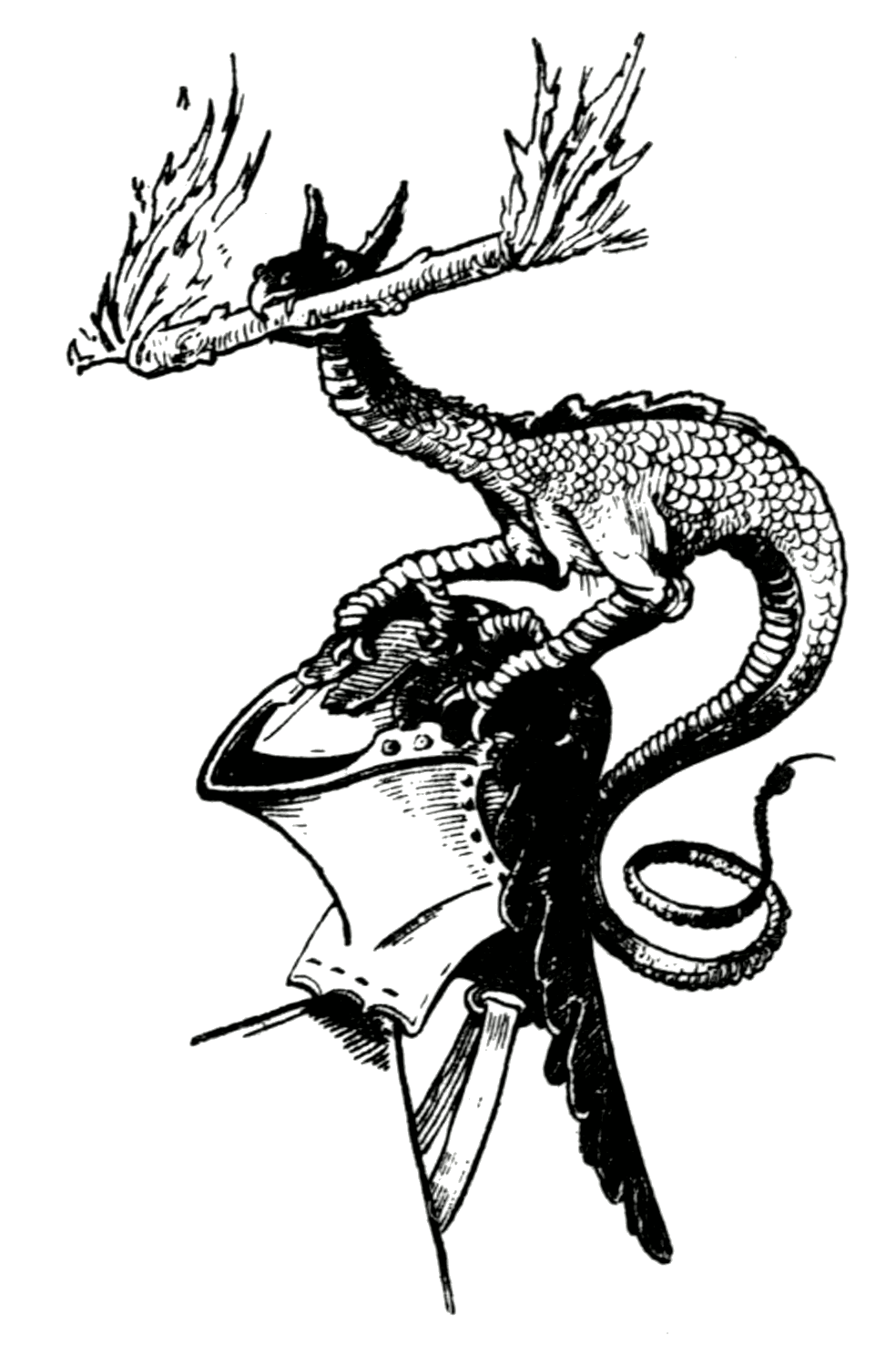
A European serpentine dragon with varied limb and wing forms.
Last updated
Legend tells of two kinds of lindworm: a good one associated with luck, often a cursed prince, and a bad one that is a dangerous man-eater.[1] In Swedish folklore, lindworms are described as large forest snakes without legs that dwell among rocks deep in the woods.[1][2] Objects placed beneath a lindworm are said to grow in size along with the creature, which led to stories of dragons guarding treasure to increase its value.[1]
Key facts and history
The word lindworm derives from early medieval Germanic languages, first appearing in English as "lintworm" in 1423 according to the Oxford English Dictionary.[3] The meaning of the prefix "lind" is uncertain, possibly from a Proto-Germanic adjective meaning "flexible" or from words meaning "soft, mild" or "to wind".[4] In Swedish folklore, lindworms traditionally appear as giant limbless forest serpents, dark in color with a brighter underside.[1] According to tradition, lindworm eggs are deposited beneath linden tree bark, and after hatching the young take up residence in rocky piles.[1]
Swedish folklorist Gunnar Olof Hyltén-Cavallius gathered approximately 50 accounts from eyewitnesses and, in 1884, announced a monetary prize for anyone who could bring in a live or dead specimen; nobody ever claimed the reward.[5]
What the cited sources add
The European folktales source describes the lindworm as a serpent that demands "A bride for me before a bride for you!" and eats brides who fail to follow the crone's instructions.[6] A Paris Review article states that "The Lindworm" is a tale with multiple versions throughout Scandinavia.[7]
References
- Wikipedia, "Lindworm" (CC BY-SA 4.0), which cites: "Lindormar", ungafakta.se (original not read by us) en.wikipedia.org
- Wikipedia, "Lindworm" (CC BY-SA 4.0), which cites: "Heraldry, Ancient and Modern: Including Boutell's Heraldry", W. W. Gibbings, 1892, p. 139; Gritzner, "Heraldische Terminologie", Vierteljahrsschrift für Heraldik, Sphragistik und Genealogie, 1878, p. 313–314; Havas, "Orte - Eine Sammlung skurriler und unterhaltsamer Fakten", Carl Ueberreuther, 2021 (original not read by us) en.wikipedia.org
- Wikipedia, "Lindworm" (CC BY-SA 4.0), which cites: "† lintworm", oed.com (original not read by us) en.wikipedia.org
- Wikipedia, "Lindworm" (CC BY-SA 4.0), which cites: Hellquist, "Svensk Etymologisk Ordbok", C. W. K. Gleerups Förlag, 1922, p. 411; Cleasby, "An Icelandic-English Dictionary", Clarendon, 1957, p. 90; "Þiðreks saga af Bern" (original not read by us) en.wikipedia.org
- Wikipedia, "Lindworm" (CC BY-SA 4.0), which cites: G. O. Hyltén-Cavallius, Om draken eller lindormen, mémoire till k. Vetenskaps-akademien, 1884. (original not read by us) en.wikipedia.org
- "Prince Lindworm•", European folktales. facts only, no text reused. worldoftales.com
- Stein, "The Lindworm", Paris Review, May 22, 2015. facts only, no text reused. theparisreview.org
Each numbered sentence above was checked against the source it cites before publication. Sentences citing Wikipedia adapt text from the English Wikipedia article Lindworm (contributors), used under CC BY-SA 4.0; this entry is available under the same licence. Other sources were used for facts only; no text or images are copied from them.
More in Norwegian folklore
Sources
Compiled from Wikipedia and the sources listed below. Text from Wikipedia is available under CC BY-SA 4.0; this entry is adapted from it.
- Wikipedia: Lindworm (CC BY-SA 4.0).
Spotted an error? Know more?
Reader corrections go straight into our review queue. Suggest an edit · How this site is sourced