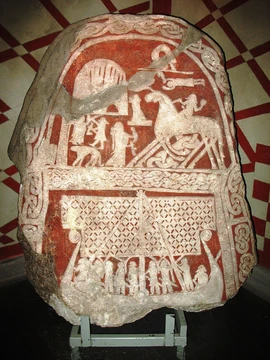
Ullr
Norse god of snow, bows, hunting, and glory.
Ullr is a god in Norse mythology associated with snow, bows, hunting, and potentially the sun. Although literary attestations are sparse, place-name evidence from Scandinavia suggests he was a major deity in pre-historic Sweden. His name derives from the Proto-Germanic *Wulþuz ('Glory'), a cognate of the Gothic noun wulþus ('glory, wealth').
- Field
- Norse mythology
- Known for
- God of snow, bows, hunting; potentially the sun; associated with ski-god, bow-god, hunting-god, shield-god
Lore & Background
Ullr is described in the Poetic Edda as dwelling in Ýdalir ('yew dales'), a name connected to the yew tree used for bows. In Grímnismál, a strophe mentions Ullr, possibly referring to a religious ceremony, indicating his importance. In Atlakviða, oaths are sworn on a ring associated with Ullr, linking him to ceremonial practices. In the Prose Edda, Snorri Sturluson records Ullr as a son of Sif and stepson of Thor, and notes that a shield can be called 'Ullr's ship,' a kenning borne out in skaldic poetry. Saxo Grammaticus, in Gesta Danorum, euhemerizes Ullr as Ollerus, a cunning wizard who ruled in Odin's place for ten years.
Reader's Guide
Ullr's significance is underscored by extensive place-name evidence in Norway and Sweden, including farms, fields, sanctuaries, and fjords bearing his name, such as Ullevi ('Ullr's sanctuary') and Ullsfjorden. This suggests a religious importance greater than the scant textual references imply. The Thorsberg chape (3rd century AD) may attest to Ullr in the compound owlþu-þewaz, possibly meaning 'servant of Owlþuz.' The related form Ullinn appears in Norwegian placenames, possibly reflecting a divine pair. Scholarly theories propose Ullr was an older god whose importance waned before the medieval texts were written. His name appears in warrior kennings, and his association with ring-oaths and shields points to a role in legal and martial contexts. The lack of myths about Ullr in the Prose Edda suggests Snorri may not have known any, yet the toponymic evidence confirms his enduring cult.
Did You Know?
- Ullr's name derives from Proto-Germanic *Wulþuz, meaning 'Glory,' a cognate of Gothic wulþus ('glory, wealth').
- The Thorsberg chape (3rd century AD) may bear the name Ullr in the compound owlþu-þewaz.
- Place names like Ullevi and Ullsfjorden in Scandinavia indicate Ullr was a major deity in pre-historic Sweden.
- In skaldic poetry, a shield is called 'Ullr's ship,' possibly linked to his identity as a ski-god.
Spotted an error? Know more?
Reader corrections go straight into our review queue. Suggest an edit · How this site is sourced