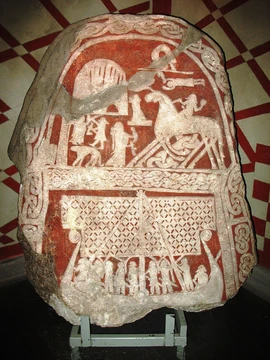
The Valkyries
Female figures who choose the slain for Odin's hall.

In Norse mythology, valkyries are female figures who decide which warriors die in battle and then lead those souls to Odin’s hall, Valhalla. The name comes from Old Norse *valkyrja*, meaning “chooser of the slain.” Once in Valhalla, the dead fighters become *einherjar*—either “single fighters” or “once fighters.” While these warriors aren’t training for Ragnarök, the valkyries serve them mead. Valkyries sometimes appear as lovers to mortal heroes, and in stories they are portrayed as royal daughters, occasionally traveling with ravens or linked to swans, boars, or wolves.
The word *valkyrja* combines *valr* (the battlefield dead) and *kjósa* (to choose). An Old English equivalent, *wælcyrge*, appears in several manuscripts, though scholars debate whether it came from Norse influence or reflects an older Anglo-Saxon pagan tradition. The Proto-Germanic form has been reconstructed as *walakuzjǭ*. In Old Norse texts, valkyries are also called *óskmey* (“wish maid”) and *Óðins meyjar* (“Odin’s maids”). The name Randalín, given to Aslaug in one saga, likely comes from a kenning meaning “shield-goddess,” another term for a valkyrie.
Valkyries appear in the Poetic Edda, the Prose Edda, *Heimskringla*, and *Njáls saga*—all written or compiled in the 13th century. They also show up in skaldic poetry, a 14th-century charm, and various runic inscriptions. In the poem *Völuspá*, a seeress tells Odin she saw six valkyries riding to the gods’ realm: Skuld, Skögul, Gunnr, Hildr, Göndul, and Geirskögul. In *Grímnismál*, Odin names thirteen valkyries who serve ale to the *einherjar*, including Hrist, Mist, and others like Hlökk, Herfjötur, and Reginleif. A prose section of *Völundarkviða* describes three valkyries—Hlaðguðr svanhvít, Hervör alvitr, and Ölrún—who are found spinning linen by a lake, their swan garments nearby. They live with three brothers for seven winters before flying off to battle and never returning. In *Helgakviða Hjörvarðssonar*, a silent young man sees nine valkyries riding past a burial mound; one of them, Sváva, later names him Helgi and protects him in fights.
Scholars have compared valkyries to the Norns and the *dísir*, all supernatural beings tied to fate. Amulets found in Scandinavian archaeological digs are thought to depict valkyries. In modern times, valkyries have inspired art, music, comic books, video games, and poetry.
- field
- Norse mythology
- known_for
- Guiding slain warriors to Valhalla and serving mead to the einherjar
- nationality
- Norse (Scandinavian)
- etymology
- Old Norse valkyrja, meaning 'chooser of the slain'
Lore & Background
Valkyries are attested in the Poetic Edda (a book of poems compiled in the 13th century from earlier traditional sources), the Prose Edda, the Heimskringla (both by Snorri Sturluson) and the Njáls saga (one of the Sagas of Icelanders), all written—or compiled—in the 13th century. They appear throughout the poetry of skalds, in a 14th-century charm, and in various runic inscriptions. The Old English cognate term wælcyrge appears in several Old English manuscripts, and scholars have explored whether the term appears in Old English by way of Norse influence, or reflects a tradition also native among the Anglo-Saxon pagans. In the Poetic Edda, valkyries are mentioned or appear in poems including Völuspá, Grímnismál, Völundarkviða, Helgakviða Hjörvarðssonar, Helgakviða Hundingsbana I, Helgakviða Hundingsbana II and Sigrdrífumál. In Völuspá, a völva tells Odin she saw valkyries coming from far away, listing six by name: Skuld, Skögul, Gunnr, Hildr, Göndul and Geirskögul. In Grímnismál, Odin provides a list of 13 valkyries who bear ale to the einherjar. In Völundarkviða, three valkyries are found spinning linen by a lake, with swan garments nearby; they are taken as wives by three brothers but later fly off to battle. In Helgakviða Hjörvarðssonar, a valkyrie named Sváva gives the name Helgi to a silent young man and later becomes his betrothed. In Helgakviða Hundingsbana I, the valkyrie Sigrún helps the hero Helgi avoid an unwanted betrothal and pledges herself to him after battle.
Reader's Guide
The valkyries hold a central place in Norse mythology as intermediaries between the battlefield and the afterlife, specifically Odin's hall Valhalla. Their role as 'choosers of the slain' underscores the Norse cultural emphasis on fate and the warrior ethos, where death in combat was a path to an honored existence among the einherjar. Beyond their martial function, valkyries appear as lovers and protectors of heroes, blending the supernatural with human relationships. Scholarly theories have been proposed about the relation between the valkyries, the Norns, and the dísir, all of which are supernatural figures associated with fate. Archaeological excavations throughout Scandinavia have uncovered amulets theorized as depicting valkyries. In modern culture, valkyries have been the subject of works of art, musical works, comic books, video games and poetry, reflecting their enduring appeal as symbols of power, choice, and the intersection of life and death. The etymology of the term—from Old Norse valr ('the slain') and kjósa ('to choose')—directly encapsulates their primary function.
Did You Know?
- The word valkyrie derives from Old Norse valkyrja, meaning 'chooser of the slain'.
- Valkyries are attested in the Poetic Edda, Prose Edda, Heimskringla, and Njáls saga, all compiled in the 13th century.
- In the poem Völundarkviða, three valkyries are described as having swan garments and are taken as wives by three brothers.
- The Old English cognate term wælcyrge appears in several Old English manuscripts, though scholars debate whether it reflects Norse influence or an Anglo-Saxon tradition.
Common Misconceptions (Editorial)
- Some believe valkyries are solely warriors who choose the slain in battle, but they also serve mead to the einherjar in Valhalla and appear as lovers or betrothed to mortal heroes. - It is sometimes assumed that all valkyrie lore originates from Norse sources only, but the Old English cognate term "wælcyrge" appears in manuscripts, raising the possibility of a shared Anglo-Saxon pagan tradition.
Why It Matters (Editorial)
The valkyries endure as symbols of fate and valor, bridging the gap between mortal heroism and divine reward. Their dual role—as choosers of the slain and as caretakers of the fallen—reflects ancient Norse values of honor, loyalty, and the inevitable cycle of battle and afterlife. This mythic blend of war and hospitality continues to captivate modern audiences, shaping portrayals in literature, art, and popular culture.
Spotted an error? Know more?
This is a living reference — every entry is fact-audited, and reader corrections feed straight into our audit queue. Suggest an edit · See this site's audit record