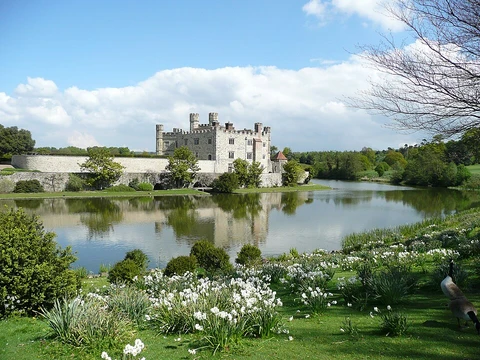
Castello Normanno (Paternò)
A Norman castle in Sicily, with construction beginning in the late 11th or early 12th century.
The Castello Normanno (Norman Castle) is a castle in Paternò, in the Province of Catania, Sicily, southern Italy. Construction likely began in the late 11th or early 12th century, with the earliest documented reference from the 12th century. It later served as a royal residence and administrative seat, and underwent periods of decay before restoration in the 19th century.
- Built
- Late 11th or early 12th century (first documented in the 12th century)
- Builder
- Uncertain; traditionally attributed to Count Roger I of Sicily, but not substantiated
- Original Style
- Norman Romanesque (Ghibelline merlons are a later addition, typically 13th century or later)
- Notable Feature
- Later Gothic-style mullioned windows with white limestone frames (added in the 13th–14th century)
Lore & Background
The castle's construction likely began in the late 11th or early 12th century, though its exact origins are uncertain. Under Henry VI, it became the seat of the Count of Paternò, assigned to Bartholomew of Luci. Later it housed notable figures including Emperor Frederick II, Eleanor of Anjou, and Blanche I of Navarre. The castle was not consistently part of the Camera Reginale estates; that institution was established by King Frederick III of Sicily in the 14th century, but Paternò's inclusion is not standard canon.
Reader's Guide
The Castello Normanno in Paternò is a significant example of Norman military architecture in Sicily, built in 1072 to defend against Islamic raids. Its history reflects the shifting powers of the island: from Norman rule under Roger I, to Swabian administration under Henry VI and Frederick II, and later inclusion in the Camera Reginale, a royal estate for queens. The castle's architectural features, such as the Ghibelline merlons and Gothic mullioned windows with contrasting white limestone, highlight medieval stylistic influences. Its later use as a jail and subsequent 19th-century restoration illustrate the cycles of neglect and revival common to many historic structures. The castle's role as a residence for kings and queens, and its frescoed chapel, underscore its importance as both a defensive and ceremonial site. Today, it stands as a landmark of Paternò and a testament to Sicily's layered medieval history.
Did You Know?
- The castle's construction likely began in the late 11th or early 12th century, not 1072.
- Its original purpose is uncertain; the claim of protecting the Simeto valley from Islamic raids is unsubstantiated.
- The castle was not part of the Camera Reginale estates created by King Frederick III of Sicily.
- The first storey houses the Chapel of St. John, decorated with 13th-century frescoes.
More in Norman castles 1-24
Spotted an error? Know more?
This is a living reference — every entry is fact-audited, and reader corrections feed straight into our audit queue. Suggest an edit · See this site's audit record