Cradock Nowell
Blackmore's second novel, set in the New Forest and London.
Last updated

via Wikipedia: Cradock Nowell · see source
Before his famous novel Lorna Doone, R. D. Blackmore wrote his second book, Cradock Nowell: a tale of the New Forest. Published in 1866 across three volumes, it is set in the New Forest and London. The story follows Cradock Nowell, who is cast out by his father after his twin brother Clayton dies under suspicious circumstances.
Title and writing
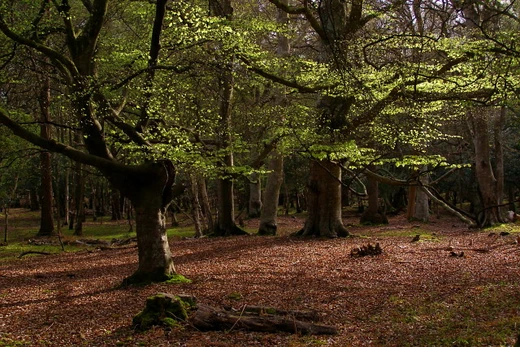
Blackmore's second novel, Cradock Nowell followed the 1864 publication of Clara Vaughan. The name was taken from a former owner of Nottage Court in Glamorganshire, the house where Blackmore spent part of his childhood; the name appears on a tablet in Newton Nottage church, which Blackmore recalled gazing at during sermons as a child. The main setting is the New Forest in Hampshire, which Blackmore knew only from visits and fishing trips, relying on John Wise's 1863 book The New Forest: Its History and Scenery.
The novel is noted for its evocative descriptions of landscape, seasons, and weather, traits that would characterise his next novel Lorna Doone. Blackmore experienced editorial meddling from Macmillan's Magazine, later writing that the novel was 'spoiled' by repeated interference. He revised and released a new edition in 1873.
Plot introduction
Twin brothers Cradock and Clayton Nowell have a nurse who forgets which is the elder after a distinguishing rosette falls to the ground. She settles the matter to her own satisfaction, and the boys grow up under their father Sir Cradock Nowell and his friend John Rosedew, the rector. Cradock falls in love with Amy Rosedew, the rector's daughter. As the brothers approach adulthood, a regimental surgeon who attended their birth arrives and reveals the nurse's mistake.
Soon after, the older brother is found shot dead in a lonely coppice, with Cradock standing nearby holding a discharged gun. Their father believes Cradock guilty and drives him away. The remainder of the story follows Cradock's fortunes and his eventual restoration to his home and father.
Reception
Cradock Nowell received mixed reviews. The Athenaeum called it 'a clever novel, decidedly original in style and mode of treatment' with 'excellent descriptions of forest scenery', but noted that 'the style is overlaid with mannerisms and affectation' and that the author 'delights in far-fetched words and pedantic epithets'. The Westminster Review praised the handling of descriptions but complained about 'muscular brutality' in the final two volumes. The Dictionary of National Biography stated that Cradock Nowell is one of Blackmore's best heroes and that Amy Rosedew is one of the most bewitching of heroines.
1873 revision
After adverse reviews and editorial interference from Macmillan's Magazine, Blackmore fully revised the novel for its 1873 republication. The new edition is described as 'diligently revised and reshapen', and Blackmore wrote in the preface that 'the present writer has done his best to mend the error of his ways.' That same year he advised a friend to try the new one-volume edition, which had cost him months of revision and reshaping.
More in New Forest
Sources
Compiled from Wikipedia and the sources listed below. Text from Wikipedia is available under CC BY-SA 4.0; this entry is adapted from it.
- Wikipedia: Cradock Nowell (CC BY-SA 4.0).
Spotted an error? Know more?
Reader corrections go straight into our review queue. Suggest an edit · How this site is sourced