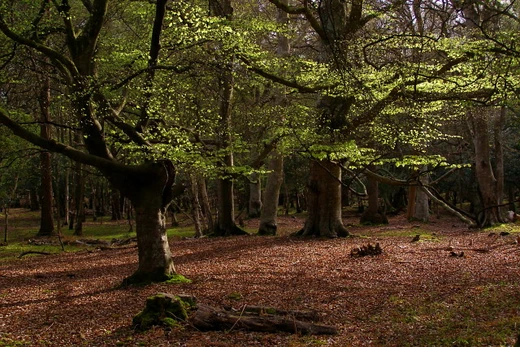
Fritham
A New Forest village with a Bronze Age barrow and gunpowder history.
Last updated
Where it is
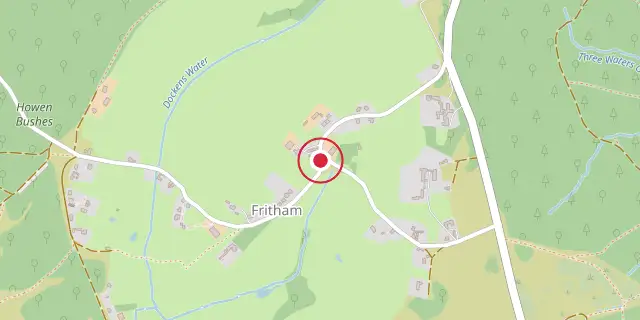
Coordinates: 50°55′34″N 1°39′40″W (50.9260, -1.6610) · Open in OpenStreetMap
Coordinates and connected clubs: the infobox of Wikipedia: Fritham (CC BY-SA 4.0). Map: drawn by Codexery from OpenStreetMap tiles.
Fritham is a small village in Hampshire, England, located in the north of the New Forest near the Wiltshire border. It lies within the civil parish of Bramshaw.
History
The name Fritham likely comes from Old English, meaning a piece of farmland in brushland at the forest's edge. The village's oldest landmark is a Bronze Age bowl barrow called The Butt, located just east of it, though a brick structure has partly damaged its top. Fritham is absent from the 1086 Domesday Book; an earlier idea that the Domesday settlement of Truham was Fritham is now doubted because Truham fell within Boldre Hundred. The first known record of Fritham comes from the early 1200s, when Geoffrey de Baddesley owned land in both Baddesley and Fritham.
The village stayed tied to the manor of South Baddesley in Boldre parish until at least 1429. The Royal Oak, a thatched cottage with red-brick additions, ranks among the New Forest's oldest pubs, dating to the 1600s. Fritham Lodge, built in 1671, might have been one of Charles II's hunting lodges. A school and chapel opened in Fritham in 1861.
From the 1860s through the 1920s, the village hosted the Schultze gunpowder factory, which made smokeless powder for sporting guns. Founded in 1865, it was once the world's largest nitro-compound gunpowder factory, with sixty buildings and a hundred workers. It provided three-quarters of the global yearly supply of sporting gunpowder, often shipping 100-ton loads to the Americas using road vans and special railway cars bound for Southampton's docks.
Today, only the superintendent's and gatekeeper's houses remain. Eyeworth Pond, near Fritham, was built by the factory as a reservoir for manufacturing water.
In 1904, Fritham Free Church was established. Four young men from Fritham perished on the Titanic in 1912: Lewis Hickman (32), Leonard Mark Hickman (24), Stanley George Hickman (21), and Ambrose Hood (21). The Ham class minesweeper HMS Fritham, launched in 1953, was named after the village.
More in New Forest
Sources
Compiled from Wikipedia and the sources listed below. Text from Wikipedia is available under CC BY-SA 4.0; this entry is adapted from it.
- Wikipedia: Fritham (CC BY-SA 4.0).
Spotted an error? Know more?
Reader corrections go straight into our review queue. Suggest an edit · How this site is sourced