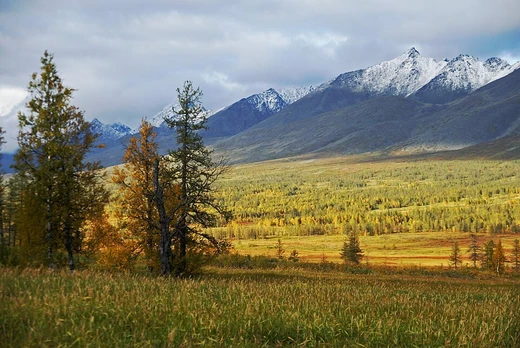
Pleshcheyevo Ozero National Park
Lake Pleshcheyevo: tsarist resort, ecological haven, home to endemic whitefish.
Nestled in the Yaroslavl Oblast, Pleshcheyevo Ozero National Park centers on Lake Pleshcheyevo, a former tsarist retreat and a vital ecological haven. The historic town of Pereslavl-Zalessky, a Golden Ring gem, sits on its southeastern shore.
Quick Facts
- Location
- Yaroslavl Oblast
- Nearest city
- Pereslavl-Zalessky
- Area
- 23,790 ha / 91.9 sq mi
- Established
- 16 October 1997
- Governing body
- FGBU "Pleshcheyovo Ozero"
Facts from the source article.
Did You Know?
- The park has recorded 790 species of vascular plants in 93 families.
- Scots Pine along the shore was artificially introduced 130–150 years ago.
- The ancient city of Pereslavl draws hundreds of thousands of visitors annually to its historic buildings and sites.
Ecoregion and climate
The park lies within the Sarmatic mixed forests ecoregion, a strip of low forests, lakes, and wetlands extending from the Baltic Sea to the Urals. Forest cover is mixed conifer and deciduous, with large unbroken tracts under pressure from agriculture. For aquatic habitats, the park belongs to the Volga-Ural freshwater ecoregion, which has many fish species but few endemics; 19 of the region's 65 fish species occur in Lake Pleshcheyevo. Dams and reservoirs along the Volga have disrupted spawning sites and favored species adapted to slower waters. The climate is humid continental with warm summers (Köppen Dfb), featuring large temperature swings. Average temperatures range from 10 °F in January to 64 °F in July, with annual precipitation of 23 inches. Snow cover lasts 13–140 cm, typical depth 30–40 cm, and soil freezes to 1 meter in mid-winter.
Animals
The park hosts 300 vertebrate species, including 60 mammals, 210 birds, 10 reptiles and amphibians, 109 insects, and 19 fish. A large-sized vendace (Ryapushka), a freshwater whitefish of the Salmonidae, is endemic to Lake Pleshcheyevo; some authors consider it a subspecies, Coregonus albus Pereslavicus. Though endemic, it is not threatened and is served smoked as a local delicacy. Its health has historically been a measure of the lake's condition, with catch records kept for the royal court since 1645 and large-scale commercial capture limited in the early 1960s. A ban on catching small whitefish in 1668 was one of Russia's first public conservation acts.
More in National Parks of Russia
Spotted an error? Know more?
Reader corrections go straight into our review queue. Suggest an edit · How this site is sourced