Economy of Nigeria
Nigeria is Africa's second-largest economy by purchasing power parity.

Nigeria’s economy is classified as lower-middle-income, mixed, and emerging. It features growing activity in manufacturing, finance, services, communications, technology, and entertainment. Globally, it ranks 52nd by nominal GDP, second in Africa by purchasing power parity (PPP), and 19th worldwide by PPP. In 2013, its rebounding manufacturing sector became the largest on the continent, supplying many goods and services to West Africa. The IMF reported a debt-to-GDP ratio of 36.63% in 2021.
Oil revenues account for two-thirds of state income but only about 9% of GDP. Nigeria produces roughly 2.7% of the world’s oil. The agricultural sector, largely subsistence-based, has not kept pace with rapid population growth. Once a major net food exporter, the country now imports some food. Mechanization has spurred a manufacturing revival and food exports, moving the country toward greater food self-sufficiency.
In 2006, Nigeria reached an agreement with the Paris Club to buy back most of its debt for about US$12 billion in cash. A 2011 Citigroup report projected Nigeria would have the highest average GDP growth in the world between 2010 and 2050. It is one of two African countries among the 11 Global Growth Generators.
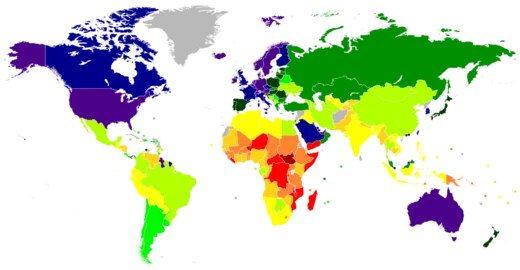
In 2014, Nigeria rebased its GDP to account for fast-growing industries like telecommunications, banking, and film. Human capital remains underdeveloped—Nigeria ranked 161 out of 189 in the 2019 UN Development Index—and non-energy infrastructure is inadequate. The country has advanced efforts toward universal primary education and environmental protection.
Government corruption has hampered economic development, though progress is visible in international corruption surveys. Nigeria’s ranking has mostly improved since 2001; in Transparency International’s 2021 Corruption Perceptions Index, it ranked 154 out of 180. The power sector faces an ongoing supply crisis. Despite rapid economic growth, large oil, coal, and gas deposits, and being Africa’s largest oil producer, residents frequently experience power shortages.
Two-thirds of Nigerians expect living conditions to improve in coming decades. According to the National Bureau of Statistics, GDP grew by 3.19% in Q2 2024. The non-oil sector drove this growth, expanding 4.13%, while the oil sector contracted by 3.83%.
Before 1800, the 14 Hausa states in northern Nigeria were civilizational leaders, with a body of Hausa literature including historical works like the Kano Chronicle and anthropological studies on the Yoruba. The Yoruba, through the Oyo Empire, formed a second power center, combining economic strength with military dominance. Slavery had long existed in parts of Nigeria but intensified from 1700 onward due to European demand for plantation labor in the Americas.
European trading posts existed only where the West African savannah reached the coast—tiny settlements that changed hands frequently due to illness among light-skinned inhabitants (Africa was considered the “white man’s grave”). Along longer stretches of mosquito-infested lagoons, European ships anchored offshore while local traders approached in small boats to sell goods including ivory, gold, and slaves. These coastal regions were named the Ivory Coast, Gold Coast (Ghana), and Slave Coast (Nigeria). According to historian Toyin Falola, European demand after 1700 transformed southern Nigeria’s mixed economy into a slave economy. Other buyers included Fulani rulers in northern Nigeria, who by 1805 had subjugated the 14 Hausa states and established an Islamic theocracy, leading to civilizational, technological, and economic decline in the north.
Due to Napoleon’s Continental Blockade, the transatlantic slave trade shifted to Portuguese, Cuban, and Brazilian ships. By 1800, England, Denmark, and Scotland had abolished slavery; in 1807, Great Britain passed the Slave Trade Act and began hunting slave ships, allocating a large portion of the Royal Navy’s budget to this effort. Freed slaves were disembarked, and crews tried in Freetown, Sierra Leone. The Royal Navy pressured local rulers to stop the trade but met resistance, as many kings (such as those of Benin or King Pebble of Bonny; in Lagos, the king’s sister Efunroye Tinubu controlled the trade) financed themselves by selling subjects into slavery. Local nobility had little interest in Britain’s sudden shift from slave traders to opponents. Meanwhile, British and German missionaries established outposts in Badagry, Abeokuta, and Calabar, building churches, hospitals, and mission schools, as well as trading houses to finance them (the firm that later became Nigeria’s largest cocoa trader was named accordingly).
- Economy type
- Lower-middle-income, mixed, emerging market
- Global GDP rank (nominal)
- 52nd
- Global GDP rank (PPP)
- 19th
- Debt-to-GDP ratio (2021)
- 36.63%
- Oil share of state revenues
- 2/3
- Oil share of GDP
- ~9%
- World oil supply share
- ~2.7%
Lore & Background
Nigeria possesses a lower-middle-income, mixed economy and is considered an emerging market, with notable expansion in manufacturing, finance, services, communications, technology, and entertainment. It ranks as the world’s 52nd-largest economy by nominal GDP, the second-largest in Africa by purchasing power parity, and 19th globally in that measure. By 2013, its re-emergent manufacturing sector had become the largest on the African continent, producing a substantial share of goods and services for West Africa. Oil revenues supply two-thirds of state revenues, yet oil contributes only about nine percent to the overall GDP; Nigeria produces roughly 2.7 percent of the world’s oil. The largely subsistence agricultural sector has struggled to keep pace with rapid population growth, and while the country was once a major net food exporter, it now imports some food products. Mechanization has spurred a manufacturing resurgence and food exports, moving the nation toward greater food sufficiency. In 2006, Nigeria reached an agreement with the Paris Club to repurchase the bulk of its debts for a cash payment of about US$12 billion. A 2011 Citigroup report projected Nigeria would have the highest average GDP growth in the world between 2010 and 2050, and it is one of only two African countries among the 11 Global Growth Generators. In 2014, Nigeria rebased its GDP to account for fast-growing industries like telecommunications, banking, and film. Human capital remains underdeveloped—the country ranked 161 out of 189 on the United Nations Development Index in 2019—and non-energy infrastructure is inadequate. Government corruption has hampered economic development, though Nigeria’s ranking in Transparency International’s Corruption Perceptions Index has mostly improved since 2001, standing at 154 out of 180 in 2021. The economy also suffers from an ongoing power supply crisis, despite large deposits of oil, coal, and gas. Two-thirds of Nigerians expect living conditions to improve in the coming decades. The National Bureau of Statistics reported GDP growth of 3.19 percent in the second quarter of 2024, driven by the non-oil sector, which expanded by 4.13 percent, while the oil sector contracted by 3.83 percent.
Reader's Guide
Nigeria’s lower-middle-income, mixed economy and emerging market is the second largest in Africa by purchasing power parity and the 52nd largest globally by nominal GDP. Its manufacturing sector, which became the continent’s largest in 2013, produces a wide range of goods and services for West Africa. While oil revenues supply two-thirds of state income, oil itself contributes only about 9% of GDP, and Nigeria produces roughly 2.7% of the world’s oil. The agricultural sector, largely subsistence-based, has failed to keep pace with rapid population growth; once a major food exporter, the country now imports some food products. Mechanization has spurred a manufacturing revival and progress toward food sufficiency. In 2006, Nigeria reached an agreement with the Paris Club to repurchase most of its debt for approximately US$12 billion. A 2011 Citigroup report projected Nigeria would have the world’s highest average GDP growth from 2010 to 2050, and it is one of two African nations among the 11 Global Growth Generators. In 2014, the country revised its GDP baseline to include fast-growing sectors like telecommunications, banking, and film. Human capital remains underdeveloped—Nigeria ranked 161st on the 2019 UN Development Index—and non-energy infrastructure is inadequate. Government corruption has hampered development, though Transparency International’s 2021 Corruption Perceptions Index ranked Nigeria 154th out of 180, a gradual improvement since 2001. The power sector suffers an ongoing supply crisis despite the country’s vast oil, coal, and gas deposits. Two-thirds of Nigerians expect living conditions to improve; GDP grew by 3.19% in Q2 2024, driven by a 4.13% expansion in the non-oil sector, while the oil sector contracted by 3.83%.
Did You Know?
- In 2006, Nigeria agreed with the Paris Club to buy back the bulk of its debts for roughly US$12 billion.
- Two-thirds of Nigerians expect living conditions to improve in the coming decades.
Frequently Asked Questions
Who is Economy of Nigeria?
Economy of Nigeria is a lower-middle-income, mixed emerging-market economy with a broad base spanning manufacturing, finance, services, communications, technology, and entertainment. It currently holds the 52nd-largest nominal GDP worldwide and the 19th-largest when adjusted for purchasing power parity.
What is Economy of Nigeria's global rank?
By nominal GDP, Economy of Nigeria sits at 52nd in the world. When measured by purchasing power parity, it climbs to 19th globally and stands as Africa's second-largest economy.
What sectors define Economy of Nigeria?
Its profile is built on expanding manufacturing, financial services, communications, technology, and entertainment industries within a mixed-market structure. This diversification distinguishes it from purely resource-dependent neighbors on the continent.
How dependent is Economy of Nigeria on oil?
Roughly two-thirds of state revenues still flow from oil, even though the commodity contributes only about 9% of total GDP. This heavy fiscal reliance on a single export remains a key vulnerability in its otherwise broad economic base.
Why is Economy of Nigeria important?
As Africa's second-largest economy by PPP and a 19th-ranked global player, it serves as a continental anchor for trade, investment, and regional growth. Its expanding service and technology sectors also position it as a rising hub for innovation across the continent.
More in National Economies 1-24
Spotted an error? Know more?
This is a living reference — every entry is fact-audited, and reader corrections feed straight into our audit queue. Suggest an edit · See this site's audit record