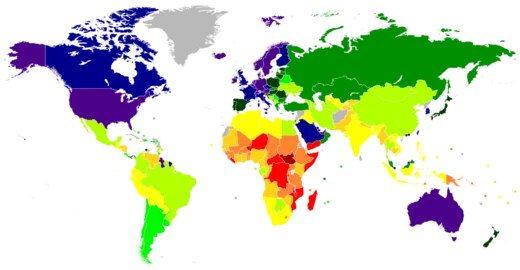
Economy of Canada
Advanced mixed economy with abundant resources and strong trade networks.

Canada’s economy is an advanced, diversified mixed system that ranks as the eleventh-largest in the world by nominal GDP as of 2026. Its GDP per capita in purchasing power parity terms places it third among G7 countries. The nation’s social security system is highly efficient and strong, with social expenditure accounting for roughly 23.1% of GDP, and average household disposable income per capita sits well above the OECD average. Economic policy is formulated by the Government of Canada, while the Bank of Canada serves as the central bank, implementing monetary policy. The economy ranks low in corruption and income disparity, and high in economic freedom and stability, though it ranks among the lowest of the most developed countries for housing affordability. The banking sector is highly developed, with the Toronto Stock Exchange being the tenth-largest stock exchange globally by market capitalization, and the cooperative banking sector has the world’s highest per-capita membership in credit unions. Among G20 members, Canada has the second-largest foreign direct investment to GDP ratio and the lowest net debt-to-GDP ratio in the G7.
Since the early 20th century, growth in manufacturing, mining, and services has shifted Canada from a largely rural economy to an urbanized, industrial one. The service industry now employs about three-quarters of the workforce. Unlike many developed nations, Canada retains an unusually important primary sector, notably forestry and petroleum. Many northern towns, where agriculture is difficult, rely on nearby mines or timber sources. The country spends around 1.70% of GDP on advanced research and development. Economic integration with the United States deepened after World War II, beginning with the 1965 Automotive Products Trade Agreement. In the 1970s, the National Energy Program and Foreign Investment Review Agency were enacted to address energy self-sufficiency and foreign ownership, but these were later dismantled or rebranded to encourage investment. The 1988 Canada–United States Free Trade Agreement eliminated tariffs, expanded by NAFTA in 1994 to include Mexico, and later replaced by the Canada–United States–Mexico Agreement. By 2023, Canada had 15 free trade agreements with 51 countries.
Canada is one of the few developed net energy exporters. Atlantic Canada has vast offshore natural gas deposits, and Alberta holds
- GDP_per_capita_PPP_rank
- 3rd among G7 countries
- social_expenditure_percent_GDP
- 23.1%
- central_bank
- Bank of Canada
- stock_exchange_rank
- 10th largest by market capitalization (Toronto Stock Exchange)
- foreign_direct_investment_ratio
- 2nd largest among G20 members
- net_debt_to_GDP_ratio
- Lowest in the G7
Lore & Background
Since the early 20th century, the growth of Canada's manufacturing, mining, and service sectors has shifted the nation from a largely rural economy to an urbanized, industrial one. The service industry now dominates, employing roughly three-quarters of the workforce. Unlike many developed countries, Canada retains an unusually significant primary sector, most notably its forestry and petroleum industries. Many northern communities, where agriculture is difficult, rely on nearby mines or timber sources for their economic survival. The country spends about 1.70% of its GDP on advanced research and development across various economic sectors.
Economic integration with the United States deepened considerably after World War II. A 1965 agreement opened borders for automobile manufacturing trade. In the 1970s, concerns over energy self-sufficiency and foreign ownership led to the creation of the National Energy Program and the Foreign Investment Review Agency, both of which were later dismantled or reformed to encourage foreign investment. A 1988 free trade deal eliminated tariffs with the United States, and the 1994 North American Free Trade Agreement expanded this zone to include Mexico, later replaced by the Canada–United States–Mexico Agreement. By 2023, Canada had signed 15 free trade agreements with 51 countries.
Canada is one of the few developed nations that are net energy exporters. Atlantic Canada has vast offshore natural gas deposits, while Alberta holds the world’s fourth-largest oil reserves. The Athabasca oil sands and other reserves give Canada about 13% of global oil reserves. The country is also a leading agricultural supplier, with the Prairies producing significant amounts of wheat, canola, and other grains. It is a top exporter of zinc, uranium, gold, nickel, aluminum, steel, iron ore, and other metals. A sizeable heavy manufacturing sector, centered in southern Ontario and Quebec, includes important automobile and aeronautics industries. Fishing and tourism are also key economic contributors.
Reader's Guide
Canada’s economic significance is rooted in its status as one of the few advanced economies that is a net exporter of energy. The country holds the fourth-largest oil reserves globally, concentrated in the Athabasca oil sands and other deposits, which together account for 13% of the world’s oil reserves. Beyond energy, Canada is a major global supplier of agricultural goods, with the Canadian Prairies ranking among the top producers of wheat, canola, and other grains. The nation also leads in exports of a wide array of minerals, including zinc, uranium, gold, nickel, platinoids, aluminum, steel, iron ore, coking coal, lead, copper, molybdenum, cobalt, and cadmium. Its heavy manufacturing sector, centered in southern Ontario and Quebec, is substantial, with automobiles and aeronautics as key industries. The fishing and tourism sectors also contribute notably to the economy. Canada’s economic integration with the United States deepened after World War II, marked by the 1965 Automotive Products Trade Agreement, and later by the 1988 Canada–United States Free Trade Agreement and the 1994 North American Free Trade Agreement (now the Canada–United States–Mexico Agreement). As of 2023, Canada is party to 15 free trade agreements covering 51 countries. The economy is highly diversified, with the service industry employing about three-quarters of the workforce, while the primary sector—particularly forestry and petroleum—remains unusually important for a developed nation. Many northern communities depend on nearby mines or timber sources. Canada spends roughly 1.70% of GDP on advanced research and development. The economy ranks low in corruption and income disparity, high in economic freedom and stability, and has a highly developed banking sector, including the world’s tenth-largest stock exchange by market capitalization and the highest per-capita credit union membership globally. Among G20 members, it has the second-largest foreign direct investment relative to GDP and the lowest net debt-to-GDP ratio in the G7. However, it ranks among the lowest of developed countries for housing affordability.
Did You Know?
- Canada has the world's highest per-capita membership in credit unions.
- Canada's defence sector exports close to $8 billion annually.
- Canada ranks among the lowest of the most developed countries for housing affordability.
Frequently Asked Questions
Who is Economy of Canada?
Canada's economy is an advanced, diversified mixed system anchored by plentiful natural resources and deep international trade networks. It currently ranks third in per-capita GDP (PPP) among G7 nations.
What are Economy of Canada's core powers and role?
The service sector absorbs roughly three-quarters of the workforce, while the primary sector keeps an unusually large footprint through forestry and petroleum. The Bank of Canada governs monetary policy, and the Toronto Stock Exchange operates as the 10th-largest exchange by market capitalization worldwide.
How does Economy of Canada's story end?
Because it is a living, ongoing system rather than a finished narrative, there is no canonical finale. Its most notable current trait is holding the lowest net debt-to-GDP ratio in the G7, pointing toward a relatively stable long-term arc.
Why is Economy of Canada important in the broader G7/G20 cast?
It sits second among G20 members in foreign direct investment ratio, making it a major draw for global capital. Its social expenditure of 23.1% of GDP also marks it as a significant reference point for balancing growth with public welfare.
What sets Economy of Canada apart from other G7 entries?
Where most peers lean almost entirely on services, Canada keeps a disproportionately large primary sector alongside its dominant service base, giving it a dual identity as both a resource powerhouse and a knowledge-driven economy. That blend, paired with its low debt profile, distinguishes it clearly in G7 comparisons.
More in National Economies 1-24
Spotted an error? Know more?
This is a living reference — every entry is fact-audited, and reader corrections feed straight into our audit queue. Suggest an edit · See this site's audit record