Aleatoric music
Music where chance determines some element of composition or performance.
Last updated

Knight Foundation · CC BY-SA 2.0
Aleatoric music, also called aleatory or chance music, takes its name from the Latin word alea, meaning "dice." In this type of music, either some part of the composition is left to chance, or a key element of how the piece is performed is left up to the performer—or both. Typically, the chance element involves a fairly small set of possibilities. The term became known to European composers through lectures by acoustician Werner Meyer-Eppler at the Darmstadt International Summer Courses for New Music in the beginning of the 1950s.
Meyer-Eppler defined an aleatoric process as one whose overall course is fixed, but whose details depend on chance. Through a confusion of Meyer-Eppler's German terms Aleatorik (noun) and aleatorisch (adjective), his translator created a new English word, "aleatoric" (rather than using the existing English adjective "aleatory"), which quickly became fashionable and has persisted. More recently, the variant "aleatoriality" has been introduced.
Quick Facts
- Field
- Music composition
- Key figure
- Werner Meyer-Eppler
- Related term
- Aleatory music, chance music
Facts from the source article.
Lore & Background
Aleatoric music, from the Latin alea meaning "dice," is defined by the deliberate introduction of chance into either the composition or its performance. This chance element typically involves a limited number of possibilities, as described by acoustician Werner Meyer-Eppler, who popularized the term in the 1950s at the Darmstadt Summer Courses. He characterized an aleatoric process as one whose general course is fixed but whose details are left to chance.
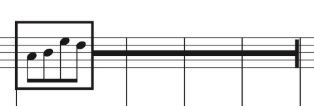
The English term "aleatoric" arose from a translation of his German terms. Early precedents include the late-15th-century catholicon genre, exemplified by Johannes Ockeghem's Missa cuiusvis toni, and the 18th- and 19th-century musical dice games attributed to composers like Carl Philipp Emanuel Bach and Mozart, where dice throws determined the sequence of pre-written measures. In the 20th century, Marcel Duchamp composed chance-based pieces between 1913 and 1915, such as Erratum Musical, performed at a Dada event in 1920. American composer John Cage’s Music of Changes (1951) was the first major work largely determined by random procedures, using the I Ching to select duration, tempo, and dynamics, though the resulting score was fixed.
Charles Ives made early use of aleatory features, and Henry Cowell allowed players to rearrange musical fragments in his Mosaic Quartet (1934). In Europe, Karlheinz Stockhausen’s Klavierstück XI (1956) presented 19 elements for the performer to sequence, while Witold Lutosławski, starting with Jeux Vénitiens (1960–61), specified pitches and rhythms but left their rhythmic coordination to chance. The terms aleatory, chance, and indeterminate music are often used interchangeably, encompassing fixed scores composed via random procedures, mobile forms, and indeterminate notation.
Etymology and the Birth of a Term
The word 'aleatoric' traces its roots to the Latin 'alea,' meaning dice, capturing the essential idea that some element of a musical work is surrendered to randomness. The term entered European compositional discourse through the acoustician Werner Meyer-Eppler, who delivered lectures at the Darmstadt International Summer Courses for New Music in the early 1950s. His definition held that a process is aleatoric when its general course is determined but its details depend on chance.
A curious linguistic accident then occurred: Meyer-Eppler's German noun 'Aleatorik' and adjective 'aleatorisch' were conflated by his translator, who coined the English word 'aleatoric' instead of reaching for the already-existing adjective 'aleatory.' This neologism quickly caught on among composers and critics, becoming the standard label for the practice. More recently, the variant 'aleatoriality' has appeared in scholarly writing, adding yet another layer to the terminology. The term is most commonly applied to procedures where the chance element involves a relatively limited set of possibilities, distinguishing it from fully open-ended indeterminacy.
Ancient Dice and Dadaist Chance
Long before the term existed, composers were already rolling dice. In the late fifteenth century, the genre known as the catholicon—exemplified by Johannes Ockeghem's Missa cuiusvis toni—allowed a mass to be set in any tonal mode, introducing an element of choice into the composition. Centuries later, the Musikalisches Würfelspiel, or musical dice game, became popular in the late eighteenth and early nineteenth centuries. Attributed to Carl Philipp Emanuel Bach, Joseph Haydn, and Wolfgang Amadeus Mozart, these games presented a sequence of measures, each with several possible versions, with dice throws determining which version appeared in the final arrangement.
The twentieth century brought a new wave: French artist Marcel Duchamp composed two chance-based pieces between 1913 and 1915, including Erratum Musical, written with his sisters Yvonne and Magdeleine for three voices. It was first performed at the Manifestation of Dada on 27 March 1920 and published in 1934. Contemporaries Francis Picabia and Georges Ribemont-Dessaignes also experimented with chance composition, presenting works at a Festival Dada at the Salle Gaveau concert hall in Paris on 26 May 1920.
Pioneers of the Modern Aleatory Sound
The mid-twentieth century saw a flowering of aleatory practice across the Atlantic. In America, Charles Ives's early twentieth-century works planted seeds that Henry Cowell cultivated in the 1930s; his Mosaic Quartet (String Quartet No. 3, 1934) let players rearrange musical fragments in multiple possible sequences, while his specially devised notations invited improvisation and ad libitum passages. Alan Hovhaness, beginning with Lousadzak in 1944, assigned short patterns to several parts with instructions to repeat them at individual speeds without coordination, producing a blurred ensemble texture. John Cage's Music of Changes (1951) is often cited as the first composition largely determined by random procedures, using the I Ching to select duration, tempo, and dynamics.
In Europe, Pierre Boulez largely popularized the term 'aleatory music' following Meyer-Eppler's introduction. Karlheinz Stockhausen's Klavierstück XI (1956) required a performer to sequence nineteen pre-composed elements in an order chosen each time. Witold Lutosławski, beginning with Jeux Vénitiens (1960–61), fully specified pitches and rhythms but left the rhythmic coordination among ensemble members to chance.
Sorting the Categories: Chance, Indeterminacy, and Notation
Scholars have long debated whether 'aleatory,' 'chance,' and 'indeterminate' music describe the same phenomenon or distinct practices. Some writers use the terms interchangeably, dividing indeterminate music into three broad categories. The first involves random procedures applied during composition to produce a fixed, determinate score—every parameter is locked before performance. Cage's Music of Changes exemplifies this: he used the I Ching to select all musical parameters, yet regarded the resulting work as entirely determinate.
Iannis Xenakis took a mathematical approach in Pithoprakta (1955–56), whose Greek title translates to 'actions by means of probability'; at the microscopic level, probability theory governed individual sound components, while the composer controlled the four sections' textural and timbral architecture at the macroscopic level. The second category, mobile form, leaves the arrangement of notated events to the performer. The third encompasses indeterminate notation, including graphic scores and textual instructions. Much confusion persists, as Cage's own HPSCHD—composed using chance procedures—incorporates music from Mozart's dice game alongside original material, blurring the boundaries between these categories.
Reader's Guide
The significance of aleatoric music lies in its challenge to traditional notions of composer control and fixed performance. By introducing chance into composition or performance, it opened new possibilities for musical form and expression. The term itself arose from a translation confusion of Meyer-Eppler's German terms, creating the new English word 'aleatoric' which quickly became fashionable.
There has been much confusion between aleatory and indeterminate/chance music. Some writers use the terms interchangeably, while others distinguish three types: random procedures to produce a fixed score, mobile form where arrangement is left to the performer, and indeterminate notation including graphic scores. The legacy of aleatoric music persists in contemporary composition, influencing approaches to performer choice and open form.
Did You Know?
- Mozart's Musikalisches Würfelspiel was one of many sources used in a computer-generated collage in Cage's piece HPSCHD, but it was not treated as a primary structural element.
Frequently Asked Questions
What is Aleatoric music and where does the name come from?
Aleatoric music (also called aleatory or chance music) is a compositional approach in which certain elements are deliberately handed over to chance or to the performer's discretion rather than being fully fixed by the score. The label traces back to the Latin word 'alea,' meaning 'dice,' and was formalized into a technical term by the German acoustician Werner Meyer-Eppler.
Who is the key figure behind the term Aleatoric music?
Werner Meyer-Eppler, a physicist and acoustician, coined the term and first presented it to a wider circle of composers through his lectures at the Darmstadt International Summer Courses for New Music. His framing gave post-war European composers a shared vocabulary for works that wove controlled randomness into their structure.
More in Music Theory And Composition
Sources
Compiled from Wikipedia and the sources listed below. Text from Wikipedia is available under CC BY-SA 4.0; this entry is adapted from it.
- Wikipedia: Aleatoric music (CC BY-SA 4.0).
Spotted an error? Know more?
Reader corrections go straight into our review queue. Suggest an edit · How this site is sourced