Blue Mountains (Pacific Northwest)
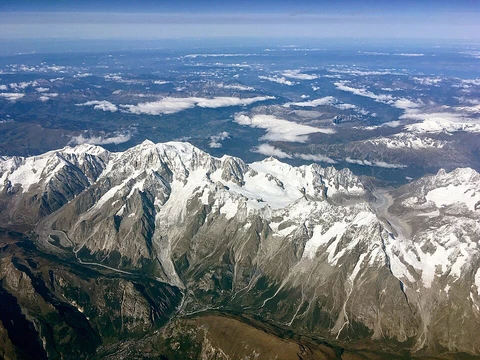
Mountain range in Oregon and Washington, home to largest fungus.
Last updated
Where it is
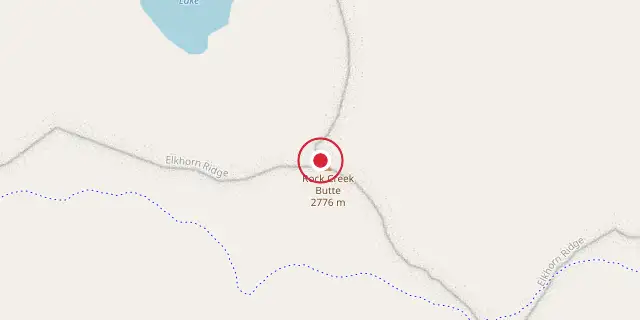
Coordinates: 44°49′01″N 118°06′14″W (44.8170, -118.1040) · Open in OpenStreetMap
Coordinates and connected clubs: the infobox of Wikipedia: Blue Mountains (Pacific Northwest) (CC BY-SA 4.0). Map: drawn by Codexery from OpenStreetMap tiles.
The range covers about 15,000 square miles and includes several sub-ranges such as the Ochoco, Aldrich, Strawberry, Greenhorn, and Elkhorn Mountains.[1][2] Rock Creek Butte, found in the Elkhorn Mountains, is the highest summit at 9,106 feet.[3]
Geography and history
Historic tribes included the Walla Walla, Cayuse, Umatilla, and Northern Paiute.[4] The Cayuse lived in the western and central Blue Mountains, while the Nez Perce had their homeland in northeastern Oregon, southeastern Washington, and western Idaho.[1] Beginning in the early eighteenth century, the Cayuse, Umatilla, and Nez Perce acquired horses and traveled beyond the mountains to hunt.[1] Thousands of emigrants traveled the Oregon Trail across the Blue Mountains in the mid-nineteenth century.[1]
Most cities and larger towns lie along this route, including Baker City and La Grande.[1] The Bald Mountain Batholith in the Elkhorn Mountains contains granitic rock as old as 155 million years.[1] The name "Blue Mountains" originates from the blue-tinted haze produced by smoke from intentional fires set by Indigenous peoples for land management.[5][1] For millennia, Indigenous groups inhabited the lower elevations and river valleys of the range.[4]
The Blue Mountains are a product of uplift and contain some of Oregon's most ancient rock formations.[6]
What the cited sources add
The Blue Mountains landscape resulted from erosion of bedrock uplifted during about the last 15 million years.[1] Glaciers scoured high elevation areas, leaving deposits of till in the Wallowa and Greenhorn Mountains.[1] Natural resources include gold, chromite, timber, and geothermal energy.[1] The most productive chromite mining occurred near Canyon City on the northwest side of the Strawberry Mountains.[1]
The Blue Mountains elk herd in Washington is one of ten identified herds, with a post-hunt population target of 5,500 elk.[7] Since 1989, the herd has been managed with a spike bull general season to improve bull-to-cow ratios.[7]
References
- Miller, "Blue Mountains", The Oregon Encyclopedia. facts only, no text reused. oregonencyclopedia.org
- "Blue Mountains (OR)", summitpost.org. facts only, no text reused. summitpost.org
- Wikipedia, "Blue Mountains (Pacific Northwest)" (CC BY-SA 4.0), which cites: Miller, "Blue Mountains", The Oregon Encyclopedia; Miller, M.B. "Roadside Geology of Oregon, Second Edition." Mountain Press Publishing Company, Missoula, MT, 2014.; "Blue Mountains (OR)", summitpost.org (we also read that source) en.wikipedia.org
- Wikipedia, "Blue Mountains (Pacific Northwest)" (CC BY-SA 4.0), which cites: Langston, "Forest Dreams, Forest Nightmares: The Paradox of Old Growth in the Inland West", University of Washington Press, 1996, p. 204; Shinn, "Historical perspectives on range burning in the inland Pacific Northwest", Journal of Range Management, 1980, p. 415–423 (we also read that source) en.wikipedia.org
- Wikipedia, "Blue Mountains (Pacific Northwest)" (CC BY-SA 4.0), which cites: ; Shinn, "Historical perspectives on range burning in the inland Pacific Northwest", Journal of Range Management, 1980, p. 415–423 (original not read by us) en.wikipedia.org
- Wikipedia, "Blue Mountains (Pacific Northwest)" (CC BY-SA 4.0), which cites: "Blue Mountains mountains, Oregon-Washington, United States Britannica", www.britannica.com; Engeman, "The Oregon Companion: An Historical Gazetteer of the Useful, the Curious, and the Arcane", Timber Press, 2009-09-01; cbgwma.org:The Columbia River Basalt Group | Continental flood basalt flows | cbgwma.org, accessdate: February 8, 2017 (we also read that source) en.wikipedia.org
- "Washington State Elk Herd Plan: Blue Mountains Elk Herd Washington Department of Fish & Wildlife", wdfw.wa.gov. facts only, no text reused. wdfw.wa.gov
Each numbered sentence above was checked against the source it cites before publication. Sentences citing Wikipedia adapt text from the English Wikipedia article Blue Mountains (Pacific Northwest) (contributors), used under CC BY-SA 4.0; this entry is available under the same licence. Other sources were used for facts only; no text or images are copied from them.
More in Mountain Ranges And Massifs
Sources
Compiled from Wikipedia and the sources listed below. Text from Wikipedia is available under CC BY-SA 4.0; this entry is adapted from it.
- Wikipedia: Blue Mountains (Pacific Northwest) (CC BY-SA 4.0).
Spotted an error? Know more?
Reader corrections go straight into our review queue. Suggest an edit · How this site is sourced