Adranon
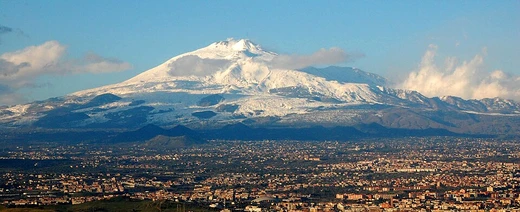
Ancient Greek polis on Etna's slopes, known for amber and volcano god.
Last updated
Where it is
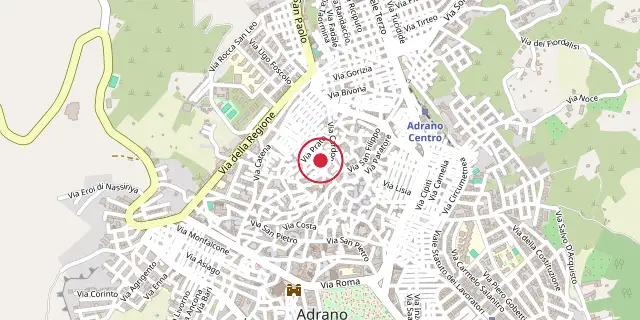
Coordinates: 37°40′01″N 14°49′59″E (37.6670, 14.8330) · Open in OpenStreetMap
Coordinates and connected clubs: the infobox of Wikipedia: Adranon (CC BY-SA 4.0). Map: drawn by Codexery from OpenStreetMap tiles.
The ancient Greek city of Adranon, today called Adrano, sat on Etna’s southwestern slopes by the Simeto River. It was famous for a type of amber called simetite and a temple to the volcano god Adranus, later identified with Hephaestus.
The archaeological site
The archaeological site was explored at the beginning of this century, with the first excavations in 1959. The north side lies under modern buildings.
Perimeter walls delimit the city on the east and west; a steep ravine along the river provided defense on the south. The walls, built of basalt ashlar, are well preserved on the east side. A rectangular tower on the northeastern edge is incorporated into St. Francis Church.
From prehistory to the Classical Era
The Adranon region shows evidence of Neolithic habitation, with recent findings in districts of the modern city. Traces of indigenous peoples from the historic era have also been found. A native settlement in the Mendolito region, connected to Adranon's topography, remains largely unexcavated and its name unknown; A. Franco identified it as Piakos (Πίακος).
G. K. Jenkins published a coin with the obverse legend ΠΙΑΚΙΝΟΣ and ΑΔΡΑΝ on the reverse, recognizing ΑΔΡΑΝ as ΑΔΡΑΝΟΝ, a numismatic link between Piakos and Adranon; other researchers read ΑΔΡΑΝ[...] as ΑΔΡΑΝΙΤΩΝ, the ethnic in the genitive case. Important finds from the eighth or seventh century BC include a treasure-trove of bronze artefacts and a city gate from the 6th century BC bearing an undeciphered Sicel inscription. Many finds are now in the Archaeological Museum of Ardano. The exact location of the Temple of Adranus, whose cult was probably linked to Etna's activity, remains unknown; sixteen basaltic pillars inside the Chiesa Madre near the Norman castle in Umberto I Square suggest the temple stood in that area.
Excavations of classical strata have revealed fourth-century BC residences with Italiote red-figure pottery and a treasure of modern currencies. The polis minted coins under Timoleon featuring Adranus as a river deity. Two excavations investigated the walls and part of the ancient cemetery southeast of the city at Sciare Manganelli, where graves consist of small circular lava-stone structures reminiscent of Mycenaean tholoi, a type uncommon in Sicily.
More in Mount Etna
Sources
Compiled from Wikipedia and the sources listed below. Text from Wikipedia is available under CC BY-SA 4.0; this entry is adapted from it.
- Wikipedia: Adranon (CC BY-SA 4.0).
Spotted an error? Know more?
Reader corrections go straight into our review queue. Suggest an edit · How this site is sourced