Benign cephalic histiocytosis
A self-limiting non-Langerhan's histiocytosis of early childhood.
Last updated
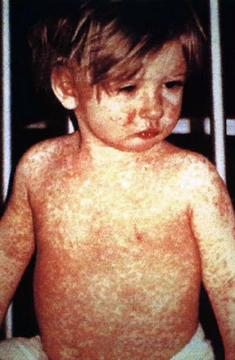
Benign cephalic histiocytosis is a non-Langerhan's histiocytosis that is uncommon and self-limiting. It typically begins towards the end of the first year of life, presenting with asymptomatic yellow to red-brown papules on the head and neck that heal spontaneously. Histology shows dermal proliferation of histiocytes with intracytoplasmic comma-shaped bodies.
Quick Facts
- Age of onset
- 2 to 34 months, less frequently up to 5 years
- Number of reported cases
- About 70 as of 2022
- Original description
- Gianotti et al., 1971
- Typical lesion size
- Approximately 8 mm / 0.315 in
- Primary affected sites
- Face and neck, may spread to buttocks and extremities
Facts from the source article.
More in Monocyte- and Macrophage-related Cutaneous Conditions
Birbeck granulesDarier–Roussy diseaseDarier–Roussy sarcoidGiant cell elastophagocytosisGranuloma annulareGranuloma multiformeChronic multifocal Langerhans cell histiocytosisHeerfordt syndromeHistiocytosisHistiocytosis with intracytoplasmic worm-like bodiesHistiocytosis XLangerhans cell histiocytosis
Sources
Compiled from Wikipedia and the sources listed below. Text from Wikipedia is available under CC BY-SA 4.0; this entry is adapted from it.
- Wikipedia: Benign cephalic histiocytosis (CC BY-SA 4.0).
- Word definitions: the Codexery glossary, each quoted from its Wikipedia article.
Spotted an error? Know more?
Reader corrections go straight into our review queue. Suggest an edit · How this site is sourced
Comments
Loading…