Mongol heartland
The historic core region of the Mongol people and empire.
Last updated
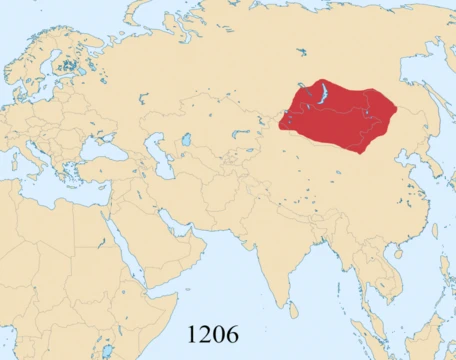
The Mongol heartland is the contiguous geographical area where the Mongol people have primarily lived, particularly as a historiographic term. It is generally considered to comprise the Mongolian Plateau and some adjacent territories, though its exact extent has changed over history. The area is also described as the heartland of the Mongol Empire during its greatest extent, when it became the largest contiguous land empire in human history.
Quick Facts
- Predecessor state
- Khamag Mongol
- Founder of khamag mongol
- Khabul Khan
- Founder of yuan dynasty
- Kublai Khan
Facts from the source article.
History
The Mongol Empire of the 13th and 14th centuries originated from the Mongol heartland in the East Asian Steppe after Genghis Khan united the nomadic tribes and became the first Khagan in 1206. The Khamag Mongol, a loose Mongolic tribal confederation on the Mongolian Plateau in the 12th century founded by Genghis Khan's great-grandfather Khabul Khan, is sometimes considered a predecessor state. By the late 13th century the empire stretched from the Pacific Ocean to the Danube River and the Persian Gulf, but the region around the Mongolian Plateau is regarded as its heartland.
Kublai Khan later moved the political center from Karakorum to Khanbaliq, yet the Mongolian Steppe remained significant for Mongol rulers. After the empire fell in 1368, the Mongols retreated to the heartland and held much of it as the Northern Yuan, while the Ming dynasty controlled parts of Inner Mongolia and built a new Great Wall.
More in Mongol Empire
Sources
Compiled from Wikipedia and the sources listed below. Text from Wikipedia is available under CC BY-SA 4.0; this entry is adapted from it.
- Wikipedia: Mongol heartland (CC BY-SA 4.0).
Spotted an error? Know more?
Reader corrections go straight into our review queue. Suggest an edit · How this site is sourced