Borjigin
Mongol clan founded c. 900 AD, ancestral to Genghis Khan.
Last updated
The Borjigin clan, founded by Bodonchar Munkhag around 900 AD, produced the ruling princes of Mongolia and Inner Mongolia until the 1900s. As the dominant class among Mongols and peoples across Central Asia and Eastern Europe, their lineage remains widespread today.
Quick Facts
- Founded
- early 10th century (c. 900 AD)
- Founder
- Bodonchar Munkhag
- Notable descendant
- Genghis Khan
- Regions today
- Mongolia, Inner Mongolia, Buryatia, Kalmykia, Xinjiang
- Ruling role
- Provided ruling princes for Mongolia and Inner Mongolia until 20th century
Facts from the source article.
History
The Borjigin clan ruled the Mongol Empire, controlling territory from Java to Iran and from Southeast Asia to Veliky Novgorod. After the empire split apart, several ruling dynasties with Chinggisid ancestry emerged, such as the Chobanids, Jalayirid Sultanate, Barlas, Manghud, Khongirad, and Oirats. In 1368, the Borjigin-led Yuan dynasty was driven out of China by rebels who established the Ming dynasty. The last Yuan emperor, Toghon Temür, moved north of the Great Wall, where the court continued on the Mongolian Plateau as the Northern Yuan.
This was a strategic shift, not a collapse; Borjigin rulers kept political control over Mongolia and later tried to regain influence in China. Following the Golden Horde’s dissolution, the Khiyad Borjigids governed Crimea and Kazan until Russia annexed them in the late 1700s. In Mongolia, the Kublaids served as khagans, with occasional interruptions from Ögedei’s and Ariq Böke’s descendants. Under Dayan Khan (1480–1517), a Borjigid revival restored their supremacy among Mongols in Mongolia proper.
The Borjigin lineage remained the ruling house, with authority spread across imperial family branches in a decentralized, semi-autonomous system.
Origin and name
The origin of the first Mongol, according to the Secret History of the Mongols, comes from a blue-grey wolf and a fallow doe. Their descendant Alan Gua, eleven generations later, conceived five sons after being touched by a ray of light. The youngest, Bodonchar Munkhag, is the ancestor of the Borjigids. Rashid al-Din Hamadani noted that many older Mongol tribes, like the Barlas, Urud, Manghud, Taichiud, Chonos, and Kiyat, were started by Borjigin members.
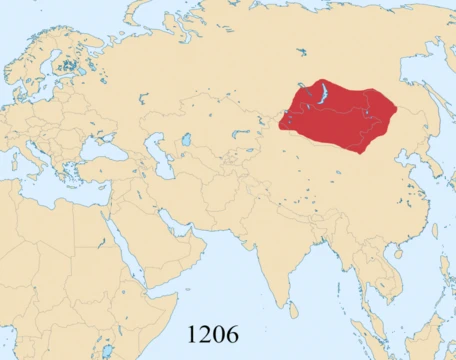
Around 1131, Khabul Khan, a descendant of Bodonchar, created the Khamag Mongol confederation. His great-grandson Temüjin became Genghis Khan in 1206, founding the Mongol Empire, and his line is known as the Chinggisids. The meaning of Borjigin is not known.
Yuan dynasty family tree
Genghis Khan founded the Mongol Empire in 1206. His grandson Kublai Khan, after defeating his rival Ariq Böke, founded the Yuan dynasty in 1271. The dynasty was overthrown by the Ming in 1368 under Toghon Temür but survived on the Mongolian Plateau as the Northern Yuan. Esen Taishi of the Oirat Mongols usurped the throne in 1453, declaring himself khan, but was overthrown the next year.
Dayan Khan recovered the khaganate, though his descendants segmented the territory. Four Genghisid Khalkha khanates—Tusheet, Setsen, Zasagt, and Altan—remained independent until Qing annexation in 1691. Borjigin nobles continued ruling under the Khalkha Khans during the Qing, Bogd Khanate, and Mongolian People's Republic into the 20th century.
More in Mongol Empire
Sources
Compiled from Wikipedia and the sources listed below. Text from Wikipedia is available under CC BY-SA 4.0; this entry is adapted from it.
- Wikipedia: Borjigin (CC BY-SA 4.0).
Spotted an error? Know more?
Reader corrections go straight into our review queue. Suggest an edit · How this site is sourced