Vicente Aleixandre
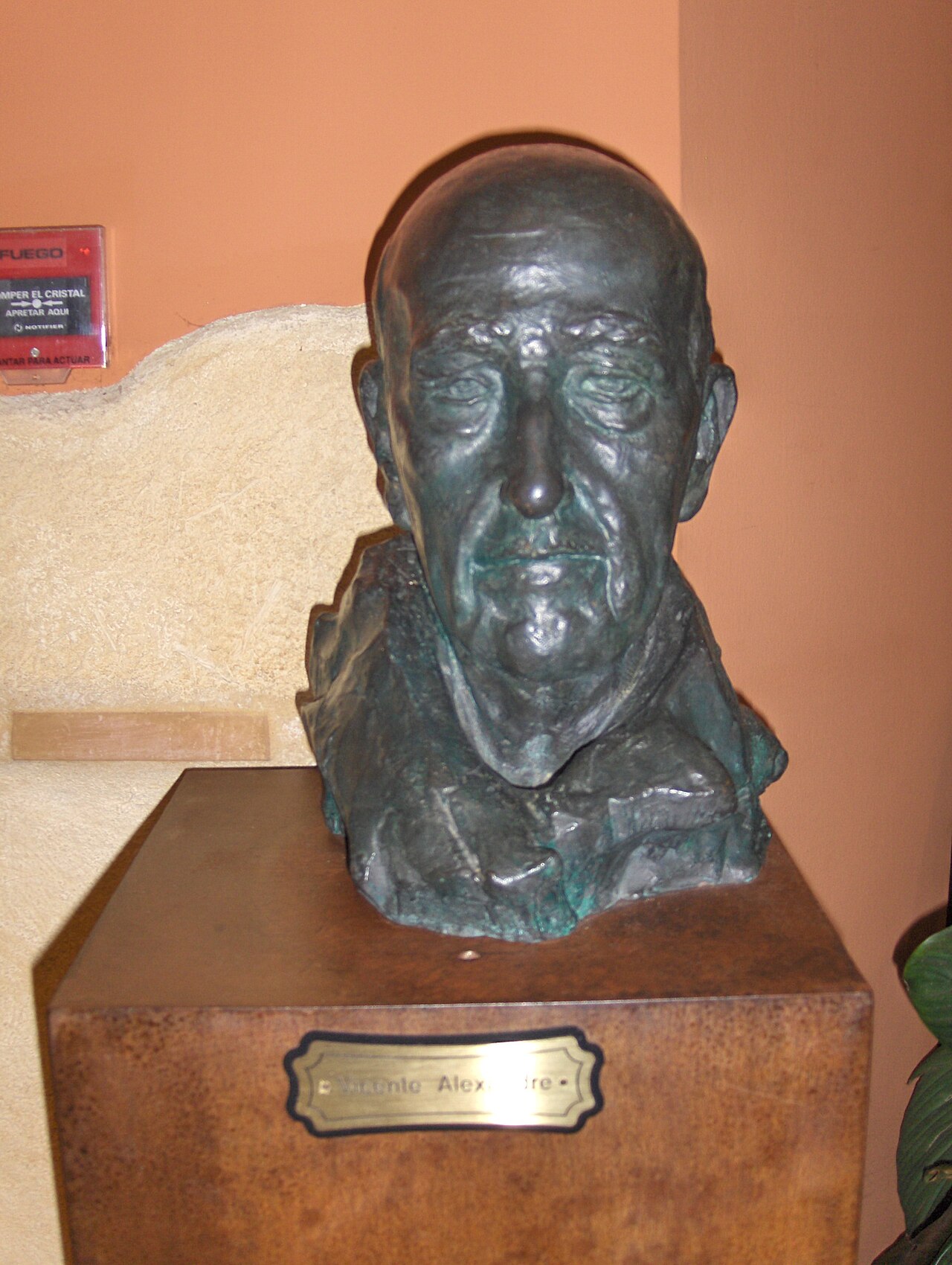
Spanish poet of the Generation of '27, Nobel laureate in 1977, known for surrealistic and nature-infused verse.
Last updated

via Wikipedia: Vicente Huidobro · see source
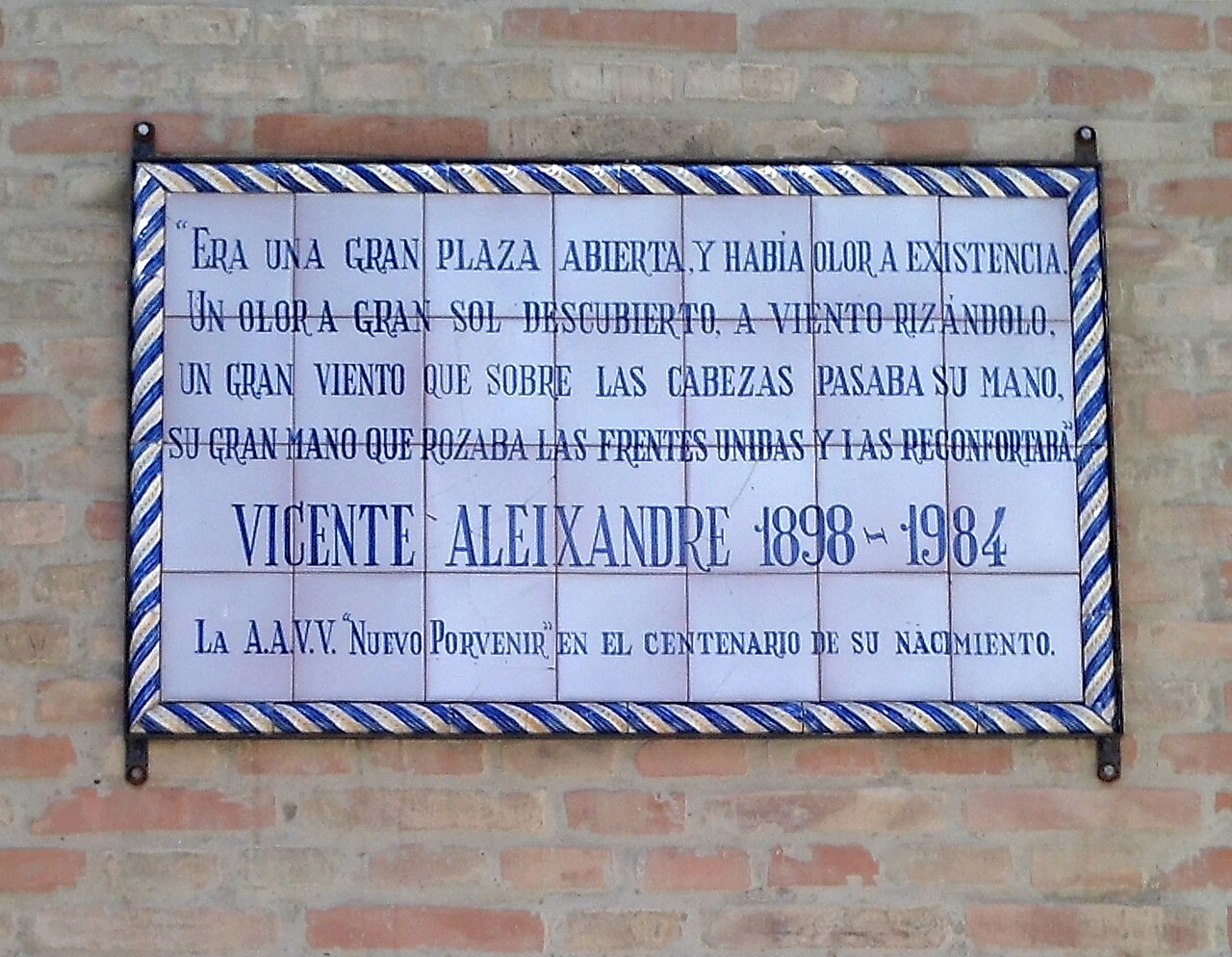
Vicente Aleixandre was a Spanish poet born in Seville on 26 April 1898 and died in Madrid on 14 December 1984.[1][2] He received the 1977 Nobel Prize in Literature for poetic writing that illuminates humanity's condition in the cosmos and society.[3] Along with Cernuda and Lorca, Aleixandre is counted among the finest poets in Spanish literature, and he belonged to the Generation of '27.[1][4]
Last updated 2026-09-28 from the source article.
Life and work
A biography by Emilio Calderón reconstructed this relationship using previously unpublished correspondence between Aleixandre and Bousoño.[5] The relationship likely began around early 1948, though the two had known each other for years.[5] Bousoño was not only a lover but also the recipient of Aleixandre's confidences.[5] In his early period, Aleixandre composed largely in free verse, employing surrealist techniques and using symbols of earth and sea to celebrate nature.[4]
A sense of sadness pervades many of his early poems, which convey his belief that humanity had forfeited the passion and free spirit he observed in the natural world.[4] The melancholy present in his verse also mirrored the sorrow from romantic involvements that were brief or unsuccessful.[4] Although his bisexuality was an open secret among his acquaintances, Aleixandre never made a public acknowledgment of it.[6] The poet Carlos Bousoño was Aleixandre's romantic partner over a long period.[6]
What the cited sources add
The biography by Emilio Calderón, which won the II Premio Stella Maris de Biografías y Memorias, reveals that Aleixandre needed to love and be loved.[5] The relationship between Aleixandre and Bousoño was always known to those in their intimate circle, such as Carmen Conde.[5] Conde's diaries contain reproaches toward Aleixandre and distrust toward Bousoño, whom she called "Carlitos"[5] The poet Jaime Gil de Biedma, a great literary admirer of Aleixandre, once arrived early for a visit to Aleixandre's home on Velintonia street.[5]
Aleixandre's niece and heir, Amaya Aleixandre, later claimed her uncle's legacy and took the Bousoño family to court.[5]
References
- Wikipedia, "Vicente Aleixandre" (CC BY-SA 4.0), which cites: Vicente Aleixandre Criticism. enotes.com; "Biografía español. Vicente Aleixandre, poeta español. Biblioteca español. Instituto Cervantes.", www.cervantes.es; The Nobel Prize in Literature 1977, Nobelprize.org (we also read that source) en.wikipedia.org
- Wikipedia, "Vicente Aleixandre" (CC BY-SA 4.0), which cites: Sorela, "Vicente Aleixandre será enterrado hoy en el cemneterio de la Almudena", El País, 1984-12-14 (original not read by us) en.wikipedia.org
- The Nobel Prize in Literature 1977, Nobelprize.org. facts only, no text reused. nobelprize.org
- Wikipedia, "Vicente Aleixandre" (CC BY-SA 4.0), which cites: Vilaseca, "Hindsight and the Real: Subjectivity in Gay Hispanic Autobiography", Peter Lang, 2003, p. 30; William Foster, "Spanish Writers on Gay and Lesbian Themes: A Bio-critical Sourcebook", Greenwood Press, 1999, p. 26–7 (we also read that source) en.wikipedia.org
- Fernández, "Las cartas de amor de Vicente Aleixandre a Carlos Bousoño", La Razón, March 6, 2016. facts only, no text reused. larazon.es
- Wikipedia, "Vicente Aleixandre" (CC BY-SA 4.0), which cites: Fernández, "Las cartas de amor de Vicente Aleixandre a Carlos Bousoño", La Razón, March 6, 2016 (we also read that source) en.wikipedia.org
Each numbered sentence above was checked against the source it cites before publication. Sentences citing Wikipedia adapt text from the English Wikipedia article Vicente Aleixandre (contributors), used under CC BY-SA 4.0; this entry is available under the same licence. Other sources were used for facts only; no text or images are copied from them.
More in Modernist & 20Th Century Poets
Test yourself
Three questions drawn from this entry’s sources. Pick an answer to check it.
Answers checked against the source article
Sources
Compiled from Wikipedia and the sources listed below. Text from Wikipedia is available under CC BY-SA 4.0; this entry is adapted from it.
- Wikipedia: Vicente Aleixandre (CC BY-SA 4.0).
Spotted an error? Know more?
Reader corrections go straight into our review queue. Suggest an edit · How this site is sourced