Tafazzin
Mitochondrial protein essential for cardiolipin remodeling.
Tafazzin is a protein encoded by the TAFAZZIN gene, highly expressed in cardiac and skeletal muscle, where it functions as a phospholipid-lysophospholipid transacylase. It catalyzes the remodeling of immature cardiolipin to its mature form containing tetralinoleoyl moieties, a process critical for mitochondrial function. Mutations in the TAFAZZIN gene are associated with mitochondrial deficiency and several disorders, most notably Barth syndrome.
Quick Facts
- Gene location
- X chromosome, q arm, position 28
- Gene size
- 10,208 base pairs
- Protein molecular weight
- 21.3 kDa
- Protein length
- 184 amino acids
- Protein half-life
- 3–6 hours
- Number of isoforms
- At least four
- Barth syndrome incidence
- 1 in 300,000 to 400,000 live births
Facts from the source article.
Did You Know?
- Tafazzin was discovered in 1996 by Italian scientists Silvia Bione et al.
- The protein was named after Tafazzi, a comedic character who beats his groin with a plastic bottle.
- The TAFAZZIN gene was frequently confused with the Hippo pathway protein TAZ, which has the official gene symbol WWTR1.
Structure
The TAFAZZIN gene spans 10,208 base pairs on the q arm of chromosome X at position 28, producing a 21.3 kDa protein of 184 amino acids. Its structure varies at the N terminus and central region, two functionally notable areas. A 30-residue hydrophobic stretch at the N terminus may serve as a membrane anchor, absent in the shortest tafazzin forms. The central region contains a variable exposed loop between amino acids 124 and 195, a hydrophilic region that interacts with other proteins. Tafazzin has no known resemblance to other proteins, and its half-life of 3–6 hours is considerably shorter than most mitochondrial proteins. The putative phospholipid-binding active site is a 57-amino-acid cleft with two open ends and positively charged residues. Tafazzin localizes to membrane leaflets facing the intermembrane space, anchored by a hydrophobic sequence from residues 215–232. It contains a conserved histidine residue, His-77, as part of the HX4D motif seen in acyltransferases, facilitating an Asp-His dyad mechanism. The protein has at least four isoforms, with lengths from 129 to 292 amino acids, and a molecular weight around 35 kDa, though lower weights may appear due to species differences. Seven functional classes of TAFAZZIN mutations have been classified based on loss-of-function mechanisms. Two peptides independent of the active site, residues 84–95 in exon 3 and residues 185–200 in exon 7/8, direct the protein to mitochondria. The translocase of the outer membrane and translocase of the inner membrane mediate tafazzin's movement and insertion.
Function
Tafazzin is localized to mitochondria and its transacylase activity is responsible for cardiolipin remodeling, critical for maintaining mitochondrial inner membrane structure and function. It catalyzes acyl transfer between phospholipids and lysophospholipids in a CoA-independent manner, with unique acyl specificity and membrane curvature sensing capabilities. After synthesis, cardiolipin must be actively remodeled to reach a final acyl composition primarily of linoleoyl residues. Tafazzin adds linoleic acid to immature cardiolipin via transacylation or the deacylation-reacylation cycle. In the deacylation-reacylation cycle, phospholipase Cld1 forms monolysocardiolipin, which is reacylated by tafazzin in a single-step reaction transferring a linoleic acid group from phosphatidylcholine. Transacylation directly transfers a linoleic acid group from phosphatidylcholine to monolysocardiolipin, forming lyso-PC and cardiolipin. This process is specific for linoleoyl-containing phosphatidylcholine and converts cardiolipin into mature tetralinoleoyl moieties. Additional enzymes such as monolysocardiolipin acyltransferase, acyl-CoA:lysocardiolipin acyltransferase, and phospholipase are also required for cardiolipin remodeling in mammals.
Clinical significance
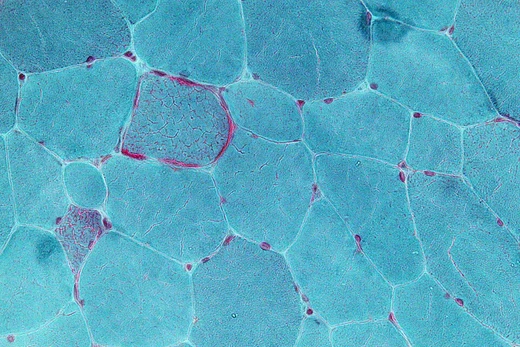
Mutations in the TAFAZZIN gene are associated with mitochondrial deficiencies and disorders including Barth syndrome, dilated cardiomyopathy, hypertrophic DCM, endocardial fibroelastosis, and left ventricular noncompaction. TAFAZZIN has also been linked to various cancers such as breast cancer, papillary thyroid carcinoma, non-small cell lung cancer, glioma, gastric cancer, thyroid neoplasms, and rectal cancer. Barth syndrome is an X-linked disease caused by more than 160 mutations in the TAFAZZIN gene, occurring in 1 out of every 300,000 to 400,000 live births, though it is underdiagnosed. It occurs almost exclusively in males, with one identified female case. Mutations result in tafazzin proteins with little or no function, disrupting cardiolipin remodeling and leading to aberrant cardiolipin fatty acyl composition, accumulation of monolysocardiolipin, and reduced total cardiolipin levels. This disrupts mitochondrial shape and function, potentially causing acute metabolic decompensation and sudden death. Tissues with high energy demands, such as heart and muscle, are most susceptible. Affected white blood cells have abnormally shaped mitochondria, impairing proliferation and maturation, leading to recurrent infections. Common clinical manifestations include dilated cardiomyopathy, muscle weakness, recurrent infections, short stature, endocardial fibroelastosis, growth retardation, neutropenia, and organic aciduria.
More in Mitochondrial Diseases
Spotted an error? Know more?
Reader corrections go straight into our review queue. Suggest an edit · How this site is sourced