Arsenopyrite
A hard, metallic ore of arsenic and gold indicator.
Last updated
Arsenopyrite (IMA symbol: Apy) is an iron arsenic sulfide mineral with the chemical formula FeAsS. It is a hard mineral, rating between 5.5 and 6 on the Mohs scale, and possesses a metallic, opaque luster with a color ranging from steel grey to silver white.
Its relative density is notably high at 6.1. When struck, the mineral emits a distinctive garlic odor, a key diagnostic feature along with its crystal habit, hardness, and density. In older literature, it may be referred to as mispickel, a term of German origin, or as mundic, a Cornish dialect word that can also denote a copper ore or a form of deterioration in concrete made with mine tailings.
Chemically, when arsenopyrite is dissolved in nitric acid, it releases elemental sulfur. Upon heating, it produces vapors of sulfur and arsenic.
With an arsenic content of 46%, it is, together with orpiment, a principal ore of arsenic. When deposits of this mineral are exposed to the atmosphere, they slowly convert into iron arsenates. Unlike iron pyrite, which can contribute to acid mine drainage, arsenopyrite is generally an acid-consuming sulfide mineral.
Arsenopyrite is often associated with significant amounts of gold, making it an indicator of gold-bearing reefs. Many gold ores containing arsenopyrite are refractory, meaning the gold is not easily extracted via cyanide leaching from the mineral matrix. The mineral is found in high-temperature hydrothermal veins, in pegmatites, and in areas of contact metamorphism or metasomatism.
Crystallography
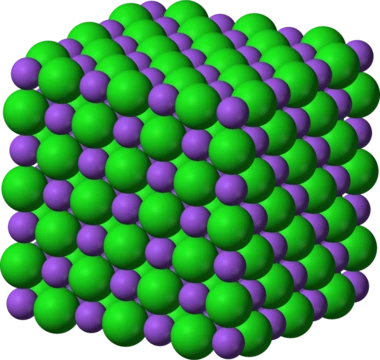
Crystallographically, arsenopyrite belongs to the monoclinic crystal system, though older references may describe it as orthorhombic. It commonly exhibits prismatic or columnar crystal forms with striations and twinning. In its atomic structure, each iron center is bonded to three arsenic atoms and three sulfur atoms.
The material can be described as Fe³⁺ with the diatomic trianion AsS³⁻, though this ionic description is imperfect because the material is semiconducting and the bonds are highly covalent. The connectivity of atoms is more similar to that in marcasite than in pyrite. Various transition metals can substitute for iron, giving rise to rare related minerals such as clinosafflorite, gudmundite, glaucodot, alloclasite, iridarsenite, osarsite, and ruarsite.
Lore & Background
Arsenopyrite crystallizes in the monoclinic crystal system, often showing prismatic or columnar forms with striations and twinning. Older references may describe it as orthorhombic, but it has been shown to be monoclinic. In its atomic structure, each iron center is linked to three arsenic atoms and three sulfur atoms, and the material can be described as Fe3+ with the diatomic trianion AsS3−, though this is imperfect because the material is semiconducting and the bonds are highly covalent. When dissolved in nitric acid, arsenopyrite releases elemental sulfur.
When heated, it produces sulfur and arsenic vapor. Deposits exposed to the atmosphere slowly convert into iron arsenates. Unlike iron pyrite, which can lead to acid mine drainage, arsenopyrite is generally an acid-consuming sulfide mineral. Arsenopyrite in older literature may be referred to as mispickel, a name of German origin, or as mundic, a Cornish dialect word that also refers to a copper ore and to a form of deterioration in aggregate concrete made with mine tailings.
Reader's Guide
Arsenopyrite holds significance as a principal ore of arsenic, with a 46% arsenic content, and as an important indicator of gold-bearing reefs. Many arsenopyrite gold ores are refractory, meaning the gold is not easily cyanide leached from the mineral matrix. The mineral is found in high temperature hydrothermal veins, pegmatites, and areas of contact metamorphism or metasomatism.
Its diagnostic properties—crystal habit, hardness, density, and garlic odor when struck—aid in identification. The arsenopyrite group includes rare minerals such as clinosafflorite, gudmundite, glaucodot, iridarsenite, osarsite, and ruarsite, where various transition metals can substitute for iron. Its legacy includes historical names like mispickel and mundic, reflecting its long recognition in mining and mineralogy.
More in Minerals & Crystals
Sources
Compiled from Wikipedia and the sources listed below. Text from Wikipedia is available under CC BY-SA 4.0; this entry is adapted from it.
- Wikipedia: Arsenopyrite (CC BY-SA 4.0).
- Word definitions: the Codexery glossary, each quoted from its Wikipedia article.
Spotted an error? Know more?
Reader corrections go straight into our review queue. Suggest an edit · How this site is sourced