Invasion of Corsica (1794)
British and Corsican forces expelled the French from Corsica in 1794.
Last updated
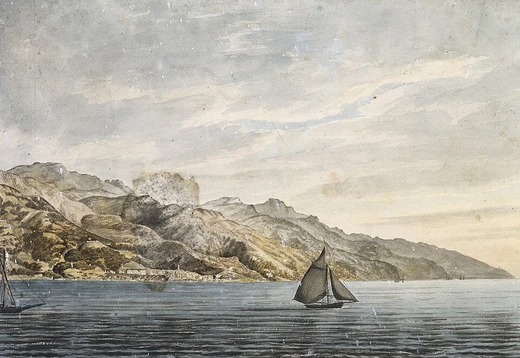
The invasion of Corsica in 1794 was a British and Corsican campaign against the French garrison on the island, fought during the French Revolutionary Wars. It involved the sieges of San Fiorenzo, Bastia, and Calvi, culminating in the expulsion of French forces by August.
Background
Corsica, a mountainous island in the Ligurian Sea, had been part of the Republic of Genoa before becoming de facto independent as the Corsican Republic under Pasquale Paoli. In 1768, Genoa sold the island to France, which invaded and annexed it. After the French Revolution of 1789, Paoli returned from 22 years of exile and revived the independence movement, defeating political rivals including the Bonaparte family. By early 1793, during the Reign of Terror, Paoli faced arrest by the French National Convention and responded by forming irregular partisan units that drove the French garrison into San Fiorenzo, Calvi, and Bastia.
He then sought external allies. Great Britain entered the French Revolutionary Wars in January 1793 and sent a fleet to blockade the French Mediterranean fleet at Toulon. The nearest British port, Gibraltar, was too distant for effective operations, and Britain had lost Minorca in the American Revolutionary War. Corsica had been proposed as a replacement base, favored by Secretary of State for War Henry Dundas.
Landings in Corsica
Major-General David Dundas, a cautious officer who had clashed with Hood during the Siege of Toulon, led the British Army. On Paoli's advice, the first attack targeted San Fiorenzo. On 7 February, British troops landed unopposed west of the Torra di Mortella. A naval attack on the tower on 8 February failed when HMS Fortitude was hit by heated shot, killing six and wounding 56.
Shore batteries erected by sailors under Moore set the tower on fire on 10 February, forcing its surrender. Moore then marched overland to storm the Convention Redoubt on 17 February. The French withdrew the next day, scuttling two frigates, and retreated to Bastia. The attack on Bastia was delayed by a dispute between Hood and Dundas, leading to Dundas's resignation and replacement by Colonel Abraham D'Aubant in March.
On 4 April, 1,450 British troops under Colonel William Villettes and Nelson landed north of Bastia. Hood's fleet maintained a blockade via an inshore squadron under Benjamin Caldwell. A naval attack on 11 April was driven off, and HMS Proselyte was sunk.
Aftermath
Corsica became a self-governing part of the British Empire, with Hood using San Fiorenzo as an anchorage despite lacking dockyard facilities. In August 1794, the 16-gun HMS Scout was captured by French frigates while escorting a Corsican fishing fleet; several boats were seized by Algerian pirates, and their crews enslaved. British envoy Frederick North secured their release for £48,000. In early 1795, a French attempt to land 25,000 troops was defeated at the Battle of Genoa.
French privateers and agents continued to land on the coast. In Bastia, disputes arose: Stuart and Elliott quarreled over military control, leading to Stuart's resignation, while Elliott prevented Paoli from seizing property of French supporters, violating surrender terms. In 1795, an Extraordinary Commission investigated crime and treason, contravening the agreed constitution. Broken promises on infrastructure and a rift between Paoli and Pozzo di Borgo led Paoli to establish an informal rival presidency at Rostino.
In July 1795, the 'assassination of the bust' incident in Ajaccio sparked rioting, and Paoli departed for Britain in October to avoid civil violence.
More in Military History of Corsica
Sources
Compiled from Wikipedia and the sources listed below. Text from Wikipedia is available under CC BY-SA 4.0; this entry is adapted from it.
- Wikipedia: Invasion of Corsica (1794) (CC BY-SA 4.0).
Spotted an error? Know more?
Reader corrections go straight into our review queue. Suggest an edit · How this site is sourced