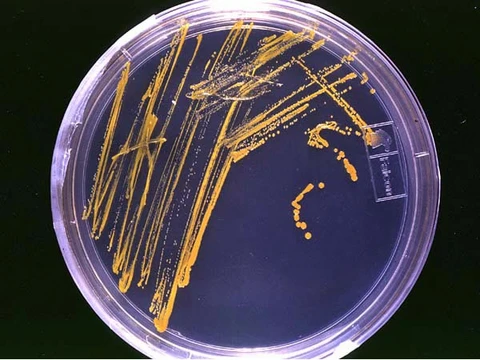
Extremophile
Organisms that thrive in extreme environments on Earth.

Justin Meissen from St Paul, United States · CC BY-SA 2.0
Extremophiles are organisms that live and often flourish in environments considered extreme by human standards, such as those with very high or low temperatures, intense pressure, high radiation, extreme salinity, or unusual pH levels. Most extremophiles are microorganisms, primarily bacteria and especially archaea, though some eukaryotes—including certain fungi and tardigrades—also qualify. Because what counts as "extreme" is a human-centered label, these life-forms have actually been ecologically dominant throughout much of Earth's history. Studying them has broadened our understanding of life's limits and fuels ideas about what life might look like on other planets.
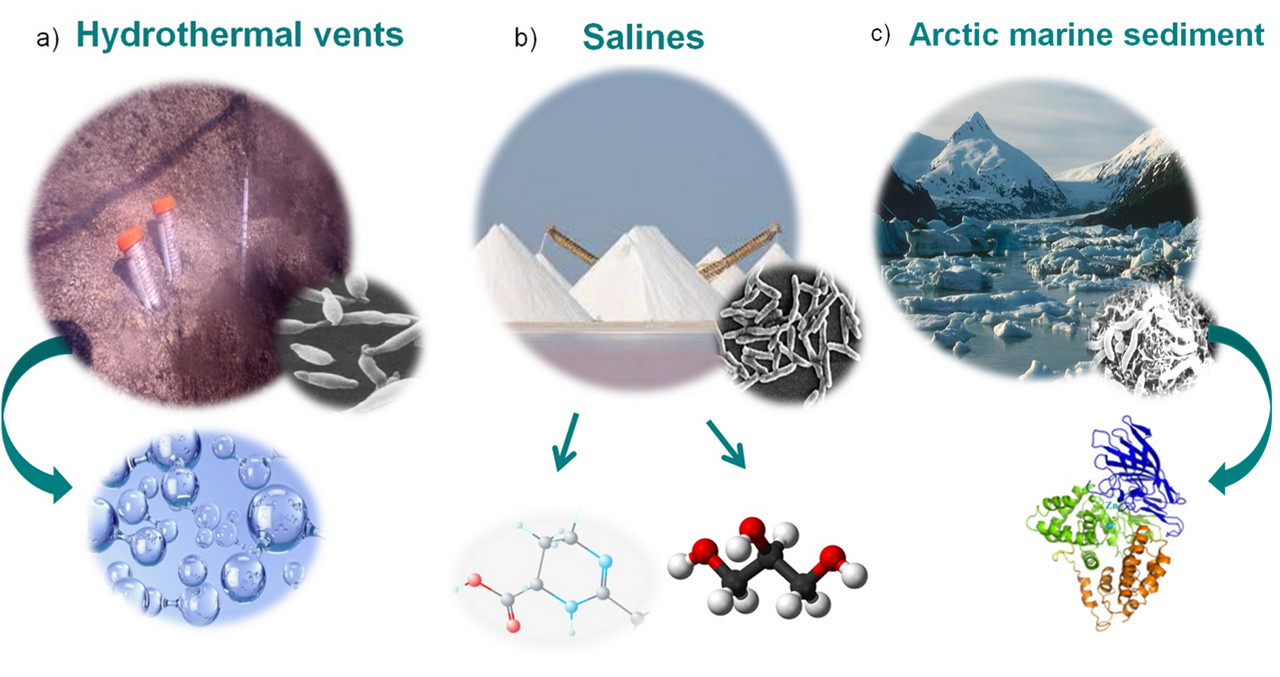
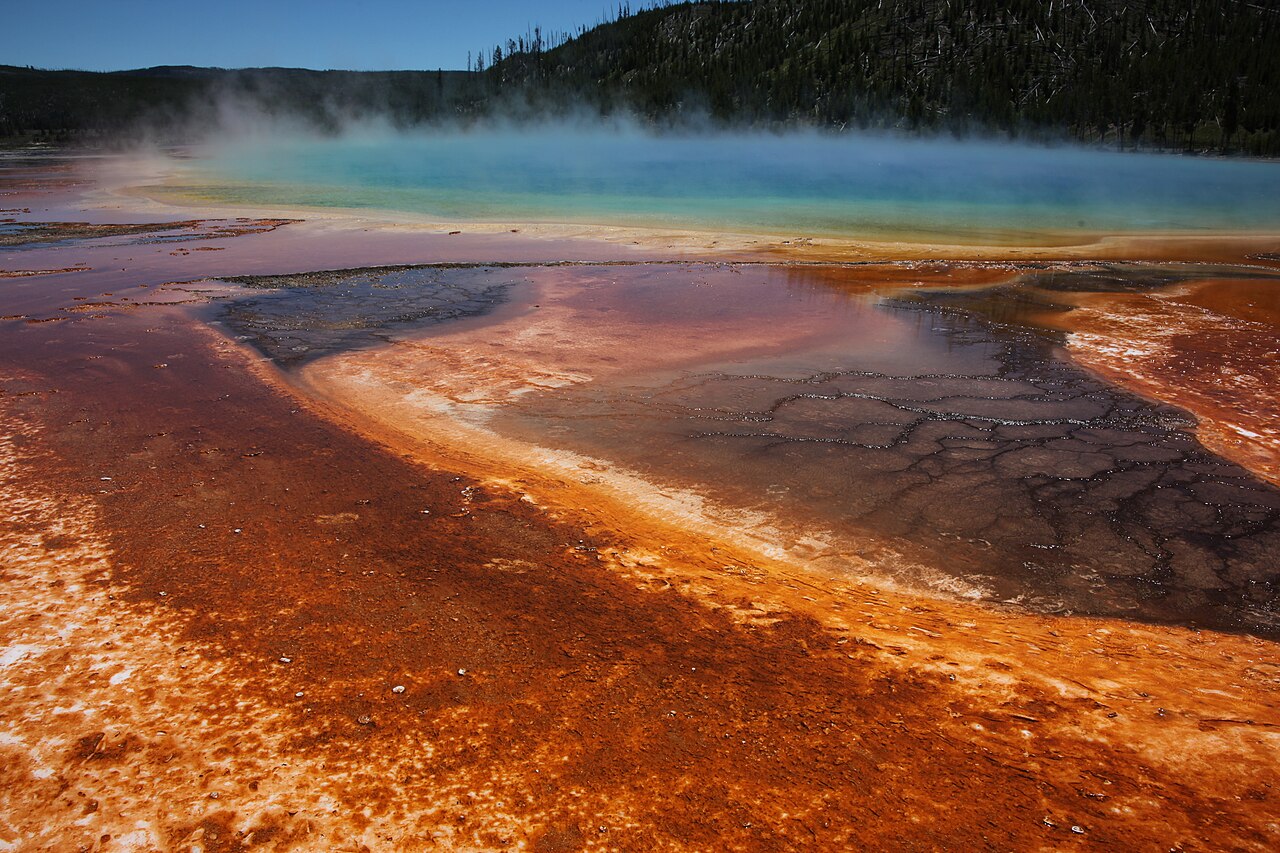
In the 1980s and 1990s, biologists discovered that microbes can survive in acidic, extremely hot, or low-pressure niches that would kill complex organisms. Some scientists now think life may have started in deep-ocean hydrothermal vents. Ancient bacterial spores, hardened against radiation, have been found that are 40 million years old. Microbes have been located in a dark, cold lake buried half a mile under Antarctic ice, in the deepest part of the Mariana Trench, and in 120 °C sediment 1.2 kilometers below the seafloor in the Nankai Trough. Others thrive inside rocks 1,900 feet beneath the seafloor, under 8,500 feet of ocean off the U.S. northwest coast. As one researcher put it, microbes are everywhere, extremely adaptable, and survive wherever they are. Their amino acid composition, which affects protein folding, is key to their adaptation. Studying Earth's extreme environments helps researchers gauge habitability on other worlds. Endospores from a *Bacillus* species have even been shown to remain viable after being heated to 420 °C.
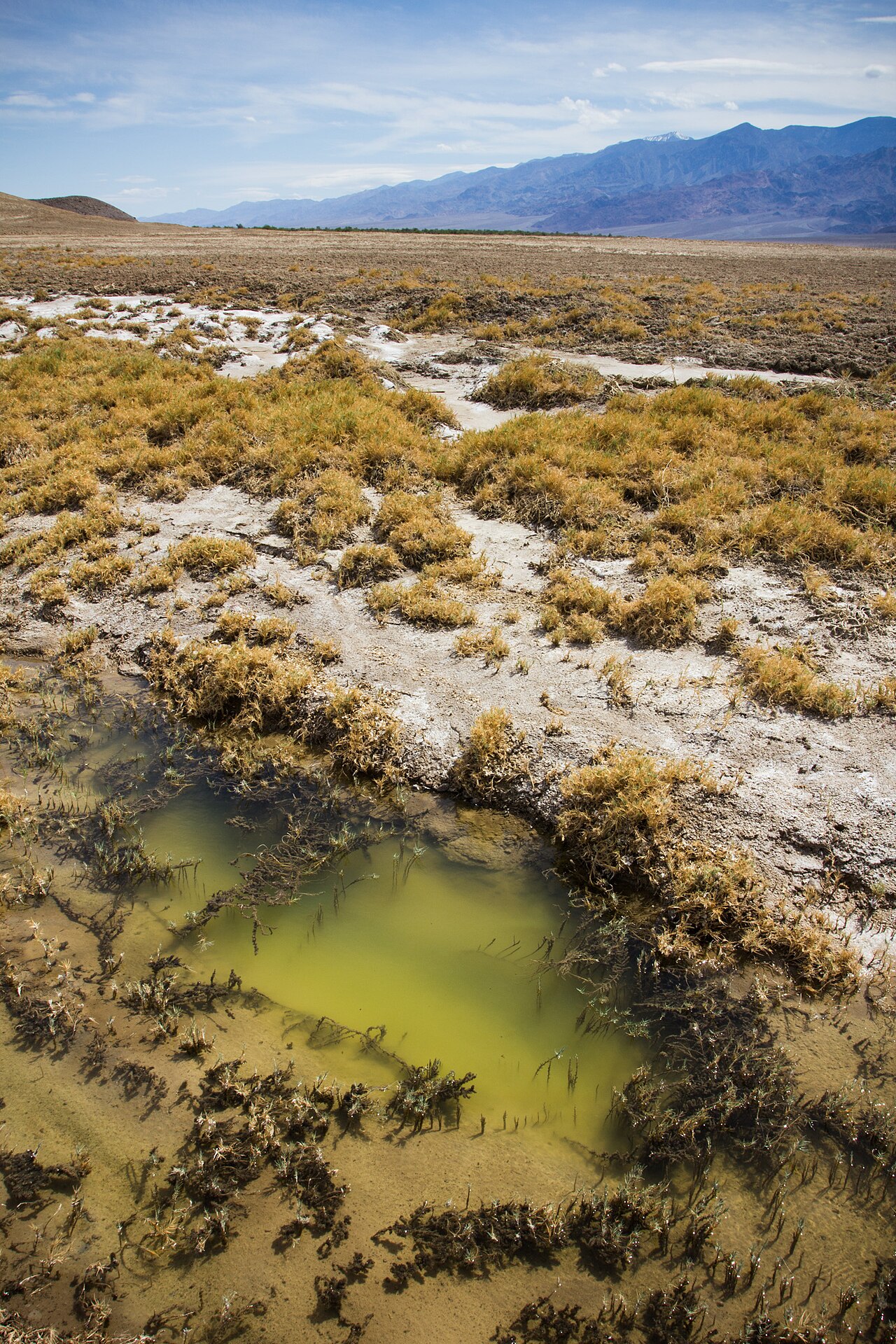
Extremophiles are classified by the conditions they favor. Acidophiles grow best at pH 3.0 or below; alkaliphiles at pH 9.0 or above. Capnophiles thrive in high carbon dioxide, like *Mannheimia* bacteria in cattle and sheep guts. Halophiles need dissolved salt concentrations of 50 g/L or more. Hyperpiezophiles prefer hydrostatic pressures above 50 MPa, and hyperthermophiles grow best above 80 °C. Metallotolerants handle high levels of heavy metals like copper, cadmium, arsenic, and zinc—examples include *Ferroplasma* sp., *Cupriavidus metallidurans*, and GFAJ-1. Oligotrophs thrive in nutrient-poor environments, osmophiles in high sugar concentrations, and piezophiles (or barophiles) at pressures above 10 MPa. Polyextremophiles qualify under multiple categories, such as *Thermococcus barophilus*, which is both thermophilic and piezophilic, or organisms on an Atacama Desert mountain summit that are radioresistant, xerophilic, psychrophilic, and oligotrophic. Note that being tolerant or resistant to harsh conditions does not make an organism an extremophile—tardigrades, for instance, are highly resistant but not true extremophiles. Xerophiles grow best where water activity is below 0.8, psychrophiles (or cryophiles) at 15 °C or lower, radioresistant organisms withstand high ionizing or ultraviolet radiation, and sulphophiles thrive in high sulfur concentrations, like *Sulfurovum* epsilonproteobacteria on the ocean floor. Thermophiles grow best above 45 °C.
Astrobiology, the multidisciplinary study of how life arises and distributes, draws heavily on extremophile research to explore the potential for life beyond Earth.
- field
- Microbiology, Astrobiology
- known_for
- Thriving in extreme environments such as high temperature, pressure, radiation, salinity, or pH
- key_characteristics
- Includes acidophiles, alkaliphiles, halophiles, hyperthermophiles, psychrophiles, radioresistant organisms, and polyextremophiles
Lore & Background
In the 1980s and 1990s, biologists found that microbial life can survive in extreme environments—niches that are acidic, extraordinarily hot, or with irregular air pressure—that would be inhospitable to complex organisms. Some scientists even concluded that life may have begun on Earth in hydrothermal vents far beneath the ocean's surface. According to astrophysicist Steinn Sigurdsson, 'There are viable bacterial spores that have been found that are 40 million years old on Earth—and we know they're very hardened to radiation.' Some bacteria were found living in the cold and dark in a lake buried a half-mile deep under the ice in Antarctica, and in the Mariana Trench, the deepest place in Earth's oceans.
Reader's Guide
Extremophiles are significant because they expand human knowledge of the limits of life and inform speculation about extraterrestrial life. They are also of interest for their potential for bioremediation of environments made hazardous to humans due to pollution or contamination. In astrobiology, extremophiles allow researchers to map what is known about the limits of life on Earth to potential extraterrestrial environments. For example, analogous deserts of Antarctica are exposed to harmful UV radiation, low temperature, high salt concentration and low mineral concentration—conditions similar to those on Mars. Finding viable microbes in the subsurface of Antarctica suggests that there may be microbes surviving in endolithic communities and living under the Martian surface. Recent research carried out in Japan involved bacteria including Escherichia coli and Paracoccus denitrificans being subject to conditions of extreme gravity, with P. denitrificans displaying robust cellular growth under hyperacceleration usually found only in cosmic environments. The research has implications on the feasibility of panspermia.
Did You Know?
- Some extremophiles are polyextremophiles, falling under multiple categories such as thermophilic and piezophilic.
Nature & Scope of Extremophilic Life
The term "extremophile" weaves together the Latin word for "extreme" with the Greek word for "love," capturing the essence of organisms that not merely endure but genuinely flourish in conditions most other life finds lethal. These environments span a remarkable range: scorching or freezing temperatures, crushing pressures, intense radiation, extreme salinity, and pH levels far outside the comfortable middle range. While the vast majority of extremophiles are microscopic—bacteria and, especially, archaea—the category also reaches into the world of eukaryotes, encompassing certain fungi and the famously resilient tardigrades. Crucially, the label "extreme" is not an absolute; it is measured against standards that are often arbitrarily set and frequently anthropocentric. What seems hostile to a human is, for these organisms, simply home. This relative framing reveals something profound: across the evolutionary history of our planet, extremophiles have been ecologically dominant, persisting through conditions that would wipe out more complex life. Their sheer abundance and longevity make them among the most prolific lifeforms Earth has ever produced, a testament to the extraordinary diversity of strategies that life has evolved to claim nearly every available niche.
Discovery & Adaptation
The modern era of extremophile research accelerated dramatically in the 1980s and 1990s, when biologists confirmed that microbial life could persist in environments once thought utterly barren—acidic pools, extraordinarily hot zones, and regions of irregular air pressure that would be fatal to complex organisms. Some researchers even proposed that life itself may have originated in the superheated waters of deep-ocean hydrothermal vents. The sheer extremity of confirmed habitats is staggering. Viable bacterial spores estimated at forty million years old have been recovered, their structures hardened against radiation. In Antarctica, bacteria were discovered in a frozen lake buried half a mile beneath the ice. In the Mariana Trench, the deepest point in Earth's oceans, microbial communities thrive. A key molecular secret behind these feats lies in amino acid composition, which governs how proteins fold and remain functional under specific stress.
Classification & Polyextremophiles
Because "extreme" can mean many different things, scientists have developed a detailed taxonomy of extremophilic categories, each defined by a specific environmental parameter. Acidophiles flourish at pH 3.0 or below, while alkaliphiles prefer pH 9.0 and above. Halophiles need dissolved salt concentrations of 50 grams per liter or more—far exceeding the salinity of a coral reef. Hyperthermophiles thrive above 80 degrees Celsius, psychrophiles at 15 degrees or below, and piezophiles under hydrostatic pressures exceeding 10 megapascals. Other categories include capnophiles, osmophiles, xerophiles, sulphophiles, metallotolerant organisms, and radioresistant species. Perhaps most fascinating is the concept of the polyextremophile: an organism that qualifies under multiple categories simultaneously. A bacterium living inside hot rock deep underground might be both thermophilic and piezophilic, as in the case of Thermococcus barophilus. A microbe on the summit of an Atacama Desert mountain could simultaneously be a radioresistant xerophile, a psychrophile, and an oligotroph. Importantly, mere tolerance or resistance to harsh conditions does not make an organism a true extremophile; it must actively thrive, not merely survive. The tardigrade, for instance, is highly stress-resistant but is not properly classified as an extremophile.
Astrobiology & Practical Applications
The study of extremophiles extends far beyond Earth's biosphere. In the multidisciplinary field of astrobiology—which draws on physics, chemistry, astronomy, biology, ecology, planetary science, and geology—these organisms serve as living models for mapping the boundaries of habitability. By understanding what conditions life on Earth can tolerate and even exploit, researchers gain a framework for evaluating whether other worlds might support life. The more extreme the niche an organism occupies, the broader the range of potential extraterrestrial environments that become plausible candidates for biospheres. This connection between terrestrial extremophiles and the search for life elsewhere is one of the most compelling threads in modern biology. Beyond the cosmos, extremophiles hold practical promise for bioremediation. Their metabolic versatility in environments made hazardous by pollution or contamination suggests they could be harnessed to clean up toxic sites, neutralize heavy metals, or break down pollutants in conditions where conventional organisms would fail. In this way, the very traits that make these organisms seem alien to human comfort make them invaluable tools for both exploring the universe and healing our own planet.
Gallery
More in Microbiology 1-24
Spotted an error? Know more?
This is a living reference — every entry is fact-audited, and reader corrections feed straight into our audit queue. Suggest an edit · See this site's audit record