Self-praise of Shulgi (Shulgi D)
Sumerian hymn praising King Shulgi of the Third Dynasty of Ur.
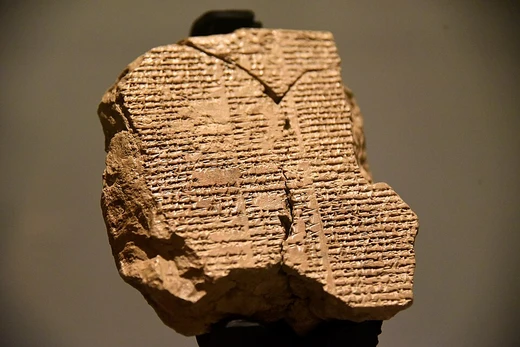
Self-praise of Shulgi (Shulgi D) is a Sumerian hymn dedicated to the Third Dynasty of Ur ruler Shulgi. It was written on clay tablets dated to between 2100 and 2000 BC. The hymn is notable as a royal self-laudatory composition from the late third millennium BC.
Quick Facts
- Created
- 2050 BC
- Material
- Clay
- Discovered date
- before 1918
- Discovered place
- Al-Qadisiyyah, Iraq
- Height
- 18 cm / 7.09 in
Facts from the source article.
Did You Know?
- In the story, Shulgi is compared to all manner of animals and wondrous things such as a tree.
- The hymn describes Shulgi's interactions with a large number of Sumerian gods.
- The text mentions victories in foreign lands and a description of the royal barge.
Compilation
The clay tablet containing this hymn, catalogued as CBS 11065 in the Babylonian section of the University of Pennsylvania Museum of Archaeology and Anthropology, was unearthed from the temple library at Nippur. George Aaron Barton translated it in 1918, publishing it as number three in "Miscellaneous Babylonian Inscriptions" under the title "Hymn to Dungi," a name later changed to Shulgi. The tablet itself measures 7 inches by 5.4 inches, with a maximum thickness of 1.6 inches. Barton observed that similar hymns, introduced into Sumerian religion from the Third Dynasty of Ur onward, had been published by Stephen Herbert Langdon. He assigned the tablet to Shulgi’s reign, noting that while the script indicates this copy was made during the First Dynasty of Babylon, the original composition could be older. In 1981, Jacob Klein expanded and retranslated the myth using additional sources: CBS 8289 from the University Museum, tablet 4571 from the Nippur collection at the Museum of the Ancient Orient in Istanbul, and tablet 5379 from the Louvre in Paris.
More in Mesopotamian Myths
Spotted an error? Know more?
Reader corrections go straight into our review queue. Suggest an edit · How this site is sourced