Enmerkar and the Lord of Aratta
Sumerian legend of Enmerkar's demand for tribute from Aratta.
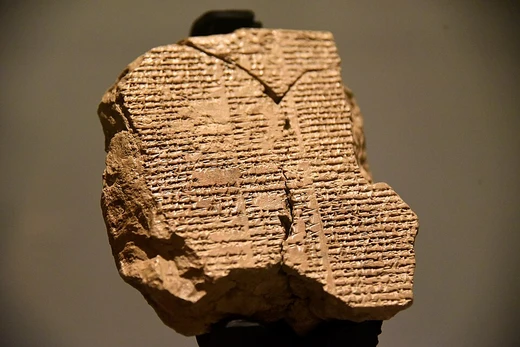
Enmerkar and the Lord of Aratta is a legendary Sumerian account composed in the Neo-Sumerian period, preserved in early post-Sumerian copies. It is one of a series of accounts describing conflicts between Enmerkar, king of Unug-Kulaba, and the unnamed king of Aratta. Since the time of Samuel Kramer, it has been compared with the Tower of Babel narrative in the Book of Genesis because it gives a Sumerian account of the confusion of tongues and involves Enmerkar constructing temples at Eridu and Uruk.
Quick Facts
- Composition period
- Neo-Sumerian period (ca. 21st century BC)
- Protagonist
- Enmerkar, king of Unug-Kulaba
- Antagonist
- Unnamed king of Aratta
- Key deity
- Inanna
- Other deity
- Enki
- Temples mentioned
- E-ana at Uruk, Abzu temple at Eridu
Facts from the source article.
Synopsis
The story begins by setting the scene: long ago, when destinies were fixed, the rulers allowed the E-ana temple in Unug Kulaba (Uruk) to rise high. Abundance, floods of carp, and rain that grew dappled barley flourished there. The E-ana was a temple dedicated to Inanna, the lady of all lands. Although the lord of Aratta also crowns himself in Inanna’s name, she prefers her brick temple in Uruk. Enmerkar, whom Inanna chose from the bright mountain, asks her to let him conquer Aratta and force its people to send precious metals and gems. These materials would build the Abzu temple of Enki at Eridu and decorate Inanna’s own E-ana sanctuary. Inanna tells Enmerkar to send a herald over the mountains of Susin and Anshan to the lord of Aratta, demanding submission and tribute. Enmerkar agrees and dispatches the envoy with threats: if the tribute is not sent, he will destroy Aratta and scatter its people, just as a sweeping devastation once occurred when Inanna shrieked and yelled. The herald is also to recite the Incantation of Nudimmud, a hymn asking Enki to either restore or disrupt the linguistic unity of the lands named Shubur, Hamazi, Sumer, Uri-ki (near Akkad), and the Martu territory.
More in Mesopotamian Myths
Spotted an error? Know more?
Reader corrections go straight into our review queue. Suggest an edit · How this site is sourced