
Pediatrics
Branch of medicine for the medical care of children and young adults.

Internet Archive Book Images · No restrictions
Pediatrics (or paediatrics in British English), also called underage medicine, focuses on the medical care of infants, toddlers, children, adolescents, and young adults. A doctor in this field is a pediatrician. The term comes from Greek roots: *pais* ("child") and *iatros* ("healer"), meaning "healer of children."
Age limits vary by region. In Commonwealth countries, pediatrics generally covers patients up to 18, though India sets the cutoff at 12. The American Academy of Pediatrics recommends care through age 21, and some pediatric subspecialists treat adults up to 26, depending on insurance rules for young adults on parental plans. Worldwide, these age limits have been rising over time. Pediatricians work in clinics, research centers, universities, general hospitals, and children’s hospitals, with some subspecialists—like neonatologists—requiring resources such as a NICU.
The earliest references to children’s medical issues appear in the Hippocratic Corpus (fifth century B.C.) and the *Sacred Disease*, covering topics like childhood epilepsy and premature births. From the first to fourth centuries A.D., Greek and Roman physicians—Celsus, Soranus of Ephesus, Aretaeus, Galen, and Oribasius—wrote about childhood illnesses such as rashes, epilepsy, and meningitis. Hippocrates, Aristotle, Celsus, Soranus, and Galen recognized that growing bodies need different treatment: *Ex toto non sic pueri ut viri curari debent* ("In general, boys should not be treated in the same way as men"). In ancient India, children’s doctors were called *kumara bhrtya*. The *Sushruta Samhita* (sixth century BCE) and *Kashyapa Samhita* contain pediatric information. A second-century AD manuscript by Soranus covered neonatal care. Byzantine physicians Oribasius, Aëtius of Amida, Alexander Trallianus, and Paulus Aegineta contributed, and Byzantines built *brephotrophia* (crèches). Islamic Golden Age writers like Haly Abbas, Yahya Serapion, Abulcasis, Avicenna, and Averroes bridged Greco-Roman and Byzantine medicine. The Persian physician al-Razi (865–925), sometimes called the father of pediatrics, wrote a monograph *Diseases in Children*. Early pediatric books include Paolo Bagellardo’s *Libellus de aegritudinibus et remediis infantium* (1472), followed by works from Bartholomäus Metlinger, Cornelius Roelans, and Heinrich von Louffenburg—together the Pediatric Incunabula.
Despite growing knowledge, children often lacked the same medical care as adults. In the 17th and 18th centuries, experts began offering specialized care. Swedish physician Nils Rosén von Rosenstein (1706–1773) is considered the founder of modern pediatrics, and his *The diseases of children, and their remedies* (1764) is seen as the first modern textbook. Pediatrics was not recognized as a separate field until the 19th century, with the first pediatric-specific publications appearing between the 1790s and 1920s. This era saw pediatrics emerge alongside new medical approaches based on observation, chemistry, biology, and anatomopathology.
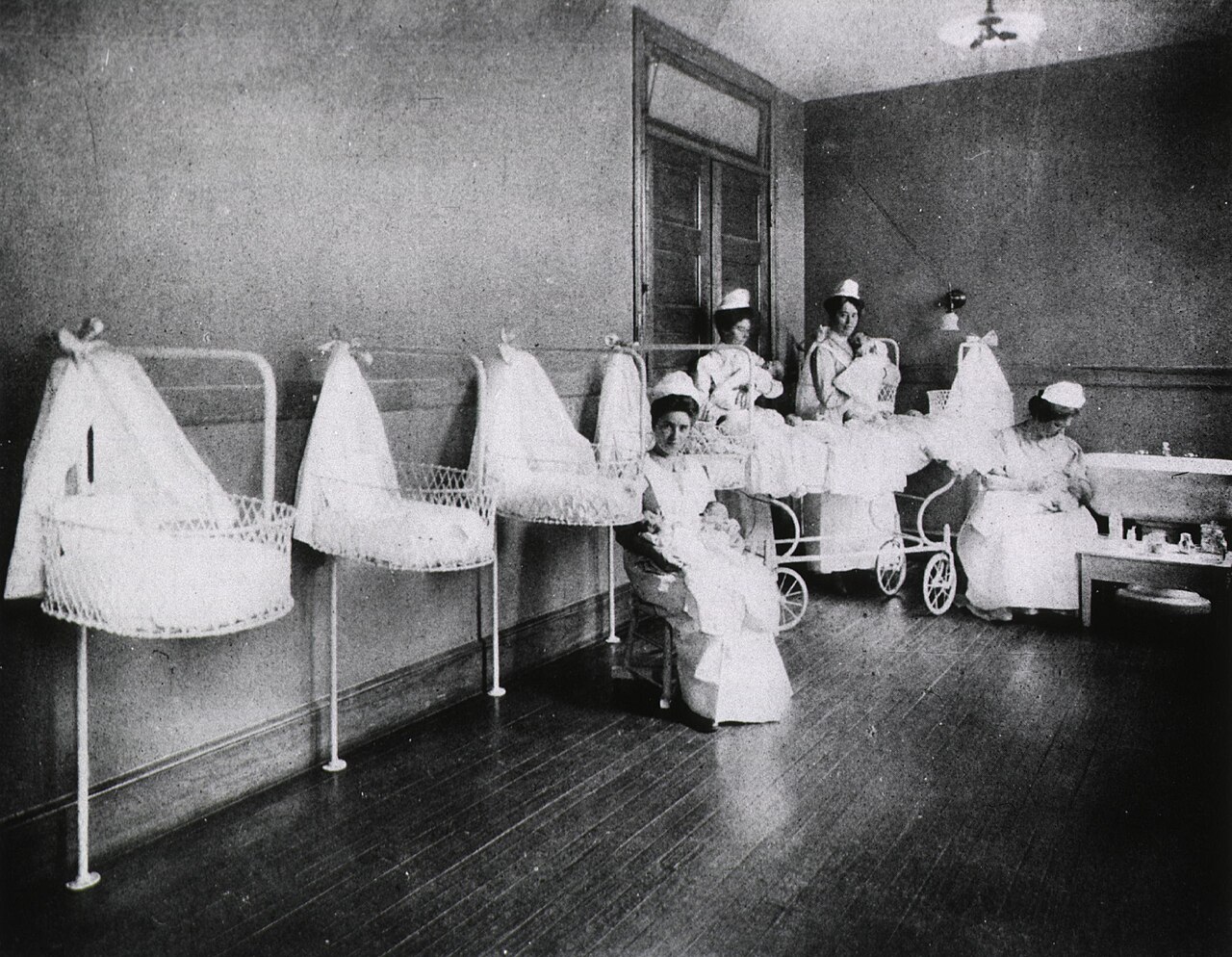
The term "pediatrics" was first used in English in 1859 by Abraham Jacobi, who became the first dedicated professor of pediatrics in 1860. Known as the father of American pediatrics, Jacobi trained in Germany and practiced in New York City. The first generally accepted pediatric hospital was the Hôpital des Enfants Malades in Paris, opened in June 1802 on the site of an orphanage, accepting patients up to age 15; it now forms part of the Necker-Enfants Malades Hospital. In Europe, Berlin’s Charité established a Pediatric Pavilion in 1830, followed by similar institutions in Saint Petersburg (1834), Vienna and Breslau (both 1837). Britain’s first pediatric hospital, Great Ormond Street, opened in 1852, founded by Charles West. Scotland’s first children’s hospital opened in Edinburgh in 1860. In the U.S., the Children’s Hospital of Philadelphia opened in 1855, and Boston Children’s Hospital in 1869. Pediatric subspecialties later developed at these institutions.
- field
- Medicine
- known_for
- Medical care of infants, toddlers, children, adolescents, and young adults
- earliest_mention
- Fifth century B.C. in the Hippocratic Corpus
Lore & Background
The earliest mentions of child-specific medical problems appear in the Hippocratic Corpus, published in the fifth century B.C., and the famous Sacred Disease. These publications discussed topics such as childhood epilepsy and premature births. From the first to fourth centuries A.D., Greek philosophers and physicians Celsus, Soranus of Ephesus, Aretaeus, Galen, and Oribasius also discussed specific illnesses affecting children. Already Hippocrates, Aristotle, Celsus, Soranus, and Galen understood the differences in growing and maturing organisms that necessitated different treatment: 'Ex toto non sic pueri ut viri curari debent' ('In general, boys should not be treated in the same way as men'). Some of the oldest traces of pediatrics can be discovered in Ancient India where children's doctors were called kumara bhrtya. Even though some pediatric works existed during this time, they were scarce and rarely published due to a lack of knowledge in pediatric medicine. Sushruta Samhita, an ayurvedic text composed during the sixth century BCE, contains information about pediatrics. Another ayurvedic text from this period is Kashyapa Samhita. A second century AD manuscript by the Greek physician and gynecologist Soranus of Ephesus dealt with neonatal pediatrics. Byzantine physicians Oribasius, Aëtius of Amida, Alexander Trallianus, and Paulus Aegineta contributed to the field. The Byzantines also built brephotrophia (crêches). Islamic Golden Age writers served as a bridge for Greco-Roman and Byzantine medicine and added ideas of their own, especially Haly Abbas, Yahya Serapion, Abulcasis, Avicenna, and Averroes. It was during the seventeenth and eighteenth centuries that medical experts started offering specialized care for children. However, it was not until the nineteenth century that medical professionals acknowledged pediatrics as a separate field of medicine.
Reader's Guide
Pediatrics emerged as a distinct medical specialty only in the 19th century, despite ancient recognition that children require different treatment than adults. The field's significance lies in its focus on the unique physiology of developing organisms, which affects everything from drug absorption to disease presentation. Worldwide age limits of pediatrics have been trending upward year after year. Within the Commonwealth, pediatrics covers patients until the age of 18, except in India where the pediatric age is 12. The American Academy of Pediatrics recommends people seek pediatric care through the age of 21, but some pediatric subspecialists continue to care for adults up to 26, depending on insurance coverage for young adults who reside with parents. Pediatricians work in clinics, research centers, universities, general hospitals and children's hospitals, including those who practice pediatric subspecialties such as neonatology.
Did You Know?
- The word pediatrics derives from the Greek words παῖς (pais 'child') and ἰατρός (iatros 'doctor, healer'), meaning 'healer of children'.
Founding & Institutional Framework
The American Board of Pediatrics traces its origins to 1933, when three major medical organizations—the American Pediatric Society, the American Academy of Pediatrics, and the American Medical Association—united to create a dedicated body for examining and certifying physicians in the diseases of childhood. This collaborative founding gave the ABP a distinctive institutional pedigree, embedding it within the broader American medical establishment from its very first year. Today, the ABP operates as an independent, nonprofit organization and holds its place as one of the 24 certifying boards that fall under the umbrella of the American Board of Medical Specialties. This dual identity—rooted in a specific specialty community yet integrated into the national framework of medical certification—has allowed the ABP to maintain focused expertise in child health while participating in the wider governance of American medicine.
The Breadth of Pediatric Certification
The ABP's certification portfolio reflects the extraordinary diversity of modern pediatric practice. The board awards standalone certificates across sixteen subspecialty areas, spanning General Pediatrics, Adolescent Medicine, Cardiology, Child Abuse Pediatrics, Critical Care Medicine, Developmental-Behavioral Pediatrics, Emergency Medicine, Endocrinology, Gastroenterology, Hematology-Oncology, Hospital Medicine, Infectious Diseases, Neonatal-Perinatal Medicine, Nephrology, Pulmonology, and Rheumatology. Beyond these, the ABP partners with other specialty boards to offer five additional certificates: Hospice and Palliative Medicine, Medical Toxicology, Pediatric Transplant Hepatology, Sleep Medicine, and Sports Medicine. This collaborative approach acknowledges that some pediatric care domains naturally intersect with broader medical specialties. The sheer breadth of this roster underscores how far the field has moved beyond a single 'diseases of childhood' model to encompass virtually every dimension of a child's health across the lifespan.
Mission & the Standard of Excellence
At its core, the ABP's mission is deceptively simple: to advance child health. But the mechanism behind that goal is specific and demanding. The board certifies pediatricians who not only meet standards of excellence but who also demonstrate a commitment to continuous learning and improvement. This dual requirement—current mastery paired with an ongoing obligation to grow—sets the ABP apart from a one-time credentialing event. Certification becomes a living standard rather than a static badge. The fact that the organization is both independent and nonprofit reinforces that its priorities are anchored in the quality of pediatric care rather than in financial considerations. By tying certification to both excellence and perpetual development, the ABP positions itself as a guardian of the standard that children and families can expect from their physicians.
Evolution & the Living Framework
The ABP's history reveals a field that has continually adapted to the changing landscape of child health. When the board was first established in 1933, its purpose was framed in terms of examining physicians for superior knowledge in the diseases of childhood—a scope that, while broad, reflected the medical understanding of the era. Over the decades, the certification landscape expanded dramatically, as evidenced by the current roster of over twenty subspecialty certificates. One particularly telling example of this evolution is the Neurodevelopmental Disabilities certificate, which the ABP awarded from 2001 to 2007. The fact that this certificate existed for a defined period and was subsequently discontinued suggests that the board is willing to reassess and restructure its offerings as the field matures. This willingness to add, refine, and even retire certificates demonstrates an institution that treats its own framework as a living document, responsive to advances in pediatric medicine.
Gallery




Frequently Asked Questions
Who is Pediatrics?
Pediatrics is the branch of medicine dedicated to the health and medical care of infants, toddlers, children, adolescents, and young adults. The name comes from two Greek roots meaning 'healer of children,' pairing the word for child with the word for doctor.
What are Pediatrics's powers and role?
Its core ability is providing specialized medical care across the entire developmental spectrum from newborn through young adulthood. A physician who wields this specialty is called a pediatrician, and the field covers everything from routine checkups to treating complex childhood illnesses.
Why is Pediatrics important to the medical world?
Children and young adults have distinct physiological needs that differ fundamentally from those of adults, making a dedicated specialty essential for safe, effective treatment. Without Pediatrics, the unique developmental stages from infancy through adolescence would lack focused clinical expertise.
More in Medical Specialties 1-15
Spotted an error? Know more?
This is a living reference — every entry is fact-audited, and reader corrections feed straight into our audit queue. Suggest an edit · See this site's audit record