14 Wall Street
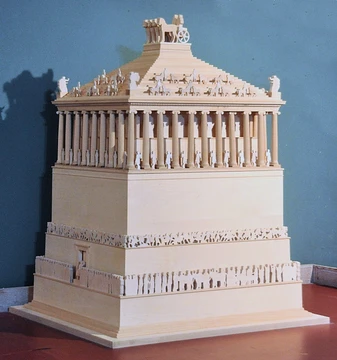
Skyscraper with a pyramidal roof inspired by the Mausoleum at Halicarnassus.
14 Wall Street, originally the Bankers Trust Company Building, is a Financial District skyscraper in Manhattan. Its tower features a seven-story pyramidal roof modeled after the Mausoleum at Halicarnassus. The building became a New York City landmark in 1997 and is part of the Wall Street Historic District.
Quick Facts
- Former names
- Bankers Trust Company Building
- Location
- 8–20 Wall Street
- Manhattan, New York 10005
- U.S.
- Construction began
- 1910
- Completed
- 1912
- Opened
- May 20, 1912
- Renovation date
- 1931–1933
- Building type
- Office
- Height
- 540 ft / 165 m
Facts from the source article.
Site
14 Wall Street occupies a lot bounded by Nassau Street to the east, Wall Street to the south, and Pine Street to the north, with dimensions of 160 ft on Wall Street, 173 ft on Nassau Street, and 178 ft on Pine Street, totaling 32947 ft². Nearby structures include the Equitable Building, Federal Hall National Memorial, 23 Wall Street, the New York Stock Exchange Building, 1 Wall Street, and 100 Broadway. An entrance to the Broad Street subway station lies directly to the southeast. The original building sits at the southeast corner of the site, previously occupied by the Stevens Building (built 1880) and the Gillender Building (completed 1897, demolished 1910). These two lots together formed a nearly square footprint of about 100 by 100 ft. The annex occupies the remainder of the plot in an L-shaped plan, replacing three earlier buildings: the seven-story Astor Building at 10–12 Wall Street, the 21-story Hanover National Building at 5–11 Nassau Street (erected 1903), and the 10-story 7 Pine Street.
Architecture
14 Wall Street rises approximately 540 ft with 32 usable above-ground floors and a seven-story pyramidal roof containing seven storage levels, plus four basement levels. The original structure, designed by Trowbridge & Livingston and built 1910–1912, is a 39-story tower without setbacks, topped by a roof inspired by the Mausoleum of Halicarnassus and also drawing from the Erechtheion and ancient Macedonian prototypes. The architects described the style as chosen for its simplicity, grace, dignity, and seriousness. The concept placed a pyramidal roof atop a tower reminiscent of St Mark's Campanile, one of the first such uses in a skyscraper after the Metropolitan Life Insurance Company Tower. A 25-story annex designed by Shreve, Lamb & Harmon, constructed 1931–1933, wraps around the western and northern sides of the original tower, standing about 325 ft tall. The Wall Street side features setbacks at the 15th, 22nd, and 25th floors; the Nassau Street side has a setback at the 23rd floor; and the Pine Street side includes a light court above the 11th story.
History
Bankers Trust was founded in 1903 by commercial banks seeking to enter the trusts and estates market, initially operating from two basement rooms at Liberty and Washington Streets. The company later acquired space in the Gillender Building due to its proximity to the New York Stock Exchange. With J. P. Morgan on the board, Bankers Trust grew rapidly and sought a permanent location in the financial center. In April 1909, negotiations began to purchase the Gillender Building; the bank first leased the adjacent Stevens Building for 84 years at $1.5 million. Press reports at the time indicated a planned 16-story office building wrapping around the Gillender Building, with George B. Post as professional advisor proposing an L-shaped structure. In November 1909, Bankers Trust finalized an agreement to buy the Gillender Building from Helen Gillender. The Manhattan Trust Company then acquired it for $1.5 million, a record land price, and resold it to Bankers Trust for $1.25 million, while retaining long-term lease rights for the ground floor. The New York Times reported collusion between the two trusts. Bankers Trust also acquired a majority share in Guaranty Trust Company, though that company built its own headquarters, and merged with Mercantile Trust Company after a fire in January 1912 affected planning. Bankers Trust absorbed Manhattan Trust in February 1912, both owned by Morgan.
Impact
Upon completion, 14 Wall Street was the world's tallest bank building and the city's third- or fourth-tallest skyscraper. Viewed from the waterfront, it and the Singer Tower resembled the posts of a gigantic gateway. Cassier's Magazine described the building as presenting a beautiful and impressive appearance, though it misattributed the influence to Egyptian pyramids. The building was seen by some as a symbol of the future, and Bankers Trust used its image in advertising as a tower of strength until the 1980s. Charles Phelps Cushing wrote in 1929 that the stepped pyramidal roof was a meeting place for midnight frolics. The iconography persisted after the annex was built, and the building's likeness became synonymous with capitalism and Wall Street, appearing in Berenice Abbott's photos and the 1921 documentary film Manhatta. A miniature model was sent to the Panama–Pacific International Exposition in 1915. The pyramidal roof inspired other buildings, including 26 Broadway, 40 Wall Street, 60 Wall Street, the annex of 195 Broadway, and the Jewish Museum annex, as well as the Union Central Life Insurance Company Building in Cincinnati, the Metropolitan Tower in Chicago, and the Foshay Tower in Minneapolis. The New York City Landmarks Preservation Commission designated it a city landmark in January 1997, and in 2007 it became a contributing property to the Wall Street Historic District.
Frequently Asked Questions
Where is 14 Wall Street?
14 Wall Street is located in 8–20 Wall Street; Manhattan, New York 10005; U.S.
When did 14 Wall Street open?
14 Wall Street opened on May 20, 1912.
Who owns 14 Wall Street?
14 Wall Street is owned by 14 Wall Street Holdings.
More in Mausoleum at Halicarnassus
Spotted an error? Know more?
Reader corrections go straight into our review queue. Suggest an edit · How this site is sourced