111 West 57th Street
The thinnest skyscraper in the world.
111 West 57th Street, called Steinway Tower, is a supertall residential building in Midtown Manhattan. JDS Development Group and Property Markets Group developed the 84-story, 1,428-foot tower, which SHoP Architects designed and finished in 2021. It ranks as the fourth-tallest building in the United States and the world's thinnest skyscraper, with a width-to-height ratio near 1:24.
Quick Facts
- Location
- Manhattan, New York
- Country
- United States
- Construction began
- July 8, 2015 (residential tower); June 1924 (Steinway Hall)
- Topped out date
- October 2019 (residential tower)
- Completed
- 2022 (residential tower); October 27, 1925 (Steinway Hall)
- Renovation date
- 2019–2021 (Steinway Hall)
- Architect
- SHoP Architects (Steinway Hall conversion and residential tower); Warren and Wetmore (Steinway Hall)
- Cost
- $2 billion
Facts from the source article.
Did You Know?
- The building's site was previously occupied by residences before Steinway & Sons acquired it.
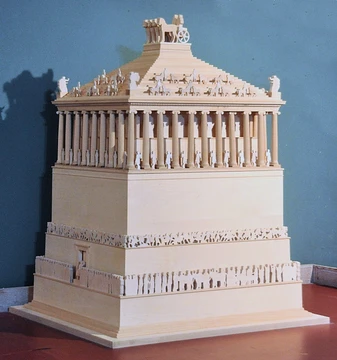
- The campanile on Steinway Hall's roof was compared to the Mausoleum at Halicarnassus by Christopher Gray.
Architecture
The development comprises two components: the preserved 16-story Steinway Hall at the base, designed by Warren and Wetmore in a neoclassical style, and a 1,428-foot residential tower above it designed by SHoP Architects in a neo-Art Deco style. It contains 84 stories above ground (or 85 including the roof slab), with the top story numbered as floor 91; floors 5–7, 13, and 21–25 are skipped. Steinway Hall is L-shaped, with frontages of 63 feet on 57th Street and 100 feet on 58th Street, and features setbacks and a campanile with a pyramidal copper roof and lantern, likened by Christopher Gray to the Mausoleum at Halicarnassus. The residential tower sits on a site about 59 by 75 feet and is the thinnest skyscraper in the world, with a width-to-height ratio of about 1:24; its top stories sway several feet during high winds. The southern elevation contains several setbacks, and the pinnacle's lighting was commissioned by L'Observatoire International. The building has been nicknamed the "stairway to heaven" due to the shape of its pinnacle.
History
Steinway & Sons had kept a piano showroom and performance space on 14th Street since 1864. After Carnegie Hall opened in 1891, the piano trade shifted north to 57th Street, so the company began looking for a new location there. By July 1916, they had picked a site at 109–113 West 57th Street, between Sixth and Seventh Avenues, with a lot extending back to 58th Street. Houses had previously stood there. A 10-story design by William K. Benedict and Marvin & Davis was delayed by the 1916 Zoning Resolution, which banned non-residential buildings on that part of 58th Street, and by lawsuits from local residents, settled by July 1920. Between 1920 and 1924, Steinway bought eight lots on 57th and 58th Streets. Warren and Wetmore then designed a 16-story building, with plans filed in July 1923. Construction ran from June 1924 to April 1925, and many studios were already rented by late 1924. The hall opened on October 27, 1925, with a radio-broadcast performance by Willem Mengelberg and 35 New York Philharmonic musicians. The $3 million cost represented about a quarter of Steinway’s total assets. The company occupied the lowest five floors and leased the rest. The basement held storage, shipping, a grand-piano testing area, and a “piano bank” of over 300 pianos worth more than $15 million.
Issues and incidents
AmBase sued developers Stern and Maloney in April 2016, alleging neglect to account for cost overruns reaching $50 million and seeking $105 million in damages. AmBase claimed that capital calls served mainly to dilute their stake, and that Stern and Maloney used illegitimate third-party funding sources. JDS and PMG countersued in January 2017, arguing there was no officially approved budget to measure cost overruns. In mid-2017, AmBase filed another lawsuit claiming collusion with lender Spruce Capital Management to allow a foreclosure that would wipe out AmBase's $66 million equity investment while preserving Stern and Maloney's $35 million stake. After an initial injunction, the New York Supreme Court's trial division ruled in August 2017 that Stern and Maloney could receive full control, eliminating AmBase's investment; the Appellate Division ruled against AmBase in January 2018.
Reception
Architectural critic Paul Goldberger called the plans "quite possibly the most elegant" of Billionaires' Row structures, describing it as a subtle reinterpretation of stepped-back towers. C. J. Hughes noted the tower rejected the crystalline look popular in the neighborhood. Carter Horsley wrote that the design was "very original" and had a feminine character, with its crown resembling a tiara. Skyscraper Museum founder Carol Willis predicted that some Billionaires' Row buildings, including 111 West 57th Street, would become designated landmarks in the 2050s. Bianca Bosker described it as resembling "the love child of a dustbuster and a Mach3 razor." Justin Davidson of New York magazine wrote: "No tower will be the last, biggest, or tallest for long, but this one might be the best." A Wall Street Journal writer said its proportions were "not of a classical column but of a coffee stirrer." The construction drew criticism: in 2015, a neighborhood group protested the shadows cast over Central Park, and in 2019, a Business Insider writer found the condo tour unremarkable. Edwin Heathcote of the Financial Times called it a "skinnyscraper" and the "purest illustration of architecture as an expression of surplus capital," lamenting its purpose of exclusion.
More in Mausoleum at Halicarnassus
Spotted an error? Know more?
Reader corrections go straight into our review queue. Suggest an edit · How this site is sourced