
Elite Dangerous
A 1:1 scale open-world space simulation with persistent multiplayer.

Anyumi- · CC BY-SA 4.0
Elite Dangerous is an online space, trading, exploration and combat simulation game developed and published by Frontier Developments. It is the fourth main game in the Elite series, serving as a reboot/remake of the original Elite rather than a direct narrative sequel to Frontier: First Encounters (1995). It is notable for being the first Elite game to feature massively multiplayer and first-person on-foot gameplay, space colonization of star systems, and player actions that affect the overarching story of a persistent universe. Released in December 2014 for Windows, it has since expanded to multiple platforms and received two major paid expansions: Horizons (2015) and Odyssey (2021).
Quick Facts
- Title
- Elite Dangerous
- Developer
- Frontier Developments
- Engine
- Cobra
- Released
- Windows / 16 December 2014 / macOS / 12 May 2015 / Xbox One / 6 October 2015 / PlayStation 4 / 27 June 2017
- Genre
- Space trading and combat · First-person shooter · Immersive sim · MMO
- Modes
- Single-player, multiplayer
- Director
- David Braben (former) / Piers Jackson (current)
- Producer
- Adam Woods (former) / Gauthier Verquerre / Michael Brookes (former)
- Designer
- Curtis Griffiths / Dan Davies / Derin Halil (former) / Gareth Hughes / Laurence Oldham / Louise McLennan / Luke Betterton / Sandro Sammarco (former) / Steve Kirby / Tom Kewell
- Programmer
- Dominic Corner / Igor Terentjev / Kay Ross (former) / Mark Allen
- Artist
- Alik Sarkisyan / Chris Gregory / Dean Searle / Emilie Rinna / John Laws / John Roberts / Josh Atack / Paul Worster / Sam Piper / Simon Brewer / Xavier Henry
- Composer
- Dan Millidge / Erasmus Talbot / Jim Croft
Facts from the source article.
Lore & Background
Elite Dangerous began development after a successful Kickstarter campaign in November 2012, led by David Braben until August 2022. The game launched in December 2014 for Windows, set in the year 3300—approximately 1,286 years after the original Elite (3125), not 45 years after Frontier: First Encounters. It retains the basic premise of its predecessors: players start with a spaceship and a small amount of money in a 1:1 scale open galaxy, roleplaying in various activities to earn credits and merit. The game combines space simulator, first-person shooter, and massively multiplayer genres, offering three game modes: Solo, Private Group, and Open Play.
The game's galaxy is a 1:1 simulation of the Milky Way, created using procedural generation (Stellar Forge) and artistic direction, with around 160,000 star systems based on real astronomical data (from the Hipparcos and Tycho-2 catalogs). Players can explore, trade, mine, engage in combat, and participate in community goals that shape the persistent narrative. The Odyssey expansion (May 2021) added first-person on-foot gameplay, including exobiology, mercenary activities, and social interaction in space station concourses. System Colonisation, added as a free update in beta on February 26, 2025, allows players to claim uninhabited star systems and build colonies.
Reader's Guide
Elite Dangerous is significant as the first massively multiplayer entry in the Elite series, bringing the franchise into the online era while retaining a single-player mode. Its 1:1 scale Milky Way, with around 400 billion star systems, represents one of the largest virtual worlds ever created, grounded in scientific data and procedural generation. The game's persistent universe, where player actions influence the overarching story via community goals and the background simulation, marks a departure from earlier Elite titles. The addition of first-person on-foot gameplay with Odyssey expanded the scope beyond ship-based activities, while System Colonisation (2025) introduced player-driven settlement building. Sales exceeded 4.8 million units by September 2022. Elite Dangerous has been supported through numerous free updates and two paid expansions, maintaining an active player base and ongoing development. Its legacy lies in blending realistic astronomical simulation with open-ended roleplay and multiplayer interaction, influencing the space simulation genre.
Did You Know?
- Elite Dangerous includes around 400 billion star systems in a 1:1 scale representation of the Milky Way.
- The game is set in the year 3300, 1,286 years in the future from UTC.
- Horizons expansion was included for free in the base game starting October 27, 2020.
The Living Galaxy
Elite Dangerous presents the Milky Way at true 1:1 scale, a staggering open world containing roughly 400 billion star systems generated procedurally. Rather than a hand-crafted set of locations, the galaxy unfolds as players chart it, with planets that can be landed upon even when they lack substantial atmospheres. Many of these worlds host unique alien flora and fauna alongside human settlements, creating a sense of discovery that extends far beyond the cockpit. The simulation is anchored to real-world time: the in-game calendar began at the year 3300 in December 2014 and has ticked forward in lockstep with UTC ever since, placing the action roughly 45 years after the events of Frontier: First Encounters (1995). This temporal continuity means the galaxy is never static; it breathes, evolves, and accumulates the consequences of millions of player decisions across its vast expanse.
From Cockpit to Concourse – The Evolution of Gameplay
When Elite Dangerous launched for Windows in December 2014, it was a pure space simulation: pilot, trade, mine, explore. The game's identity expanded dramatically over the following years. The Horizons expansion in December 2015 introduced planet landings on airless worlds, surface recon vehicles, engineering, ship-launched fighters, multicrew, player avatars, and guardian ruins. Then Odyssey, released in May 2021, fundamentally reshaped the experience by adding first-person on-foot gameplay: players could disembark onto planets with tenuous atmospheres, walk through settlements, collect genetic samples for exobiology, engage in first-person combat as mercenaries, and socialize in the concourse of star ports. Colony building arrived as a free update in late 2025, letting players claim uninhabited systems and shape their economies as system architects. Each layer built on the last, transforming a cockpit-bound sim into a full-body, multi-activity sandbox.
A Persistent, Player-Driven Universe
Elite Dangerous was the first title in the Elite series to feature massively multiplayer online play, and its persistent galaxy is a defining pillar. Three modes structure the experience: Solo for single-player, Private Group for curated sessions with friends, and Open Play, where anyone can interact. In Open Play, actions that might be considered griefing in other multiplayer titles are permitted, provided they do not breach the terms of service; however, coordinated harassment, mechanical exploitation, or abusive language can still trigger server bans. Crucially, player actions ripple outward. Frontier publishes community goals, lore, and large-scale narratives through the in-game GalNet News and mail system, and when players collectively meet those goals, the changes persist—reshaping star systems and the overarching story. Tourist Beacons and Listening Posts scatter additional lore throughout the galaxy. By September 2022, the game had sold over 4.8 million units, a testament to the pull of a shared, evolving universe.
Ships, Physics, and the Heritage of Flight
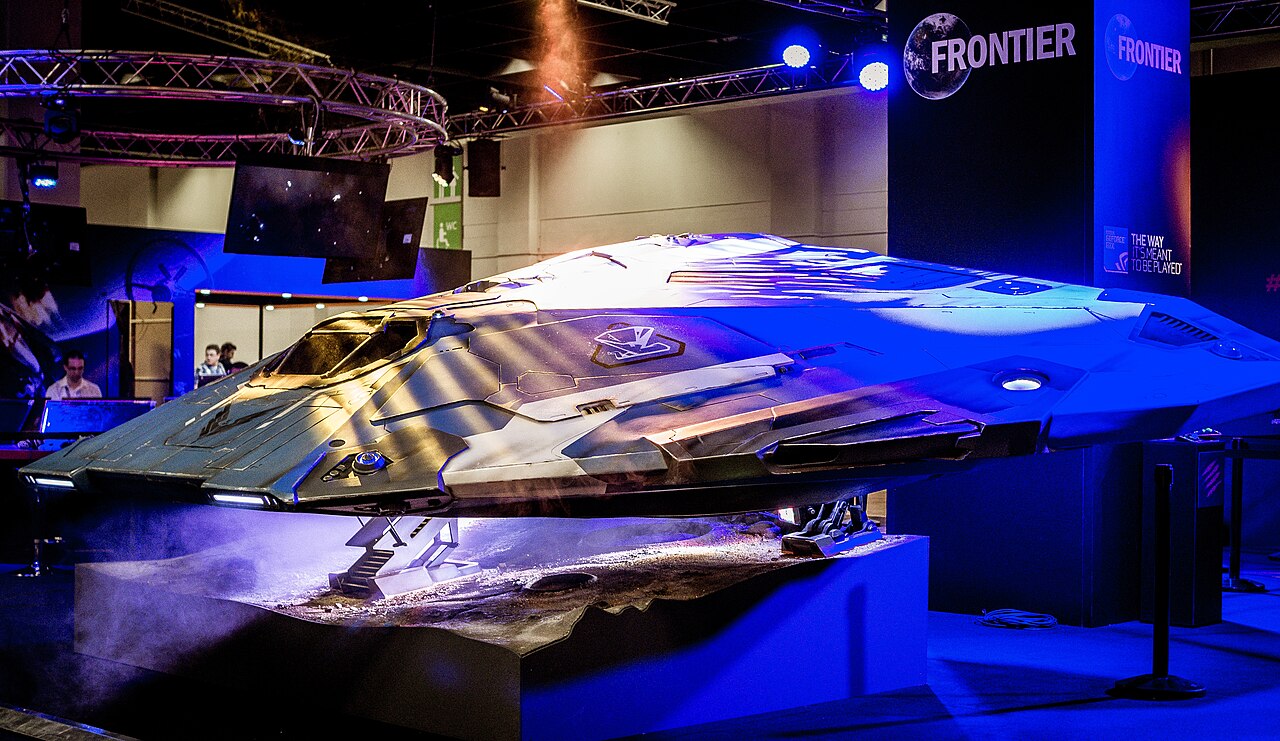
More than 45 flyable vessels populate Elite Dangerous, each highly configurable with swappable engines, weapons, power plants, and scanners tailored to a player's chosen career. The flight model is built on Newtonian physics with a fly-by-wire layer on top, and flight assist is enabled by default, making dogfights feel visceral and close-range rather than the long-distance jousting of Elite II. Intra-system travel uses a Frame Shift Drive to supercruise at over 2,000 times the speed of light, with a Supercruise Overdrive boost that trades fuel for speed. Interstellar jumps occur through a higher-dimensional hyperspace. Several ships, like the Cobra Mk III, deliberately echo the polygonal silhouettes of the original 1984 Elite, preserving the series' visual DNA. At the top of the hierarchy sit capital ships: the Drake-Class Carrier, a mobile base for the wealthiest pilots, and the Javelin-Class Carrier, designed to support squadron operations. On the ground, SRVs like the Scarab and Scorpion extend exploration across planetary surfaces.
Gallery



Frequently Asked Questions
What is Elite Dangerous?
Elite Dangerous is a space simulation game built around trading, exploration, and combat, set in a persistent shared universe. It was developed by Frontier Developments and launched in December 2014, initially on Windows before expanding to consoles and macOS.
Who developed Elite Dangerous?
Frontier Developments, a British studio, both developed and published the title. The game sits as the fourth major entry in the long-running Elite franchise, functioning as a modern reimagining of the 1984 original rather than a straight sequel to the 1995 First Encounters.
What sets Elite Dangerous apart from earlier Elite games?
It was the first installment in the series to include a shared persistent universe where every player's choices ripple into the broader narrative. It also introduced on-foot first-person gameplay in space stations and colonies, alongside a galaxy rendered at true 1:1 astronomical scale.
How large is the Elite Dangerous galaxy?
The game models the Milky Way at real-world scale, containing roughly 400 billion procedurally generated star systems. Players travel between them using jump drives, and the sheer size means most of the galaxy remains unexplored even years after launch.
Is Elite Dangerous a multiplayer experience?
Yes—the entire game takes place in a single persistent online world where thousands of players coexist simultaneously. There is no traditional single-player campaign; instead, your reputation, faction standing, and economic decisions all shape the shared universe in real time.
More in Massively multiplayer online first-person shooter games 1-21
Spotted an error? Know more?
Reader corrections go straight into our review queue. Suggest an edit · How this site is sourced