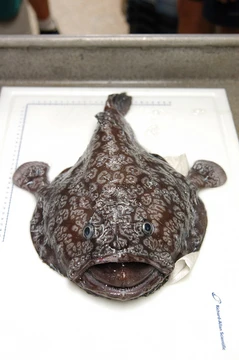
Choridactylus
A genus of Indo-West Pacific stingfishes with separated pectoral fin rays.
Last updated

Sir Francis Day · via Wikipedia: Choridactylus · Public domain
Choridactylus is a genus of marine ray-finned fishes commonly known as stingfishes. It is one of two genera in the tribe Choridactylini, which is classified within the subfamily Synanceiinae of the family Scorpaenidae, the scorpionfishes and their relatives. These fishes are found in the Indo-West Pacific.
Scientific classification
- KingdomAnimalia
- PhylumChordata
- ClassActinopterygii
- DivisionTeleostei
- OrderPerciformes
- FamilySynanceiidae
- GenusChoridactylus
Named by J. Richardson, 1848
Sources: Wikipedia taxobox: Choridactylus (CC BY-SA 4.0)
Quick Facts
- First described
- 1848
- Described by
- John Richardson
- Type species
- Choridactylus multibarbus
- Number of species
- 4
- Size range
- 14 cm (5.51 in) to 25 cm (9.84 in) total length
- Dorsal fin spines
- 12-15
- Dorsal fin soft rays
- 8-10
Facts from the source article.
Lore & Background
The genus Choridactylus was first described in 1848 by Scottish naval surgeon and naturalist John Richardson as a monotypic genus, with the sole species Choridactylus multibarbus. The type locality was given as the 'Sea of China'. The generic name combines choris, meaning 'separated', and dactylus, meaning 'finger', referring to the detached lower pectoral fin rays that readily distinguished it from other stonefishes known to Richardson. Some authorities classify this taxon as a subfamily Choridactylinae within the family Synanceiidae, reflecting taxonomic uncertainty.
Choridactylus stingfishes have small blunt heads with bulging eyes and an occipital depression. The mouth is small and slightly oblique, with villiform teeth on the jaws but no vomerine or palatine teeth. The body bears small tentacles or skin flaps on the lower jaw, eye, spiny dorsal fin, and spiny anal fin, with tufts on the lateral line and upper body. The pectoral fins have 12 rays, with the three lower rays separated from the rest.
These fishes inhabit shallow waters over sandy substrates. Choridactylus multibarbus is widespread from the Red Sea to the Philippines, while the other three species are restricted to the western Indian Ocean. The four recognized species are Choridactylus lineatus, Choridactylus multibarbus, Choridactylus natalensis, and Choridactylus striatus.
Reader's Guide
Choridactylus represents a distinctive lineage within the scorpionfish and stonefish group, notable for the separated lower pectoral fin rays that inspired its name. This anatomical feature, along with the presence of small tentacles and skin flaps, reflects adaptations to its benthic lifestyle on sandy substrates in shallow Indo-West Pacific waters. The genus is one of only two in the tribe Choridactylini, highlighting its evolutionary distinctiveness within the subfamily Synanceiinae.
The taxonomic debate—whether to place it in the family Scorpaenidae or Synanceiidae—underscores the ongoing refinement of relationships among venomous marine fishes. The four species vary in size from 14 to 25 cm, with the widespread Choridactylus multibarbus ranging from the Red Sea to the Philippines, while the other three are more localized in the western Indian Ocean. The genus was established by John Richardson in 1848, and its continued study contributes to understanding the diversity and biogeography of Indo-Pacific stingfishes.
More in Marine Fish Genera
Test yourself
Three questions drawn from this entry’s sources. Pick an answer to check it.
Answers checked against the source article
Sources
Compiled from Wikipedia and the sources listed below. Text from Wikipedia is available under CC BY-SA 4.0; this entry is adapted from it.
- Wikipedia: Choridactylus (CC BY-SA 4.0).
- Word definitions: the Codexery glossary, each quoted from its Wikipedia article.
Spotted an error? Know more?
Reader corrections go straight into our review queue. Suggest an edit · How this site is sourced