
Prestressed concrete
Concrete strengthened by internal compression from tensioned tendons.

Scaglione, Nick · Public domain
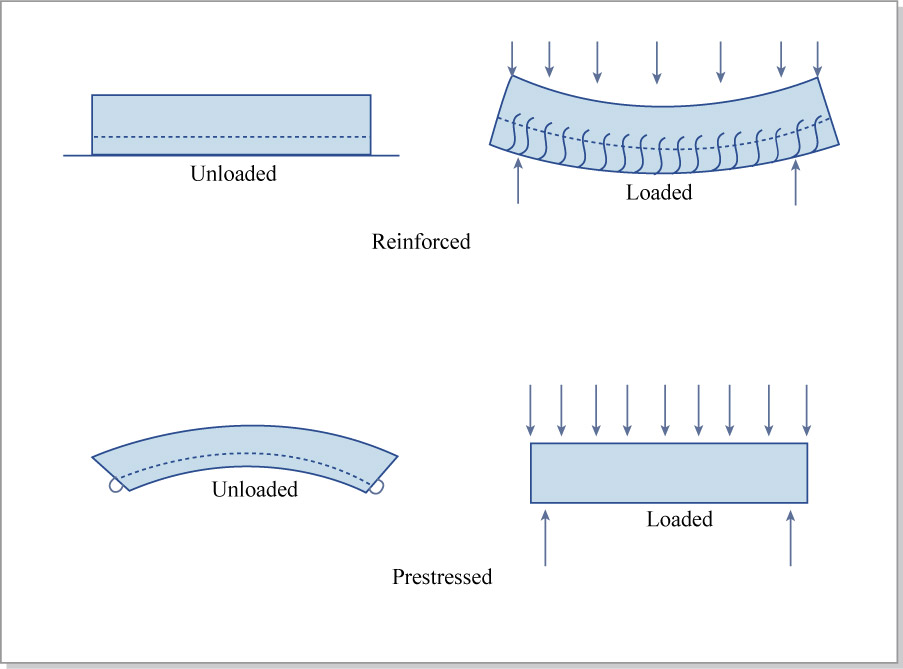
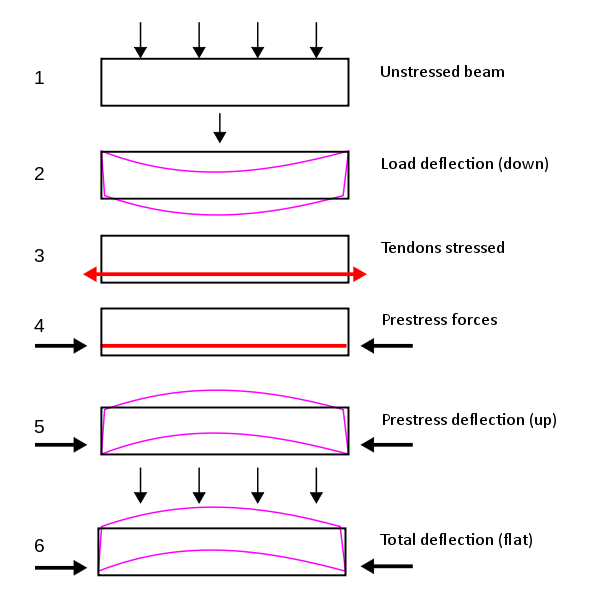
Prestressed concrete is a construction material that is deliberately compressed during manufacturing to better resist the pulling forces it will face once in use. This compression comes from stretching strong tendons—which can be single wires, multi-wire strands, or threaded bars made of high-tensile steel, carbon fiber, or aramid fiber—either inside or next to the concrete. Once this initial squeeze is applied, the material behaves like high-strength concrete under compression and like ductile high-strength steel under tension. This often gives it better structural capacity or serviceability than standard reinforced concrete, because the internal stresses are arranged to counteract the stresses from later loads.
It is used in many buildings and civil structures, allowing longer spans, thinner sections, and material savings compared to plain reinforced concrete. Common uses include high-rise buildings, residential slabs, foundations, bridges, dams, silos, tanks, industrial pavements, and nuclear containment structures. First used in the late 1800s, the method has grown beyond pre-tensioning to include post-tensioning, which happens after the concrete is poured. Tensioning systems can be monostrand (each wire or strand stressed alone) or multi-strand (all strands stressed at once). Tendons may be inside the concrete (internal prestressing) or outside it (external prestressing). Pre-tensioned concrete uses tendons bonded directly to the concrete, while post-tensioned concrete can use either bonded or unbonded tendons.
**Pre-tensioned concrete**
In pre-tensioned concrete, the tendons are stretched before the concrete is cast. As the concrete hardens, it bonds to the tendons. Then the end anchorages are released, and the tendon tension transfers into the concrete as compression through static friction. This is a common prefabrication method: the concrete element is made off-site and brought to the site after curing. It needs strong, stable end anchorages to stretch the tendons between them. These anchorages form the ends of a casting bed, which can be many times longer than the element being made, so multiple elements can be built end-to-end in one operation, boosting productivity and economy. The bond between fresh concrete and the tendon surface is critical—it decides when the anchorages can be safely released. Higher early-age bond strength speeds production and lowers costs. To improve bonding, pre-tensioned tendons are usually single wires or strands, which offer more surface area than bundled strands.
Unlike post-tensioned tendons, pre-tensioned tendons generally run in straight lines between anchorages. If curved or “harped” tendons are needed, intermediate deviators hold them in the desired non-linear shape during tensioning. These deviators handle large forces and need a strong casting-bed foundation. Straight tendons are typical in linear precast elements like shallow beams and hollow-core slabs; profiled tendons are more common in deeper precast bridge beams and girders. Pre-tensioned concrete is widely used for structural beams, floor slabs, hollow-core slabs, balconies, lintels, driven piles, water tanks, and concrete pipes.
**Post-tensioned concrete**
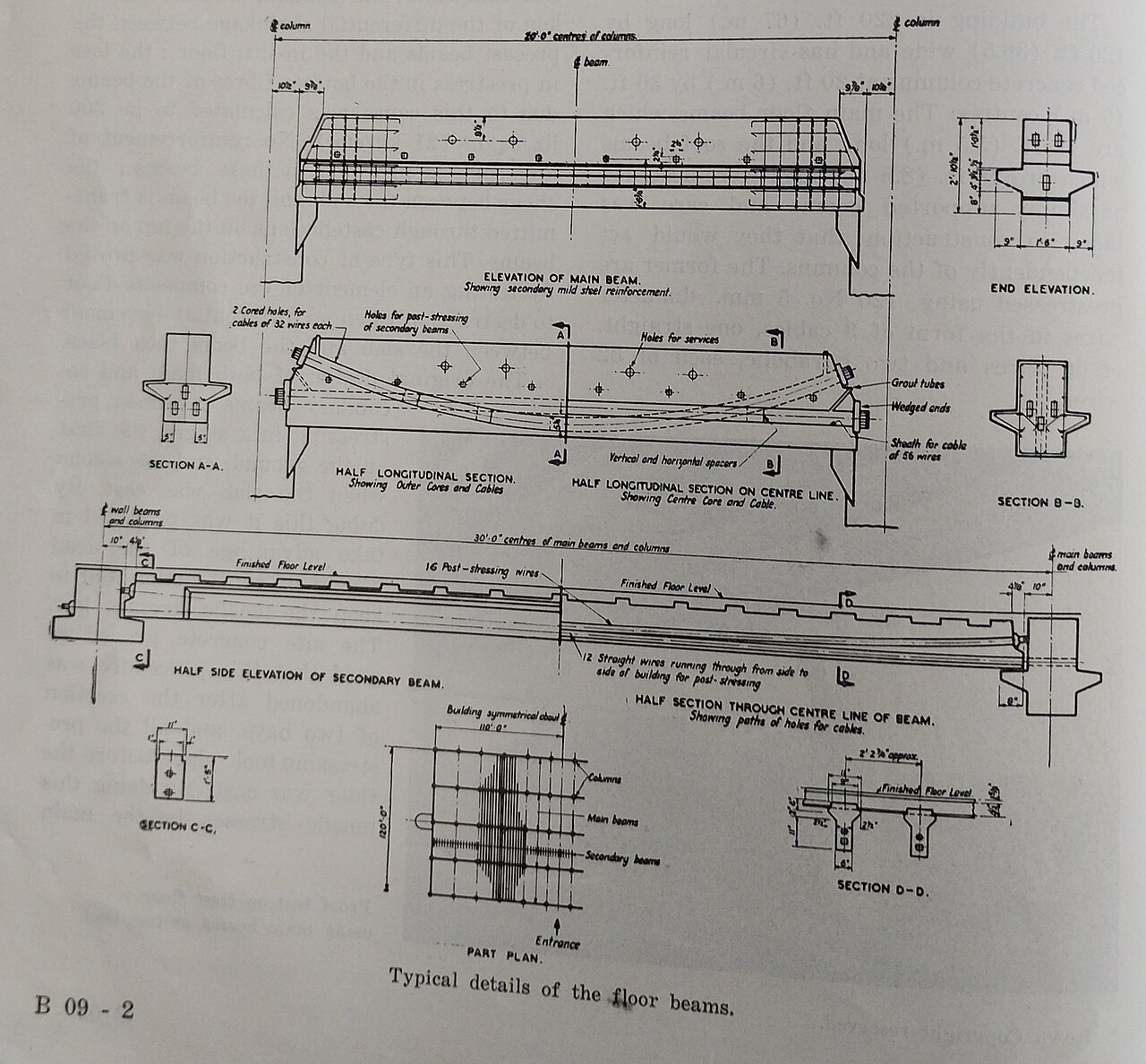
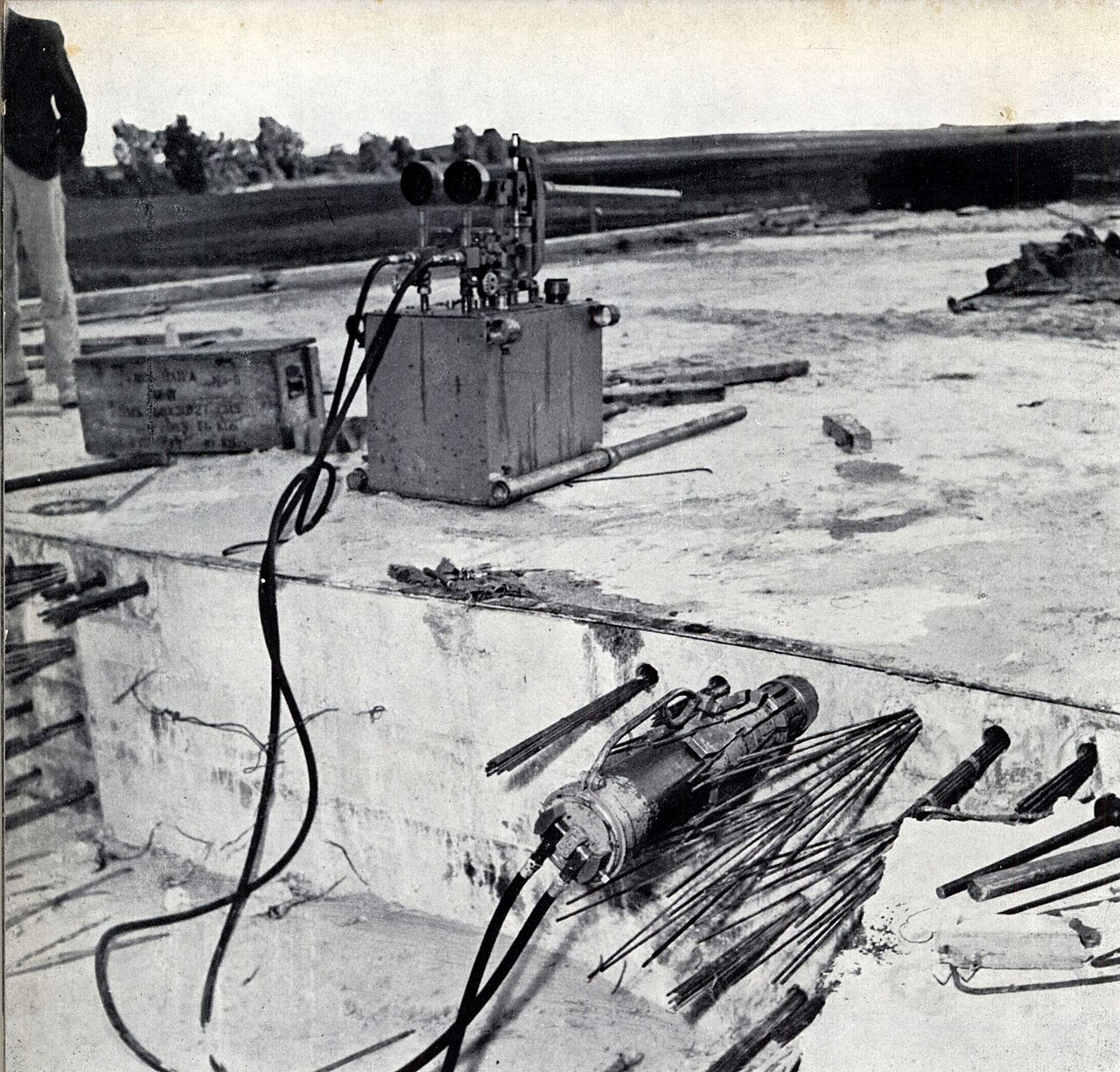
In post-tensioned concrete, the tendons are tensioned after the concrete structure is cast. The tendons are not in direct contact with the concrete; instead, they are wrapped in a protective sleeve or duct that is either cast into the concrete or placed next to it. Each tendon end has an anchorage assembly fixed firmly to the concrete. After the concrete is cast and set, the tendons are stressed by pulling their ends through the anchorages while pressing against the concrete. The large forces needed to tension the tendons create a lasting compression in the concrete once the tendon is locked off at the anchorage. How the tendon ends are locked depends on the tendon type: button-head anchoring for wires, split-wedge anchoring for strands, and threaded anchoring for bars.
The tendon encapsulation systems are made of plastic or galvanized steel. They come in two main types: bonded post-tensioning, where the tendon is later grouted inside the duct to bond it to the concrete; and unbonded post-tensioning, where the tendon stays permanently debonded from the concrete.
- field
- Construction material
- known_for
- Improved structural capacity and serviceability compared with conventionally reinforced concrete
- first_used
- Late nineteenth century
Lore & Background
Prestressed concrete is a construction material in which internal compressive stresses are deliberately introduced during production to counteract the tensile forces the structure will experience in service. This compression is achieved by tensioning high-strength tendons, which may be single wires, multi-wire strands, or threaded bars made from high-tensile steels, carbon fiber, or aramid fiber. The tendons are located either within the concrete volume or adjacent to it. Once the initial compression is applied, the material behaves like high-strength concrete under compressive loads and like ductile high-strength steel under tension, resulting in improved structural capacity and serviceability compared to conventionally reinforced concrete. This allows for longer spans, reduced structural thicknesses, and material savings in a wide range of applications, including high-rise buildings, residential slabs, bridges, dams, silos, tanks, industrial pavements, and nuclear containment structures. The concept was patented by Eugène Freyssinet in 1928. Prestressed concrete is divided into two main variants: pre-tensioned and post-tensioned. In pre-tensioned concrete, the tendons are tensioned before the concrete is cast; the concrete bonds to the tendons as it cures, and upon release of the end anchorages, the tendon tension is transferred to the concrete as compression via static friction. This method is a common prefabrication technique, often using straight tendons in linear elements like shallow beams and hollow-core slabs, though profiled tendons with intermediate deviators are used in deeper bridge girders. Post-tensioned concrete involves tensioning the tendons after the concrete has been cast and set. The tendons are encapsulated in a protective sleeve or duct cast into the structure, with anchorage assemblies fixed to the concrete at each end. Post-tensioned tendons may be bonded or unbonded, and tensioning systems can be monostrand (each strand stressed individually) or multi-strand (all strands stressed simultaneously). Tendons may also be located entirely outside the concrete volume in external prestressing.
Reader's Guide
Prestressed concrete has developed beyond pre-tensioning to include post-tensioning, which occurs after the concrete is cast. Pre-tensioned concrete involves tensioning tendons before casting, with the concrete bonding to the tendons as it cures. Post-tensioned concrete involves tensioning tendons after the concrete has set, using protective sleeves or ducts. Bonded post-tensioning grouts the ducts after tensioning to protect tendons and lock in pre-tension, while unbonded post-tensioning allows permanent freedom of longitudinal movement via greased sheaths. The material is used in high-rise buildings, residential slabs, bridges, dams, silos, tanks, industrial pavements, and nuclear containment structures, allowing longer spans, reduced thicknesses, and material savings.
Did You Know?
- Tendons may be made from high-tensile steels, carbon fiber, or aramid fiber.
- Pre-tensioned concrete uses tendons directly bonded to the concrete, while post-tensioned concrete can use bonded or unbonded tendons.
- Bonded post-tensioning grouts the duct after tensioning to protect against corrosion and lock in pre-tension.
The Core Principle: Engineering Compression into Strength
Prestressed concrete represents a deliberate inversion of how we think about concrete's weaknesses. Rather than accepting that concrete resists compression well but fails under tension, the technique introduces a planned state of compression into the material before it ever carries a service load. The mechanism relies on high-strength tendons—single wires, multi-wire strands, or threaded bars fabricated from high-tensile steels, carbon fiber, or aramid fiber—that are tensioned to squeeze the surrounding concrete. Once that initial compression is locked in, the composite element behaves almost dually: under further compressive loading it performs like high-strength concrete, while under tensile loading it responds like ductile, high-strength steel. The internal stress pattern is not arbitrary; it is engineered so that stresses generated by later imposed loads are partially or fully counteracted, yielding gains in structural capacity, serviceability, or both over conventionally reinforced concrete.
Pre-tensioning: The Prefabrication Workhorse
Pre-tensioning is the variant in which the tendons are stretched before any concrete is poured. The wires or strands are anchored between robust end blocks on a casting bed, and the fresh concrete is then placed around them. As the concrete cures and hardens, it bonds directly to the tendon surfaces. Once sufficient bond strength has developed, the end anchorages are released, and the stored tension in the tendons is transferred into the concrete as a permanent compressive force through static friction. Because the bond between early-age concrete and the tendon surface governs when release is safe, pre-tensioned tendons are typically individual wires or strands rather than bundled groups, maximizing the available bonding area. The casting bed can span many times the length of a single element, enabling several pieces to be fabricated end-to-end in one tensioning cycle—a setup that delivers substantial productivity gains and economies of scale. Straight tendons suit shallow precast beams and hollow-core slabs, while profiled or harped tendons, held in place by intermediate deviators, serve deeper bridge girders. Typical products include structural beams, floor slabs, balconies, lintels, driven piles, water tanks, and concrete pipes.
Post-tensioning: Stressing After the Pour
Post-tensioning reverses the sequence: the concrete structure is cast first, and the tendons are tensioned afterward. The tendons never touch the concrete directly; instead they are enclosed in protective sleeves or ducts made of plastic or galvanized steel, which are either cast into the structure or placed alongside it. At each end, a dedicated anchorage assembly is fixed firmly to the surrounding concrete. Once the concrete has set, pulling forces draw the tendon ends through these anchorages while pressing back against the concrete, generating a large, permanent compressive force. The locking mechanism varies with tendon type: button-head anchoring for wire tendons, split-wedge anchoring for strand tendons, and threaded anchoring for bar tendons. A key advantage of this approach is geometric flexibility—because the ducts are cast before tensioning, they can be profiled with vertical, horizontal, or combined curvature, and the resulting reaction forces can be directed to counter specific load patterns. Tendon systems are classified as bonded, where the duct is grouted after stressing to lock the tendon to the concrete, or unbonded, where a greased sheath keeps the tendon permanently free to slide.
Where Prestressed Concrete Builds the Modern World
The practical payoff of prestressed concrete is a broad expansion of what a single concrete element can achieve. Compared with simple reinforced concrete, it permits longer spans, thinner structural sections, and meaningful material savings—benefits that ripple through an enormous range of building and civil engineering projects. High-rise buildings exploit the technique in their floor systems; residential construction relies on prestressed slabs; foundation systems, bridge decks, and dam structures all draw on its superior load-carrying behavior. Silos, storage tanks, industrial pavements, and even nuclear containment structures benefit from the material's enhanced capacity and serviceability. The technology has evolved well beyond its original pre-tensioning roots: post-tensioning opened the door to on-site stressing of large, irregular geometries, while tensioning systems now range from monostrand configurations, where each wire or strand is stressed individually, to multi-strand arrangements in which all elements in a tendon are stressed simultaneously. Tendons can be embedded within the concrete volume or routed entirely outside it, giving engineers a flexible toolkit. From a late-nineteenth-century curiosity to a cornerstone of modern infrastructure, prestressed concrete continues to shape how we build.
Gallery
More in Manufacturing And Materials 1-24
Spotted an error? Know more?
This is a living reference — every entry is fact-audited, and reader corrections feed straight into our audit queue. Suggest an edit · See this site's audit record