Reader's Digest
Life well shared
Last updated

Raimond Spekking · CC BY-SA 4.0
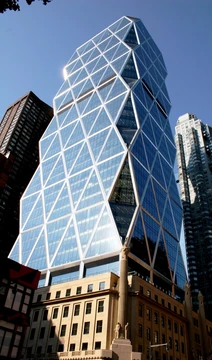
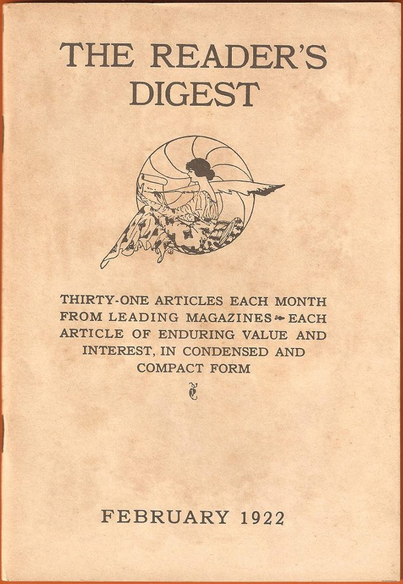
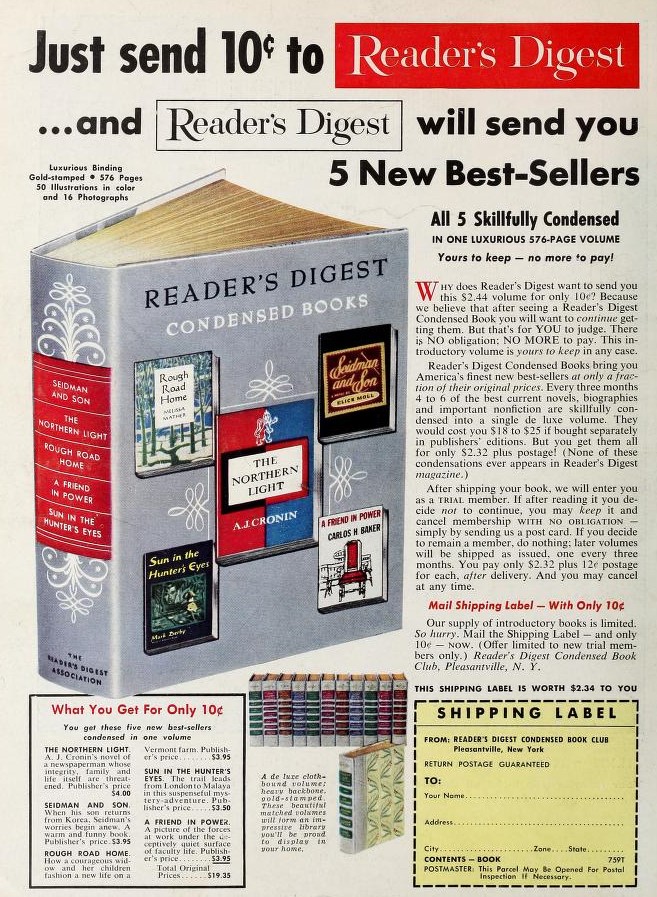
Reader's Digest is an American general-interest magazine for families that comes out six times a year. It used to be based in Chappaqua, New York, but now its main office is in midtown Manhattan. DeWitt Wallace and his wife Lila Bell Wallace started the magazine in 1922.
For a long time, it was the top-selling consumer magazine in the United States, but it lost that spot in 2009 to Better Homes and Gardens. In 2006, Mediamark Research & Intelligence found that Reader's Digest reached more readers with household incomes above $100,000 than Fortune, The Wall Street Journal, Business Week, and Inc. put together. Around the world, there are 49 editions of Reader's Digest in 21 languages, reaching an extra 40 million people across more than 70 countries.
The magazine has a worldwide paid circulation of 10.5 million, which makes it the largest paid-circulation magazine globally. It also comes out in Braille, digital, and audio formats, plus a large-type version called Reader's Digest Large Print. The magazine is small, with pages about half the size of most American magazines.
Lore & Background
In 1920, Dewitt Wallace married Lila Bell Wallace in Pleasantville, New York. Shortly thereafter, the two would launch Reader's Digest in the basement below a Greenwich Village speakeasy. The idea for Reader's Digest was to gather a sampling of favorite articles on many subjects from various monthly magazines, sometimes condensing and rewriting them, and to combine them into one magazine. In the 20th century, Reader's Digest maintained a conservative and anti-Communist perspective on political and social issues.
The Wallaces initially hoped the journal could provide $5,000 of gross income. By 1929, the magazine had 290,000 subscribers and had a gross income of $900,000 a year. The first international edition was published in the United Kingdom in 1938.
By the 40th anniversary of Reader's Digest, it had 40 international editions, in 13 languages and Braille, and at one point, it was the largest-circulating journal in China, Mexico, Spain, Sweden, Peru, and other countries, with a total international circulation of 23 million. The first "Word Power" column was published in the January 1945 edition, written by Wilfred J. Funk. In December 1952, the magazine published "Cancer by the Carton", a series of articles that linked smoking with lung cancer.
From 2002 to 2006, Reader's Digest conducted a vocabulary competition in schools throughout the US called Reader's Digest National Word Power Challenge. In 2007, the magazine said it would not have the competition for the 2007–08 school year. In 2006, the magazine published three more local-language editions in Slovenia, Croatia, and Romania. In October 2007, the Digest expanded into Serbia.
The magazine's licensee in Italy stopped publishing in December 2007. The magazine launched in the People's Republic of China in January 2008. It ceased publishing in China in 2012. For 2010, the US edition reduced its publishing schedule to 10 times a year rather than 12, and to increase digital offerings.
It also cut its circulation guarantee for advertisers to 5.5 million copies from 8 million. Beginning in January 2013, the US edition was increased to 12 times a year. Its current frequency of publication is 6 times a year.
Origins in a Speakeasy Basement
In 1920, DeWitt Wallace married Lila Bell Wallace in Pleasantville, New York, and the couple soon set out to create something bold. They launched Reader's Digest in the basement beneath a Greenwich Village speakeasy, with a deceptively simple premise: gather the best articles from various monthly magazines, sometimes condensing and rewriting them, and bundle them into a single compact publication. The Wallaces initially projected a modest $5,000 in net income, but DeWitt's keen read on what a mass-market audience craved proved far more ambitious than that modest target.
The magazine's compact format—pages roughly half the size of typical American periodicals—gave it a distinctive, pocketable identity. Growth was explosive. By 1929, just seven years after its debut, the Digest had amassed 290,000 subscribers and generated $900,000 in annual gross income. What began as a couple's experiment in a dim basement quickly became a defining voice in American publishing, setting the stage for decades of expansion that would eventually carry its pages across the globe.
A Magazine Without Borders
Reader's Digest built what remains the largest paid-circulation magazine operation on Earth, with a global reach of 10.5 million copies and an additional 40 million readers spread across more than 70 countries. The publication exists in 49 editions spanning 21 languages, and it is also available in Braille, digital, audio, and a large-print format. The first international edition appeared in the United Kingdom in 1938, and by the magazine's 40th anniversary, it had expanded to 40 international editions in 13 languages, with a combined international circulation of 23 million.
At various points, the Digest was the largest-circulating journal in China, Mexico, Spain, Sweden, and Peru. The company continued adding markets into the 2000s, launching editions in Slovenia, Croatia, Romania, and Serbia between 2006 and 2007. Yet the global footprint has also contracted: the Italian licensee ceased publishing in late 2007, the China edition closed in 2012 amid weak sales and translation challenges, and the UK edition's closure was announced in April 2024.
Financial Rollercoaster and Changing Hands
The business life of Reader's Digest Association has been marked by dramatic swings. In 1990, the parent company went public, but from 2005 through 2010 it reported a net loss every single year. In March 2007, Ripplewood Holdings led a private-equity consortium in a $2.8 billion leveraged buyout, financed largely by $2.2 billion in debt, with partners including Rothschild Bank of Zürich and GoldenTree Asset Management. The deal tripled the company's annual interest payments to $148 million.
The strain proved unsustainable: in August 2009, RDA filed for Chapter 11 bankruptcy to restructure that debt, emerging with lenders converting debt into equity and Ripplewood's $275 million investment wiped out entirely. The US edition also cut its publishing frequency from 12 to 10 issues in 2010 and reduced its advertiser circulation guarantee from 8 million to 5.5 million copies. A second bankruptcy filing followed in February 2013, after which venture capitalist Mike Luckwell acquired the company for a symbolic £1. The magazine's frequency has since settled at six issues per year.
Shaping Public Discourse and Everyday Culture
Beyond its business metrics, Reader's Digest carved out a distinctive cultural role. In the 20th century, it maintained a conservative, anti-Communist editorial stance on political and social matters, giving it a particular ideological flavor that set it apart from purely entertainment-focused periodicals. Its content choices carried real weight: in December 1952, the magazine published 'Cancer by the Carton,' a landmark series of articles that explicitly linked cigarette smoking to lung cancer, contributing to a broader public-health reckoning.
The January 1945 edition introduced the 'Word Power' column, penned by Wilfred J. Funk, which became a beloved fixture for readers eager to expand their vocabulary. From 2002 to 2006, the magazine extended that educational mission into schools across the United States through the National Word Power Challenge, a vocabulary competition before the program was paused for a full evaluation. Media Mark Research data from 2006 showed the Digest reached more readers with household incomes above $100,000 than Fortune, The Wall Street Journal, BusinessWeek, and Inc. combined, underscoring its surprising penetration into affluent, business-minded households.
Reader's Guide
Reader's Digest is a compact general-interest family magazine, roughly half the size of most American magazines. It is published six times a year in the United States.
The magazine offers a mix of condensed articles, original features, and regular columns such as "Word Power". It is available in print, Braille, digital, audio, and large-type editions. Global editions reach readers in more than 70 countries via 49 editions in 21 languages.
Frequently Asked Questions
What is Reader's Digest most known for?
The magazine is widely recognized for its condensed reprints of longer articles, its long-running 'Word Power' language column, and its status as the world's largest paid-circulation magazine. For many years it also held the title of best-selling consumer magazine in the United States.
Where is Reader's Digest headquartered?
The magazine operates out of Midtown Manhattan, New York City. Despite its worldwide distribution, it remains an American publication at its core.
How big is Reader's Digest's readership?
Reader's Digest reaches millions of readers across over 70 countries through its various local editions. It was for decades the top-selling consumer magazine in the U.S. before the digital era reshaped the market.
What is Reader's Digest's tagline?
The U.S. edition has used the motto 'Life well shared' since 2008. The phrase captures the magazine's long-standing emphasis on accessible, family-friendly content for a broad general audience.
More in Magazines & Newspapers
Sources
Compiled from Wikipedia and the sources listed below. Text from Wikipedia is available under CC BY-SA 4.0; this entry is adapted from it.
- Wikipedia: Reader's Digest (CC BY-SA 4.0).
Spotted an error? Know more?
Reader corrections go straight into our review queue. Suggest an edit · How this site is sourced