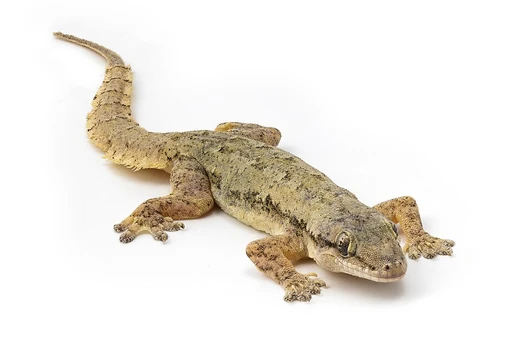
Iguana
Herbivorous lizards native to the Americas and Caribbean.

Iguanas are a genus of plant-eating lizards found in the tropical regions of Mexico, Central America, South America, and the Caribbean. The genus was first scientifically described in 1768 by Austrian naturalist J.N. Laurenti. It includes two recognized species: the green iguana, which is common across its range and often kept as a pet, and the Lesser Antillean iguana, which lives only in the Lesser Antilles. While genetic studies suggest the green iguana might actually be a group of several distinct species, the Reptile Database currently classifies these variations as subspecies. The name "iguana" comes from the Taino word *iwana*.
These lizards are large, measuring between 1.2 and 2.0 meters (4 to 6.5 feet) from head to tail. They have a dewlap under the chin and a row of enlarged scales running from the neck down the back. Their bodies are covered with different scale types: large, round tuberculate scales are scattered on the sides of the neck among smaller overlapping ones, while the scales on the upper back are thicker and more tightly packed than those on the belly. A prominent round scale, called the subtympanic shield, sits on each cheek. Iguanas have excellent vision, allowing them to spot shapes, shadows, colors, and movement from far away, which helps them navigate forests and find food. They also use visual signals to communicate with each other. Their eardrum, or tympanum, is located above the subtympanic shield behind each eye, though the Lesser Antillean iguana lacks this shield. Their coloration helps them blend into their surroundings, making them hard for predators to spot.
Like most reptiles, iguanas have a three-chambered heart with two atria, one ventricle, and two aortae. Their muscles are very pale because they contain a high proportion of fast-twitch, glycolytic fibers (type A), which are low in myoglobin and have few blood vessels. This muscle composition allows iguanas to make quick, short bursts of movement, but it is inefficient for sustained activity since these fibers rely on anaerobic respiration.
At the back of the head, many lizards—including iguanas—have a pale scale marking the parietal eye. This organ detects changes in light and sends signals to the pineal gland, helping the animal distinguish day from night. A photopigment called parapinopsin, also found in lampreys, is present in iguanas and is sensitive to ultraviolet light, aiding this day-night signaling.
As herbivores, iguanas eat only vegetation and foliage. To process plant matter, they need a strong bite force relative to their size, more so than carnivorous or omnivorous reptiles. Their skulls have evolved to be taller and wider, with shorter snouts and larger bodies, which allows for more muscle attachment and better resistance to biting forces. Their teeth are acrodontal—sitting on top of the jawbone—and are small and serrated, adapted for grasping and shearing food.
Male iguanas have two hemipenes, one of which is inserted into the female's cloaca during mating. Females can store sperm from previous mates for several years, allowing them to fertilize eggs even if no male is nearby when they are ready to lay. The number of eggs in a clutch depends heavily on the female's body size and is influenced by climate and environment. Green iguanas can lay up to 71 eggs per clutch, while Lesser Antillean iguanas have a maximum of 30; a hybrid female between the two species was recorded with 35 eggs. In some cases, an iguana can produce offspring without mating.
Mating typically occurs during the dry season, so that offspring hatch in the wet season when food is more abundant. Females control large territories and build several nests. Males compete for access to females, marking their territory with pheromones from femoral pores on the upper side of their hind legs. Male courtship behaviors include head bobbing, extending and retracting the dewlap, nuzzling and biting the female's neck, and occasionally changing color. Once a female selects a male, he mounts her from behind.
Iguanas are popular as pets, and non-native populations have been introduced to places like Ishigaki Island, the Florida Peninsula, Hawaii, Singapore, Thailand, Taiwan, and several islands in the Lesser Antilles that already have native iguana populations. Several other related genera in the same family also include species commonly called "iguanas."
- Described by
- J.N. Laurenti
- Native to
- Mexico, Central America, South America, Caribbean
- Number of species
- 2 widely recognized, but some sources recognize Iguana rhinolopha as a separate species or subspecies
- Known for
- Herbivorous diet, popular pet, introduced beyond native range
Lore & Background
The word 'iguana' derives from the Taino name iwana. Iguanas are large lizards, ranging from 1.2 to 2.0 meters in length including the tail. They possess a dewlap, a row of elongated scales from neck to tail, and a subtympanic shield on the cheek. Their vision is keen, allowing them to see shapes, colors, and movement at long distances, and they use visual signals to communicate. The tympanum (eardrum) is located above the subtympanic shield; the Lesser Antillean iguana possesses a smaller, less prominent subtympanic shield. Iguanas have a three-chambered heart and a mix of muscle fiber types, enabling both short bursts of speed and sustained movement.
Reader's Guide
Iguanas are significant as a widely recognized genus of herbivorous lizards, with the green iguana being a popular pet and introduced to many non-native areas including Florida, Hawaii, Singapore, and Thailand. Their skull morphology is adapted for herbivory, with taller and wider skulls, shorter snouts, and serrated acrodontal teeth for grasping and shearing plant matter. Reproduction follows a promiscuous or polygynandrous mating style during the dry season, with females laying clutches of up to 71 eggs (for green iguanas) in underground nests. The genus has been subject to taxonomic debate, with genetic studies suggesting possible multiple species within the green iguana complex, though the Reptile Database maintains a subspecies classification. Iguanas also possess a parietal eye sensitive to light changes, aiding in day-night signaling.
Did You Know?
- The word 'iguana' comes from the Taino name iwana.
- Iguanas have a parietal eye on the back of their head sensitive to changes in illumination.
- Female iguanas can store sperm from previous mates for several years.
- The green iguana has been introduced to Ishigaki Island, Florida, Hawaii, Singapore, Thailand, and Taiwan.
Taxonomy, Naming, and Global Spread
Laurenti, though the common name itself traces back to the Taino word iwana. Two species are currently recognized within the group: the green iguana, distributed broadly across tropical Mexico, Central America, South America, and the Caribbean, and the Lesser Antillean iguana, confined to the Lesser Antilles. Genetic research has complicated the picture, suggesting the green iguana may actually represent a complex of multiple species, several of which have been recently described. The Reptile Database, however, lumps all of these under subspecies of a single green iguana. Beyond the genus proper, several related genera in the same family carry the word iguana in their common names. The green iguana has also become a widespread non-native presence, introduced to locations as far-flung as Ishigaki Island, the Florida Peninsula, Hawaii, Singapore, Thailand, and Taiwan, and even to islands within the Lesser Antilles that already host native iguana populations.
Sensory World and Physical Design
Iguanas are substantial lizards, reaching 1.2 to 2.0 meters in total length including their tails. Their bodies display a mosaic of scale types: large, round tuberculate scales dot the lateral neck among smaller overlapping ones, while the dorsal trunk bears thicker, more tightly packed scales than the ventral side. A prominent dewlap hangs beneath the throat, and elongated scales run from the neck down the midline to the tail. On each cheek sits a large, round subtympanic shield, above which the eardrum is positioned behind the eye. Their vision is remarkably acute, letting them discern shapes, shadows, colors, and movement from considerable distances, a trait that helps them navigate dense forests and locate vegetation. A pale scale near the back of the head marks the parietal eye, a light-sensitive organ that signals day-night transitions to the pineal gland via a photopigment called parapinopsin, which is also sensitive to ultraviolet light. Their muscles are notably pale, reflecting a high density of fast-twitch glycolytic fibers that enable brief bursts of speed but make sustained locomotion energetically costly.
A Skull Built for Leaves
Iguanas are strict herbivores, foraging exclusively on vegetation and foliage. This dietary specialization has driven remarkable modifications to their skull architecture. Compared with carnivorous or omnivorous reptiles, herbivorous lizards like iguanas possess taller and wider skulls, shorter snouts, and larger overall body sizes. These structural changes increase the strength of the skull, allowing greater muscle attachment and the ability to withstand stronger forces during feeding. The result is a bite force that is proportionally higher relative to body size than in meat-eating reptiles, essential for acquiring and processing tough plant matter. The teeth themselves are acrodontal, meaning they sit on top of the jaw bone surface and project upward. They are small and serrated, evolved specifically to grasp and shear vegetation rather than tear flesh. This combination of a reinforced cranial framework and specialized dentition makes the iguana skull a biomechanical adaptation to a plant-based diet, one of the most distinctive features separating them from their carnivorous relatives in the broader lizard family.
Mating Rituals and the Economics of Eggs
Iguana reproduction follows an r-strategy, with minimal parental investment after eggs are laid. Mating occurs during the dry season, a timing that ensures hatchlings emerge in the wet season when food is more abundant. The system is promiscuous or polygynandrous: females hold large territories containing multiple nests, while males compete for access to them. Male rivalry involves head bobbing, extending and retracting the dewlap, nuzzling and biting female necks, and occasional color changes. Males also mark territory using pheromones secreted from femoral pores on the dorsal side of their hind limbs. Once a female selects a mate, the male straddles her and holds her in place by biting her shoulder, sometimes leaving scars. Females can store sperm from previous mates for several years, fertilizing eggs even without a current male present. In some circumstances, an iguana can produce hatchlings without mating at all. Clutch size depends on body size and environmental conditions, reaching up to 71 eggs in the green iguana and 30 in the Lesser Antillean iguana. Eggs are buried in underground nests, with the Lesser Antillean species digging to depths of 1.65 meters, and hatchlings emerge after more than 85 days of incubation.
Frequently Asked Questions
What species does the Iguana genus include?
Two species are widely recognized: the green iguana and the Lesser Antillean iguana. However, some taxonomic sources treat Iguana rhinolopha as a distinct species or subspecies, so the exact count remains debated.
What is Iguana known for in the pet and hobbyist community?
The green iguana is one of the most popular reptile pets worldwide and has been introduced well beyond its native range. Its herbivorous diet and relatively docile temperament make it a common choice for reptile keepers.
Where is the Lesser Antillean iguana found?
This species is native to the Lesser Antilles islands in the Caribbean, distinguishing it from the more broadly distributed green iguana.
Why is the taxonomy of Iguana still unsettled?
Ongoing genetic analysis suggests the green iguana may comprise multiple lineages, and the status of Iguana rhinolopha as a separate species versus a subspecies is still discussed among herpetologists. This keeps the precise species count in flux.
More in Lizards And Snakes 1-17
Spotted an error? Know more?
This is a living reference — every entry is fact-audited, and reader corrections feed straight into our audit queue. Suggest an edit · See this site's audit record