
Nibelungenlied
Medieval German epic based on oral heroic legend.

Unknown author · Public domain
The *Nibelungenlied* (also known in Middle High German as *Der Nibelunge liet* or *Der Nibelunge nôt*, and in English as *The Song of the Nibelungs*) is an epic poem composed around the year 1200 in Middle High German. The poet remains anonymous but likely came from the area around Passau. The work draws on a Germanic oral heroic tradition, with some roots in actual historical events and figures from the 5th and 6th centuries, a tradition that was widespread across most of the Germanic-speaking world. Scandinavian versions of similar material appear in the *Poetic Edda* and the *Völsunga saga*.
The poem unfolds in two parts. In the first, the prince Siegfried arrives in Worms seeking to marry the Burgundian princess Kriemhild. Her brother, King Gunther, agrees to the match on the condition that Siegfried helps him win the warrior-queen Brünhild as his own wife. Siegfried succeeds, and he marries Kriemhild. However, a rivalry develops between Brünhild and Kriemhild, which ultimately leads to Siegfried’s murder at the hands of the Burgundian vassal Hagen, with Gunther’s complicity.
In the second part, the widowed Kriemhild marries Etzel, king of the Huns. She later invites her brother and his court to Etzel’s kingdom, intending to kill Hagen. Her quest for revenge results in the deaths of all the Burgundians who attend, the destruction of Etzel’s kingdom, and Kriemhild’s own death.
The *Nibelungenlied* was the first heroic epic to be written down in the German vernacular, helping to establish a written tradition of heroic poetry in that language. Its tragic ending seems to have troubled medieval audiences, prompting a very early sequel, the *Nibelungenklage*, which softened the finality of the tragedy. The poem fell out of use after around 1500 and was rediscovered in 1755. Hailed as the “German Iliad,” it took on a new life as the German national epic. It was later co-opted for nationalist purposes and heavily used in anti-democratic, reactionary, and Nazi propaganda before and during the Second World War. Today, its legacy is most visible in Richard Wagner’s operatic cycle *Der Ring des Nibelungen*, though that work draws mostly on Old Norse sources. In 2009, the three main manuscripts of the *Nibelungenlied* were inscribed in UNESCO’s Memory of the World Register for their historical importance. The poem has been called “one of the most impressive, and certainly the most powerful, of the German epics of the Middle Ages.”
**Versions and manuscripts**
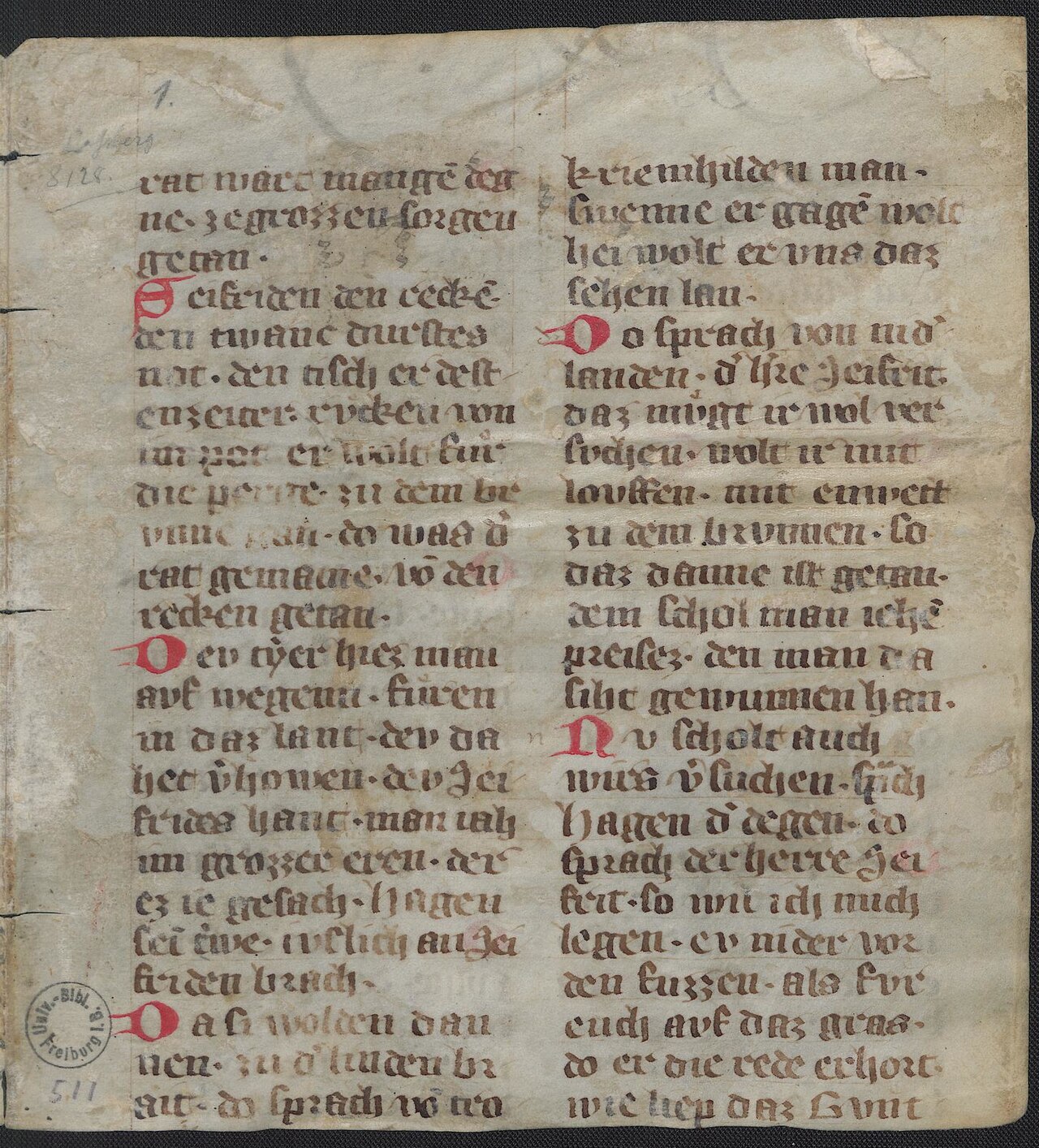
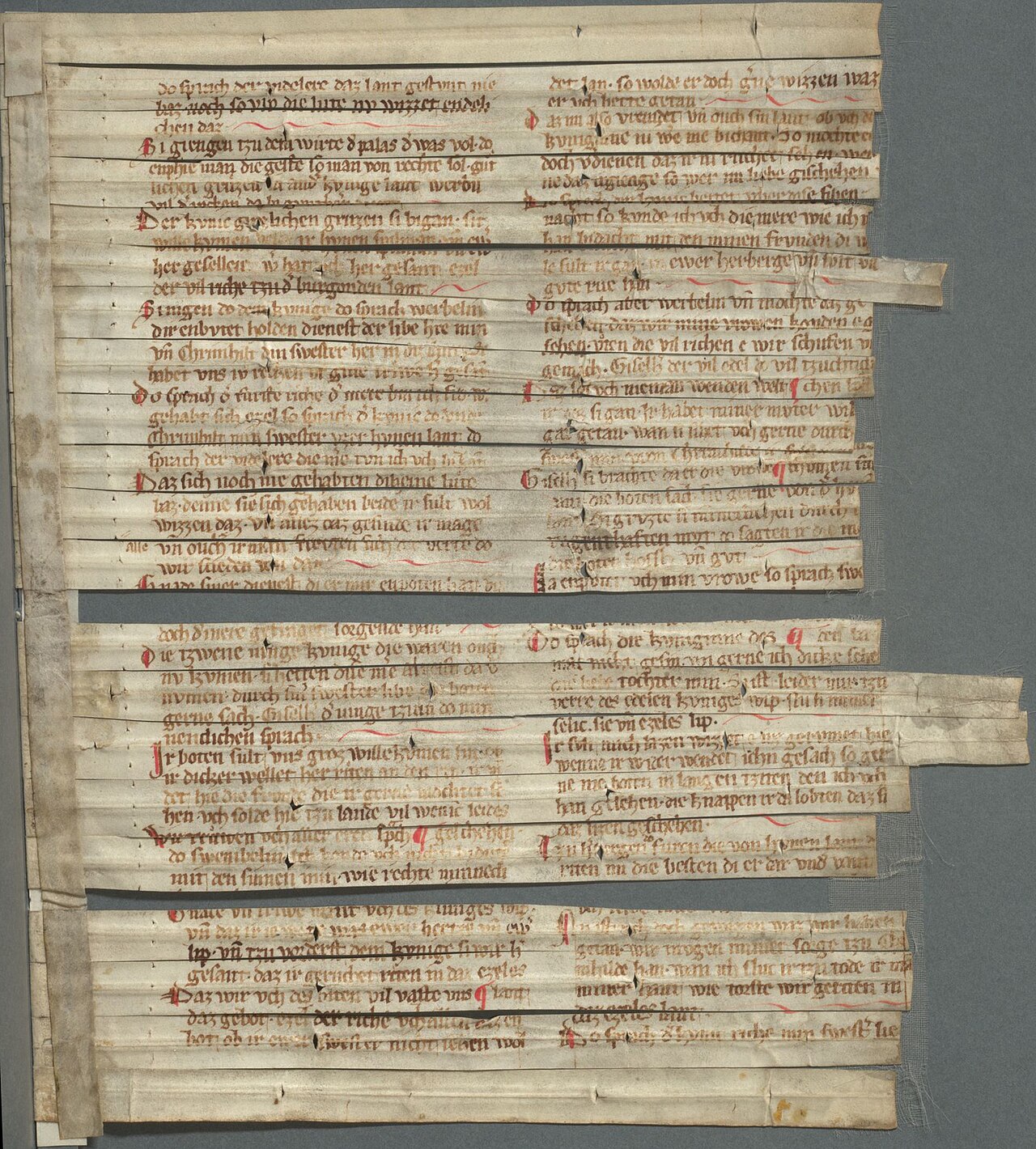
There are 37 known manuscripts and manuscript fragments of the *Nibelungenlied* and its variant versions. Eleven of these are essentially complete, while twenty-four are in various fragmentary states. One of the fragments is a Dutch version (manuscript “T”). The texts of the different manuscripts vary considerably, though less so than in many other Middle High German heroic epics, such as the Dietrich epics. While the exact wording and inclusion or exclusion of stanzas differ, the general order of events, the appearance of characters, their actions, and the content of their speeches remain relatively stable across versions from before the 1400s. Most scholars believe all versions derive from an original “archetype” through alterations and reworking, though Jan-Dirk Müller has proposed that the *Nibelungenlied* always existed in variant forms, linking this variation to the transition from oral to written transmission.
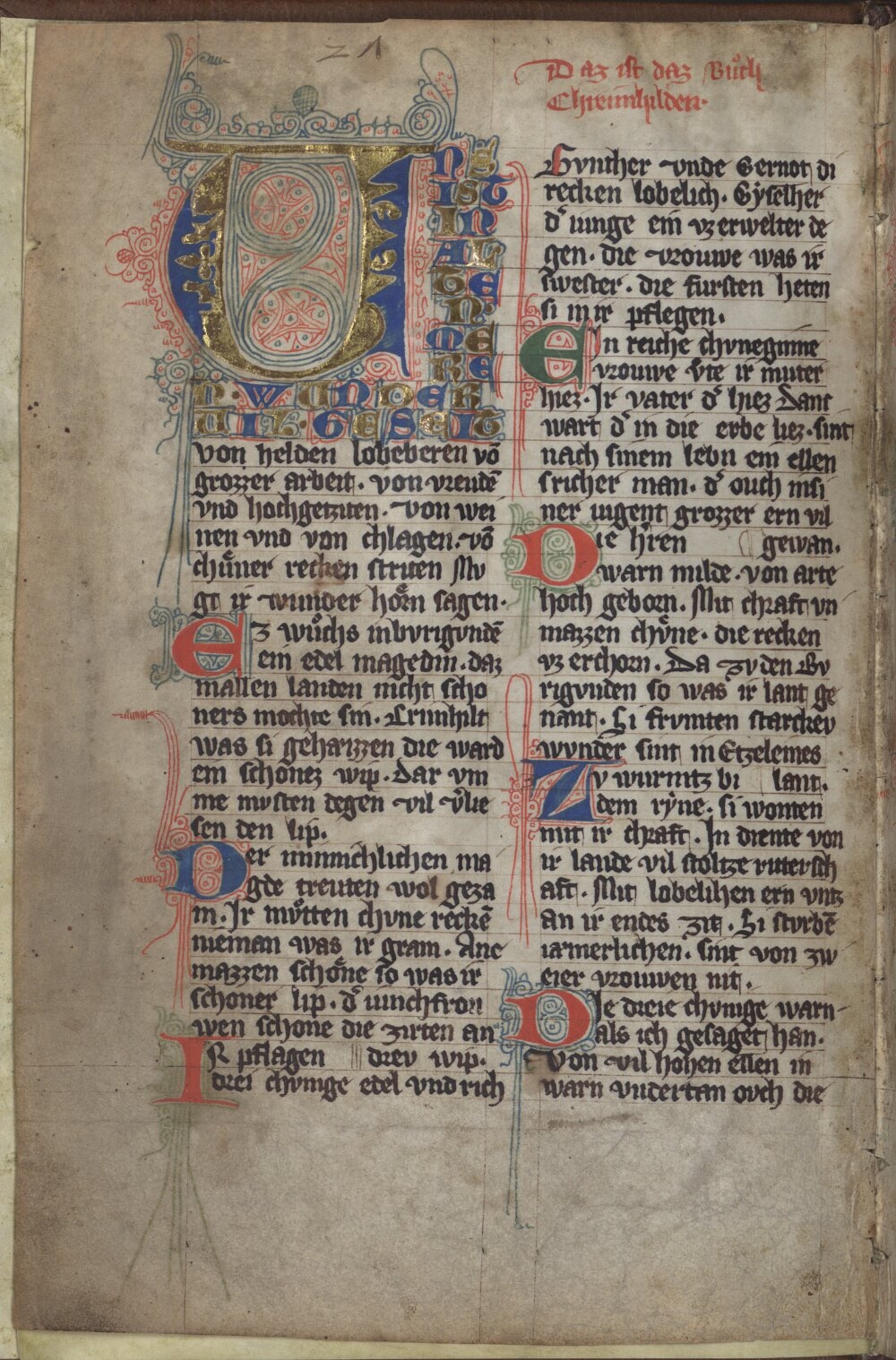
Based on the three oldest complete manuscripts—the Hohenems-Munich manuscript A (c. 1275–1300), the Sankt Gall manuscript B (c. 1233–1266), and the Hohenems-Donaueschingen manuscript C (c. 1225–1250)—scholars have traditionally distinguished two versions near the time of the poem’s composition. Manuscripts A and B are grouped together as version *AB, while manuscript C and most of the earliest fragments, including the oldest surviving attestation, represent version *C. Using the final words of the epic, *AB is also called the Not-version, and *C the Lied-version. Version *C is clearly a reworking of an earlier version, though it is uncertain whether that earlier version was *AB; *AB may itself be an expanded version of an even earlier text. Most scholars consider manuscript B the closest to the original *AB version.
By 1300, the *Nibelungenlied* was circulating in at least five versions: the Not-version *A, the Not-version *B, the Lied-version *C, a mixed version *Db, and another mixed version *Jdh (or *J/*d). Most fragments from after 1300 belong to the two mixed versions (*Mischfassungen*), which appear to be based on copies of both the Not and Lied versions. Three later manuscripts offer variant versions: one, m (after 1450), is lost, while two survive: n (c. 1470/80) and k (c. 1480/90). Manuscripts m and n include a story of Siegfried’s youth that more closely resembles the Old Norse *Þiðreks saga* and the early modern German *Lied vom Hürnen Seyfrid*, while k shortens the text and modernizes the language.
**Synopsis**
**Opening stanza** The famous opening of the *Nibelungenlied* is thought to be an addition by the adaptor of the *C version, as it does not appear in manuscript B, which likely represents the earlier version. It may have been inspired by the prologue of the *Nibelungenklage*.
Original (MS C): Uns ist in alten mæren || wunders vil geseit von helden lobebæren,|| von grôzer arebeit, von fröuden, hôchgezîten, || von weinen und von klagen, von küener recken strîten || muget ir nu wunder hœren sagen.
Modern German: Uns ist in alten Geschichten viel Staunenswertes gesagt von ruhmwürdigen Helden, von großer Mühsal (im Kampf), von Freuden, Festen, von Weinen und von Klagen, von kühner Recken Streiten könnt ihr nun Wunder hören sagen.
- Language
- Middle High German
- Genre
- Heroic epic
- Region of origin
- Passau (likely)
- Also known as
- Der Nibelunge liet or Der Nibelunge nôt
- Manuscripts extant
- 37 known manuscripts and fragments
Lore & Background
The poem is split into two parts. In the first part, the prince Siegfried comes to Worms to acquire the hand of the Burgundian princess Kriemhild from her brother King Gunther. Gunther agrees to let Siegfried marry Kriemhild if Siegfried helps Gunther acquire the warrior-queen Brünhild as his wife. Siegfried does this and marries Kriemhild; however, Brünhild and Kriemhild become rivals, leading eventually to Siegfried's murder by the Burgundian vassal Hagen with Gunther's involvement. In the second part, the widow Kriemhild is married to Etzel, king of the Huns. She later invites her brother and his court to visit Etzel's kingdom intending to kill Hagen. Her revenge results in the death of all the Burgundians who came to Etzel's court as well as the destruction of Etzel's kingdom and the death of Kriemhild herself.
Reader's Guide
Dubbed the 'German Iliad', the Nibelungenlied began a new life as the German national epic after its rediscovery in 1755. The poem was appropriated for nationalist purposes and was heavily used in anti-democratic, reactionary, and Nazi propaganda before and during the Second World War. Its legacy today is most visible in Richard Wagner's operatic cycle Der Ring des Nibelungen, which, however, is mostly based on Old Norse sources. In 2009, the three main manuscripts of the Nibelungenlied were inscribed in UNESCO's Memory of the World Register in recognition of their historical significance. The poem's tragedy appears to have bothered its medieval audience, and very early on a sequel was written, the Nibelungenklage, which made the tragedy less final. Scandinavian parallels to the German poem are found especially in the heroic lays of the Poetic Edda and in the Völsunga saga.
Did You Know?
- The Nibelungenlied was the first heroic epic put into writing in the German vernacular.
- The poem was forgotten after around 1500 and rediscovered in 1755.
- In 2009, the three main manuscripts of the Nibelungenlied were inscribed in UNESCO's Memory of the World Register.
- The famous opening stanza is thought to be an addition by the adaptor of the *C version and does not appear in manuscript B.
- A sequel called the Nibelungenklage was written very early on to make the tragedy less final.
Composition and the Manuscript Tradition
The Nibelungenlied was composed around 1200 in Middle High German by an anonymous poet likely hailing from the Passau region. There are 37 known manuscripts and manuscript fragments of the Nibelungenlied and its variant versions. Eleven of these manuscripts are essentially complete. Twenty-four manuscripts are in various fragmentary states of completion, including one version in Dutch (manuscript 'T'). The text of the different manuscripts varies considerably from one another, though there is less variance than found in many other Middle High German heroic epics, such as the Dietrich epics. Using the versions provided by the three oldest complete manuscripts—the Hohenems-Munich manuscript A (c. 1275–1300), the Sankt Gall manuscript B (c. 1233–1266), and the Hohenems-Donaueschingen manuscript C (c. 1225–1250)—scholars have traditionally differentiated two versions that existed near the time of the poem's composition: A and B are counted as belonging to a single version *AB, while a version *C is attested by manuscript C and most of the earliest fragments. Using the final words of the epic, *AB is also called the Not-version, and *C the Lied-version. Most scholars assume that manuscript B is the closest to the original *AB version. By 1300, the Nibelungenlied was circulating in at least five versions: the Not-version *A; the Not-version *B; the Lied-version *C; a mixed version *Db; and a mixed version *Jdh (or *J/*d).
Narrative Architecture and the Two-Part Tragedy
The poem is split into two parts. In the first part, the prince Siegfried comes to Worms to acquire the hand of the Burgundian princess Kriemhild from her brother King Gunther. Gunther agrees to let Siegfried marry Kriemhild if Siegfried helps Gunther acquire the warrior-queen Brünhild as his wife. Siegfried does this and marries Kriemhild; however, Brünhild and Kriemhild become rivals, leading eventually to Siegfried's murder by the Burgundian vassal Hagen with Gunther's involvement. In the second part, the widow Kriemhild is married to Etzel, king of the Huns. She later invites her brother and his court to visit Etzel's kingdom intending to kill Hagen. Her revenge results in the death of all the Burgundians who came to Etzel's court as well as the destruction of Etzel's kingdom and the death of Kriemhild herself. The famous opening stanza—'Uns ist in alten mæren || wunders vil geseit'—is actually thought to be an addition by the adaptor of the '*C' version of the Nibelungenlied, as it does not appear in the manuscript of B, which probably represents the earlier version. It may have been inspired by the prologue of the Nibelungenklage. Manuscript B instead begins with the introduction of Kriemhild, the protagonist of the work.
Roots in Germanic Oral Tradition
The Nibelungenlied is based on an oral tradition of Germanic heroic legend that has some of its origin in historic events and individuals of the 5th and 6th centuries and that spread throughout almost all of Germanic-speaking Europe. Scandinavian parallels to the German poem are found especially in the heroic lays of the Poetic Edda and in the Völsunga saga. Later manuscripts provide variant versions: one, m (after 1450), is lost while two are still extant: n (c. 1470/80) and k (c.1480/90). Manuscripts m and n contain a story of Siegfried's youth that more closely resembles that found in the Old Norse Þiðreks saga and early modern German Lied vom Hürnen Seyfrid, while k shortens the text and modernizes the language.
Rediscovery, National Myth, and Enduring Legacy
The poem was forgotten after around 1500 but was rediscovered in 1755. Dubbed the 'German Iliad', the Nibelungenlied began a new life as the German national epic. The poem was appropriated for nationalist purposes and was heavily used in anti-democratic, reactionary, and Nazi propaganda before and during the Second World War. Its legacy today is most visible in Richard Wagner's operatic cycle Der Ring des Nibelungen, which, however, is mostly based on Old Norse sources. In 2009, the three main manuscripts of the Nibelungenlied were inscribed in UNESCO's Memory of the World Register in recognition of their historical significance. It has been called 'one of the most impressive, and certainly the most powerful, of the German epics of the Middle Ages'. The poem's tragedy appears to have bothered its medieval audience, and very early on a sequel was written, the Nibelungenklage, which made the tragedy less final.
Gallery
Frequently Asked Questions
Who wrote the Nibelungenlied?
No named author survives, but the poet is generally thought to have been active in the Passau region. The work holds the distinction of being the earliest known heroic epic recorded in the German language.
What language is the Nibelungenlied written in, and how many copies exist?
The poem was composed in Middle High German. Thirty-seven manuscripts and fragments of the text are known to survive to this day.
How does the Nibelungenlied story end?
The narrative closes in catastrophic vengeance, as Kriemhild arranges the mass killing of the Nibelung heroes to exact revenge for the murder of her husband, Siegfried. The final scene is one of mutual annihilation rather than heroic triumph.
Why is the Nibelungenlied important to literary history?
By being the first major heroic epic committed to writing in the German vernacular, it laid the groundwork for a broader tradition of written German heroic poetry. It also preserves a window into much older Germanic oral traditions that predate the medieval period by several centuries.
More in Literary Novels And Classics 1-15
Spotted an error? Know more?
This is a living reference — every entry is fact-audited, and reader corrections feed straight into our audit queue. Suggest an edit · See this site's audit record