Court of equity
Courts applying equity to complement common law and promote justice.

A court of equity, sometimes called a chancery court, is a type of court that applies principles of fairness rather than strict legal rules to the cases it hears. These courts began when people started sending petitions to England’s Lord Chancellor, and they mainly handled requests for remedies other than money damages, like forcing someone to do what they promised (specific performance) or issuing special orders (extraordinary writs). Eventually, most equity courts merged with regular law courts, and laws were passed that let a single court handle both common law and equity at the same time. Today, courts of equity are seen as a way to fill gaps in the common law and promote justice.
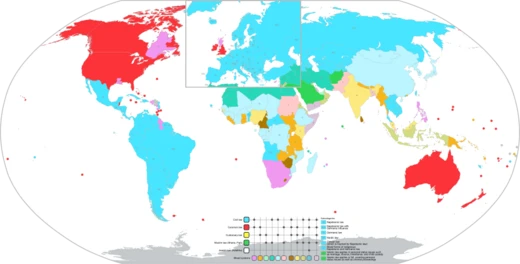
In the early United States, some states kept the English system of separate courts for law and equity, while others combined them, just as the U.S. Congress did for federal courts. Federal bankruptcy courts are one example of a court that acts as a court of equity. A few common law places, including the U.S. states of Delaware, Mississippi, New Jersey, South Carolina, and Tennessee, still keep the difference between law and equity, and between courts of law and courts of equity. In New Jersey, this split exists between the civil division and the general equity division of the New Jersey Superior Court.
**History**
The special nature of equity courts comes from how they developed over time. This history has shaped how they are used in case law, reflecting the values that built equitable jurisdiction. The changes in these courts show how equity’s rules and remedies evolved, how its main features shifted, and how social and political conditions affected its operation and deeper legal questions.
**Equity as a body of law**
Equity is now seen as a separate area of law, used by many modern courts. The way procedures grew inside equity courts has guided how equitable principles are applied. Starting from the varied rules of the early Courts of Chancery, today’s courts can handle equity cases while keeping their power to use discretion to fix new kinds of unfairness. Equity is not a standalone legal system; instead, it is about corrective justice and works alongside common law to balance out its rigid rules.
**Origin of the equity jurisdiction**
Equity first appeared in three main periods: the medieval period (13th–15th centuries), the formative period (16th–17th centuries), and the period of systematization (17th–19th centuries). Over these times, equity grew from the Chancellor giving fair relief based on personal conscience into an organized, established body of law run by courts.
**Medieval period**
The Chancery Division was set up in the 13th century by the King after the Supreme Court of Judicature was split. Under the Chancellor’s authority, the “King’s law” was used in local courts. The division did not handle actual cases but did work related to the King’s secretarial office. Even though it was not a court, there was still some judicial activity. It had limited power to decide whether writs issued in courts were valid, allowing only those that were similar to previous cases. These decisions were temporary and could be overruled by law courts if they conflicted with the actual law. As the division’s administrative work grew through its control of the King’s leftover influence, the Chancellor began handling “prayers” and “petitions,” including letters for remedies, relief, and grants on the King’s behalf. During the 14th and 15th centuries, the Chancery became a large, independent bureaucracy. Its formal job was to issue writs about inheritance or property transfers, which gave judges permission to start claims in the King’s courts.
**Formative period**
In the 16th century, the modern system of equity and the Chancellor turned into a body with recognized judicial features. As a result, the courts’ jurisdiction became more independent. This meant the Court of Chancery could issue decrees without the King’s Council, the Chancellors became skilled in law, and their role in resolving petitions became more organized. As it grew into a real judicial court with more power, other common law courts became wary and defensive about their own jurisdiction. This court had a specific jurisdiction and used different procedures than common law courts—for example, it issued a common injunction instead of the common law injunctive relief.
**Period of systematization**
The systematization of equity is often credited to Lord Eldon and the Judicature Acts of 1873. He organized the rules and principles found in modern equity today, making them more consistent and certain. As a result, equity existed alongside common law. Before this, the Courts of Chancery had problems and went through a “period of decline and stagnation” in the early 18th century. These defects included delays in cases, administrative complications, high costs, and burdensome processes.
**The High Court of Chancery**
By the early 1500s, a large part of the court’s workload came from equity cases. W.S. Holdsworth believed that the principles of equity were developed by and through the Chancery, and he identified three factors that shaped this jurisdiction: opposition to the rigidity of common law; ideas about the role of conscience in setting equitable rules; and a procedure, different from common law, that allowed the court to act flexibly.
- field
- Equity jurisdiction
- known_for
- Applying equitable principles, originating from petitions to the Lord Chancellor of England
- nationality
- English, later adopted in the United States and other common law jurisdictions
- origin_periods
- Medieval period (13th–15th centuries), formative period (16th–17th centuries), period of systematization (17th–19th centuries)
Lore & Background
The historical emergence of equity occurred during three significant periods: the medieval period (13th–15th centuries), the formative period (16th–17th centuries), and the period of systematization (17th–19th centuries). Throughout these periods, equity developed progressively from the Chancellor providing equitable relief based on personal conscience to an established and organized body of law governed by courts. The Chancery Division was established in the 13th century by the King after the separation of the Supreme Court of Judicature. Under the Chancellor's authority, the 'King's law' prevailed in local courts. The division did not handle actual cases but performed functions associated with the King's secretarial department. During the 14th and 15th centuries, the Chancery developed into an independent and extensive bureaucracy, issuing writs regarding inheritance or property transfers. In the 16th century, the modern system of equity and the Chancellor evolved into a body with recognized judicial features. The Court of Chancery issued decrees independently of the King's Council, Chancellors became proficient in law, and a more systematized role in resolving petitions emerged. He rationalized the rules and principles found in modern equity today, to provide enhanced consistency and certainty. Prior to this, the Courts of Chancery experienced shortcomings and a 'period of decline and stagnation' during the early 18th century, including jurisdictional delays, administrative complications, costly proceedings, and burdensome processes.
Reader's Guide
Courts of equity are significant because they developed a distinct body of law—equity—that complements common law by addressing its inflexible rules and promoting corrective justice. Their historical evolution, from medieval petitions to the Lord Chancellor to a systematized court system, shaped modern legal procedures and remedies. In the early years of the United States, some states followed the English tradition of maintaining separate courts for law and equity, while others combined both types of jurisdiction. United States bankruptcy courts serve as an example of a federal court that operates as a court of equity. A few common law jurisdictions, such as the U.S. states of Delaware, Mississippi, New Jersey, South Carolina, and Tennessee, continue to preserve the distinctions between law and equity.
Did You Know?
- Courts of equity originated from petitions to the Lord Chancellor of England.
- The Chancery Division was established in the 13th century by the King after the separation of the Supreme Court of Judicature.
- United States bankruptcy courts serve as an example of a federal court that operates as a court of equity.
Frequently Asked Questions
What is a Court of equity?
A Court of equity is a judicial body that resolves disputes by applying fairness-based principles rather than strict legal rules. It is also commonly called a chancery court or equity court.
Where did Courts of equity originate?
These courts grew out of medieval English practice, where petitioners who felt common law remedies were inadequate would appeal directly to the Lord Chancellor. The system developed from the 13th through 15th centuries and later spread to the United States and other common law jurisdictions.
What remedies can a Court of equity grant?
Rather than awarding monetary damages, equity courts typically order specific performance, issue extraordinary writs, or provide other tailored relief. Their focus is on achieving a just outcome where rigid legal rules fall short.
How do Courts of equity complement common law courts?
Equity courts fill gaps left by the common law system by offering flexible, conscience-based remedies. Together, the two systems ensure that parties receive both the letter and the spirit of justice.
What happened to Courts of equity in modern legal systems?
Over time, most equity courts were merged with courts of law through various legislative acts, giving a single court combined jurisdiction over both common law and equitable claims. Today the distinction persists in terminology and doctrine, but the separate institutional courts largely no longer exist in their original form.
More in Legal Systems & Courts 1-24
Spotted an error? Know more?
This is a living reference — every entry is fact-audited, and reader corrections feed straight into our audit queue. Suggest an edit · See this site's audit record