Court-martial
A military court for trying armed forces members and war crimes.

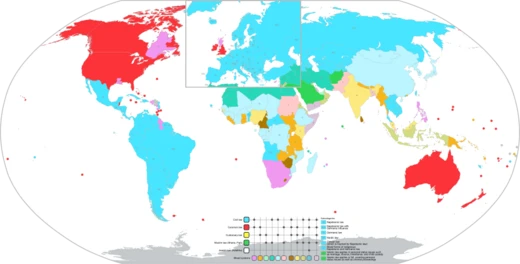
A court-martial is a military court or a trial conducted in such a court, empowered to determine the guilt of members of the armed forces subject to military law and, if found guilty, to decide upon punishment. Courts-martial may also be used to try prisoners of war for war crimes, and can involve civilian defendants in cases such as violations of martial law. The Geneva Conventions require that prisoners of war tried for war crimes be subject to the same procedures as the holding military’s own forces. Most navies convene a standard court-martial whenever a ship is lost, not to presume wrongdoing by the captain, but to make the circumstances of the loss part of the official record. Most military forces maintain a judicial system for breaches of military discipline, though some countries, like France, use civilian courts in peacetime.
The composition of a court-martial typically includes a presiding judge, a prosecutor, and a defense attorney, all of whom are trained lawyers and officers, though the precise format varies by country and the severity of the accusation. Courts-martial have jurisdiction over a wide range of military offences, some resembling civilian crimes like fraud or theft, and others purely military, such as cowardice, desertion, or insubordination. For the British Armed Forces, offences are defined in the Armed Forces Act 2006; for Canadian Forces, in the Queen’s Regulations and Orders and the National Defence Act; and for the United States, under the Uniform Code of Military Justice. In Canada, a two-tier system exists: summary trials by superior officers and more serious matters heard by courts martial presided over by independent military judges, with appeals to the Court Martial Appeal Court. In Finland, military jurisdiction covers crimes only service members can commit, as well as normal crimes where both defendant and victim are military, though war crimes and sexual crimes are excluded. Finnish military cases are handled by civilian district courts with a special composition including a civilian judge and two military members, while courts-martial proper are instituted only during war by government decree.
- type
- Military judicial body
- jurisdiction
- Armed forces and, in some cases, civilians
- composition
- Presiding judge, prosecutor, defense attorney (all trained lawyers and officers)
- notable feature
- Hyphenation differs between US and British usage
- scope
- Tries military offences including cowardice, desertion, insubordination, and civilian-like crimes
Lore & Background
Courts-martial are convened for a variety of purposes, including dealing with violations of martial law and, in most navies, whenever a ship is lost to make the circumstances part of the official record, without presuming wrongdoing by the captain. The precise format varies by country and severity of accusation, but typically involves a presiding judge, prosecutor, and defense attorney, all trained lawyers and officers. Most military forces maintain a judicial system for breaches of military discipline, though some countries like France use civilian courts in peacetime. The hyphenation of the term differs: in US usage, it is always hyphenated as a noun or verb, while British usage distinguishes the noun "court martial" from the verb "to court-martial" with a hyphen. Courts-martial have jurisdiction over a wide range of military offences, many resembling civilian crimes such as fraud, theft, or perjury, alongside purely military crimes like cowardice, desertion, and insubordination. Specific offences and punishments are detailed per country, such as under the UK’s Armed Forces Act 2006, Canada’s Queen’s Regulations and Orders and National Defence Act, or the US Uniform Code of Military Justice. In Canada, a two-tier system exists: summary trials by superior officers and more serious matters before independent military judges, with appeals to the Court Martial Appeal Court of Canada. China’s highest military court is the Military Court of the Chinese People’s Liberation Army, a special people’s court under dual leadership of the Supreme People’s Court and the Central Military Commission. Finland handles military crimes—both purely military offences and normal crimes involving military personnel—through civilian district courts with a special composition including a civilian judge and two military members, while courts-martial proper are only instituted during war by government decree. The Geneva Conventions require that prisoners of war tried for war crimes receive the same procedures as the holding military’s own forces.
Reader's Guide
Courts-martial serve as the primary judicial mechanism for enforcing military law, addressing both purely military crimes—such as cowardice, desertion, and insubordination—and civilian-like offenses like fraud, theft, or perjury. Their significance lies in maintaining discipline within armed forces while also providing a legal framework for trying prisoners of war for war crimes, as required by the Geneva Conventions. The structure and procedures of courts-martial vary widely across nations, from Canada's two-tier system with independent military judges to Finland's use of civilian courts with military members in peacetime and war-time courts-martial by government decree.
Did You Know?
- The Geneva Conventions require that POWs on trial for war crimes be subject to the same procedures as the holding military's own forces.
- Most navies convene a standard court-martial whenever a ship is lost, not to presume wrongdoing but to record the circumstances.
- In British usage, a hyphen distinguishes the noun 'court martial' from the verb 'to court-martial'.
Frequently Asked Questions
What is a Court-martial?
A Court-martial is a military judicial body that hears cases involving members of the armed forces and, in certain circumstances, civilian defendants. It determines guilt under military law and assigns punishment when a conviction is reached.
Who can be tried before a Court-martial?
Its primary jurisdiction covers armed forces personnel, but it may also sit in cases involving prisoners of war accused of war crimes or civilians charged with violations of martial law.
What kinds of offenses does a Court-martial handle?
It tries a range of military offences such as cowardice, desertion, and insubordination, as well as crimes that would be prosecuted in civilian courts.
Who makes up a Court-martial panel?
The proceedings involve a presiding judge, a prosecutor, and a defense attorney, all of whom are trained lawyers and military officers.
How does the spelling of 'Court-martial' differ between the US and the UK?
American usage typically hyphenates the term, while British convention often writes it as a single unhyphenated word, though both refer to the same type of military tribunal.
More in Legal Systems & Courts 1-24
Spotted an error? Know more?
This is a living reference — every entry is fact-audited, and reader corrections feed straight into our audit queue. Suggest an edit · See this site's audit record