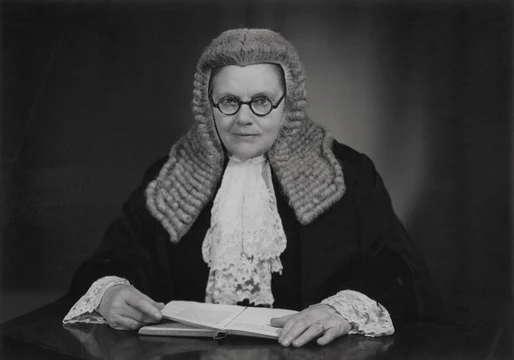
Legal writing
Legal writing analyzes facts and presents arguments using authority.

Coolcaesar at en.wikipedia · CC BY-SA 3.0
Legal writing is a specialized form of written communication used within the legal profession. It involves the analysis of fact patterns and the presentation of arguments in documents such as legal memoranda and briefs, and is distinguished by its heavy reliance on authority, precedent, and technical vocabulary. One primary form of legal writing is predictive analysis, which offers a balanced assessment of a legal problem or issue, often for internal decision-making. Another is persuasive analysis, which advocates for a specific legal position, as seen in motions and appellate briefs. A third category, legal drafting, involves creating legal instruments like contracts and wills.
A key distinguishing feature is the heavy reliance on authority; writers must support assertions with citations, using a unique and complex citation system. In the United States, this system is governed by two competing manuals: the ALWD Citation Manual and The Bluebook. Legal writing also values precedent, leading lawyers to reuse and modify templates of previously successful documents, such as contracts or motions, for new cases.
The vocabulary of legal writing includes specialized terms unique to law (e.g., tort, fee simple), ordinary words with different legal meanings (e.g., action, consideration), archaic words from earlier English (e.g., herein, whereby), and loan words from French and Latin (e.g., estoppel, habeas corpus). These features contribute to a formal style, which can include long sentences and complex constructions. The appropriate level of formality depends on the audience and purpose: an appellate brief to a high court demands high formality, while an internal memorandum or an email to a client may be less formal. Transactional documents, from a large merger agreement to a simple proxy statement, similarly vary in formality. While many U.S. law schools emphasize clarity and directness in teaching legal writing, practicing lawyers often resort to template-based, hyperformal writing due to time constraints. Recently, automated tools have emerged to help lawyers check formalities, verify citations, and manage quotations in legal documents.
- field
- Legal writing
- known_for
- Analysis of fact patterns, presentation of arguments, drafting of legal instruments
- distinguishing_features
- Authority, precedent, vocabulary, formality
Lore & Background
Legal writing is distinguished by its heavy reliance on authority, with every assertion typically supported by citations to legal sources. This citation practice follows a unique and complex system, with American legal writing governed by two competing manuals: the ALWD Citation Manual and The Bluebook. Precedent is also central; lawyers frequently reuse templates or forms from prior contracts or successful motions rather than drafting entirely new documents. The vocabulary of legal writing is notably specialized, falling into four categories: unique legal terms like *tort* and *fee simple*; ordinary words with distinct legal meanings, such as *action* for lawsuit or *party* for a principal in litigation; archaic English words like *herein*, *hereto*, and *wherefore*; and loanwords from French (*estoppel*, *voir dire*) and Latin (*habeas corpus*, *prima facie*), which are not italicized as foreign terms would be in mainstream English. This vocabulary contributes to a formal style, characterized by long sentences, complex constructions, and hyper-formal language. While some formality is necessary for precision and respect—such as in appellate briefs to high courts—it can hinder reader comprehension, especially for nonlawyers. The appropriate level of formality depends on the audience: an interoffice memo may be less formal than a merger agreement between large corporations, while a proxy statement for a neighborhood association should be as plain as possible. Many U.S. law schools teach legal writing emphasizing clarity and directness, though practicing lawyers often rely on outdated, template-based, hyperformal styles due to heavy workloads.
Reader's Guide
Legal writing is categorized into two broad types: legal analysis (predictive and persuasive) and legal drafting. Predictive analysis, such as the legal memorandum, predicts the outcome of a legal question. Persuasive analysis, such as motions and briefs, attempts to persuade a deciding authority. Legal drafting creates binding legal text like statutes, contracts, and wills, and does not require legal authority citation. The level of formality in legal writing varies based on audience and purpose, from highly formal appellate briefs to informal client emails. Many U.S. law schools teach legal writing with an emphasis on clarity and simplicity, though practicing lawyers often resort to template-based, hyperformal styles. Automated tools have recently been developed to help with citation verification and formalities.
Did You Know?
- Legal writing uses specialized words unique to law, such as tort, fee simple, and novation.
- Ordinary words like 'action' and 'consideration' have different meanings in legal writing.
- Legal writing employs archaic vocabulary such as 'herein', 'hereto', and 'hereby'.
- Loan words from French (estoppel, laches) and Latin (certiorari, habeas corpus) are common.
The Architecture of Authority and Citation
Legal writing is fundamentally built on a pillar that no other genre of writing demands to the same degree: the obligation to substantiate every claim with cited authority. A writer in this field cannot simply assert a position; each statement must be anchored to a recognized legal source, and the mechanism for doing so is a citation system of remarkable complexity and uniqueness. In the United States, two competing rulebooks govern how these citations are formatted—the ALWD Citation Manual and The Bluebook—each offering its own professional system. This is not a minor stylistic preference; it is a structural requirement that shapes the entire document. Beyond American borders, different nations employ their own citation conventions, meaning the practice is both deeply standardized within a jurisdiction and varied across the globe. The result is a writing form where the scaffolding of proof is as visible and essential as the argument itself, setting legal prose apart from journalism, academia, or any other discipline where sources matter but do not dominate the page in quite this way.
A Vocabulary Forged Across Centuries
The language of legal writing draws from four distinct wellsprings, creating a lexicon unlike any other professional field. First, there are terms entirely native to law—words like tort, fee simple, and novation that exist only in this domain. Second, ordinary English words are repurposed with specialized legal meanings: action becomes a lawsuit, consideration transforms into the support underlying a promise, execute means to sign into effect, and party identifies a principal in litigation. Third, legal prose retains a stratum of archaic vocabulary from the sixteenth century—herein, hereto, whereby, wherefore, said, such—words that once belonged to everyday speech but now survive primarily in legal documents. Fourth, the field absorbs loan terms from French (estoppel, laches, voir dire) and Latin (certiorari, habeas corpus, prima facie, inter alia, mens rea, sub judice), which are treated as native English legal language rather than foreign insertions and thus are not italicized. Together these four layers produce a vocabulary that is simultaneously precise, historically layered, and deliberately resistant to the casual drift of common speech.
The Spectrum of Formality and the Reader at the Center
Formality in legal writing is not a fixed setting but a dial that turns according to audience and purpose. An appellate brief filed before a jurisdiction's highest court demands a highly formal register, signaling respect for the institution and the gravity of the matter. An interoffice memorandum to a supervisor, serving as an internal decision-making tool, can adopt a less formal tone while remaining professional. An email updating a friend who is also a client about a case's status sits at the informal end. Transactional documents follow a parallel continuum: a 150-page merger agreement between two large corporations, each represented by counsel, calls for maximum formality alongside precision and airtightness. A commercial lease for a small office space requires less complexity. A proxy statement for a neighborhood association's board election should be as plain as possible, and informality is justified if it serves comprehension. The governing principle is assessing the needs and expectations of the reader. When legal content must reach nonlawyers, clarity must override ceremony. Many law schools emphasize this balance, yet busy practitioners often default to outdated, hyperformal templates under deadline pressure.
Two Pillars: Analysis and Drafting
Legal writing divides into two broad categories: legal analysis and legal drafting. Analysis itself splits further into predictive and persuasive modes. Predictive analysis, most commonly embodied in the legal memorandum, forecasts the likely outcome of a legal question by examining the governing authorities and the facts that generated it, then applies those authorities to reach a conclusion and offers advice and recommendations to the client. It also functions as a record of the research performed. Persuasive analysis, by contrast, advocates for a particular legal position and takes the form of motions and briefs. In American law schools, students are required to study both modes, with courses centered on outcome-predicting memoranda and persuasive filings. Legal drafting, while less universally taught, covers the creation of contracts, wills, and other legal instruments. A related practice—drawing on precedent rather than pure authority—means that a lawyer who has successfully prepared a similar contract or motion before will often reuse that document with limited modifications, calling these reusable documents templates or, less commonly, forms. This blending of analytical rigor, persuasive advocacy, and practical drafting gives legal writing a structural breadth that few other professional writing disciplines match.
Gallery






Frequently Asked Questions
Who is Legal writing?
Legal writing is a specialized branch of written communication within the legal profession, centered on analyzing fact patterns and constructing persuasive arguments for documents such as memoranda and briefs. It sits at the intersection of legal reasoning and professional drafting.
What are Legal writing's powers/role?
Its core function is to dissect factual scenarios and present structured arguments grounded in cited authority and precedent. It also covers the drafting of legal instruments like contracts and wills.
How does Legal writing's story end?
Rather than concluding with a narrative arc, Legal writing fulfills its purpose when a court, client, or opposing party receives a clear, authority-backed argument or instrument that advances a legal position. Its 'ending' is the practical effect it produces on a dispute or transaction.
Why is Legal writing important?
It is the primary vehicle through which legal professionals communicate complex reasoning to courts, clients, and colleagues. Without its structured reliance on precedent and technical vocabulary, the legal system would lack a consistent framework for argumentation.
What distinguishes Legal writing from other forms of writing?
It is set apart by its heavy dependence on cited authority, binding precedent, and a specialized technical vocabulary. Its formality and structured argumentation differ sharply from academic or creative writing.
More in Legal Professions 1-24
Spotted an error? Know more?
This is a living reference — every entry is fact-audited, and reader corrections feed straight into our audit queue. Suggest an edit · See this site's audit record