
Legal aid
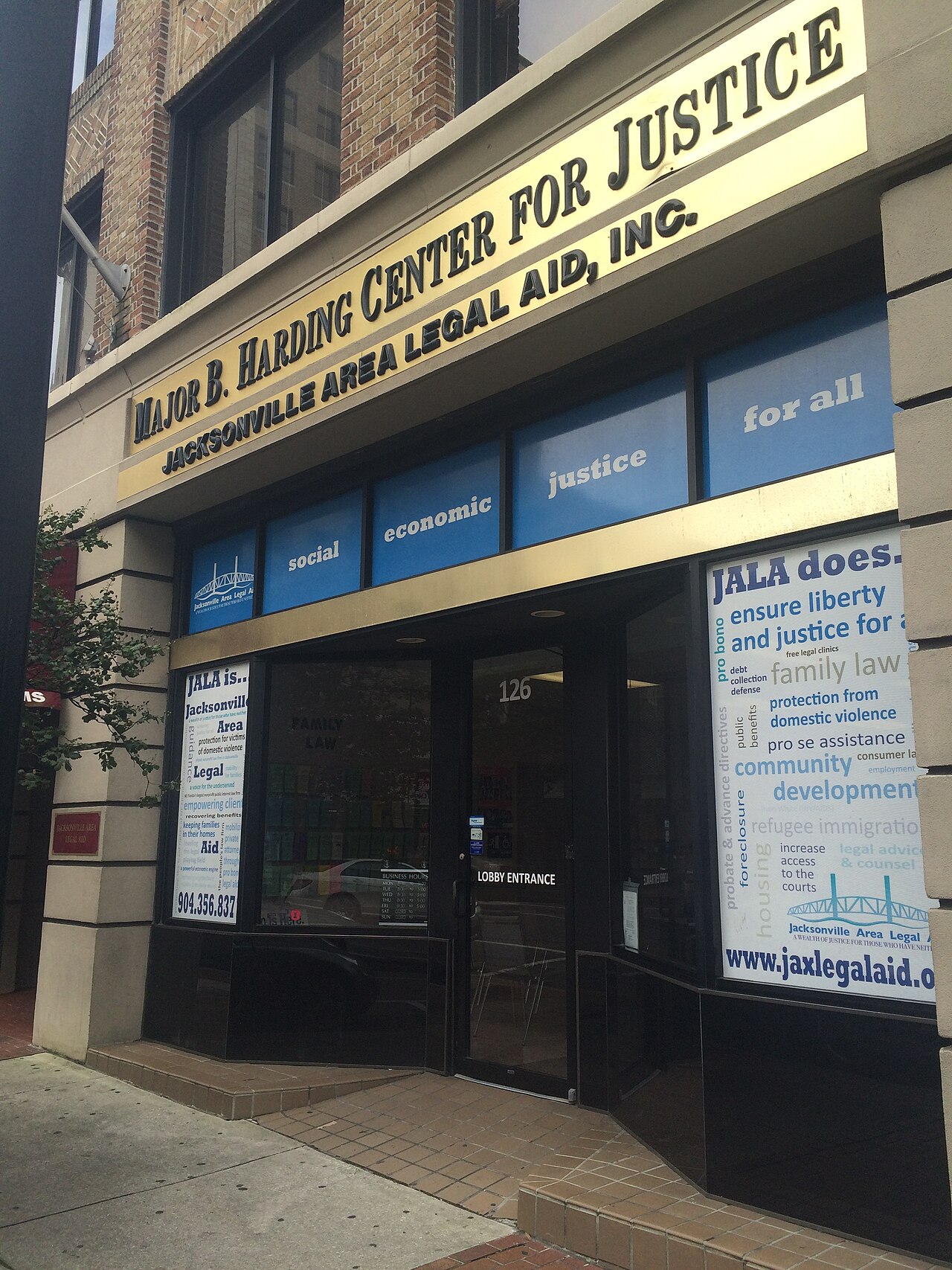
Legal aid ensures access to justice for those unable to afford counsel.

Mouryan · CC BY-SA 4.0
Legal aid helps people who cannot afford a lawyer or court costs get legal representation and access to the justice system. It is considered essential for ensuring equality before the law, the right to counsel, and a fair trial. This principle is reflected in Article 6.3 of the European Convention on Human Rights for criminal cases and Article 6.1 for both civil and criminal matters. For those without sufficient money, government-funded legal aid increases the chance of receiving free or reduced-cost help from legal professionals, or financial assistance, during court proceedings.
Several models for delivering legal aid exist, such as duty lawyers, community legal clinics, and paying lawyers to handle cases for eligible individuals. Informal or general legal advice may also be offered at low or no cost through organizations like law centres in the UK, community legal centres in Australia, and other groups providing aid inside and outside of court.
Legal aid is closely tied to the welfare state, and a state’s willingness to provide it depends on attitudes toward welfare. It is a welfare service for those who cannot afford legal counsel, and it also helps enforce welfare provisions—like social housing—by giving eligible people access to legal advice and courts. Historically, legal aid has been vital for upholding economic, social, and cultural rights, especially in areas like social security, housing, social care, health, education, employment law, and anti-discrimination legislation. Jurist Mauro Cappelletti argued that legal aid is essential for access to justice because it lets individuals enforce these rights through legal channels. His ideas developed in the second half of the 20th century, when capitalist democracies created liberal welfare states focused on the individual. States increasingly acted as contractors and service providers in a market-based system that saw citizens as consumers, shifting emphasis toward individual enforcement of rights.
Before the mid-20th century, literature on legal aid stressed collective enforcement of economic, social, and cultural rights. As classic welfare states formed in the 1940s after World War II, a key idea was that citizens shared collective responsibility for these rights, and the state took responsibility for those unable to support themselves due to illness or unemployment. Enforcement was mainly collective, through public policies rather than individual lawsuits. Laws supporting welfare were seen as tools for planners, not lawyers. Legal aid schemes were introduced on the assumption that the state should help people in legal disputes, but they initially focused on family law and divorce.
In the 1950s and 1960s, the welfare state’s role changed, and social goals were no longer seen as universally shared. Individuals gained more freedom to pursue their own aims. The welfare state expanded, and legal aid grew as concerns about the power of welfare providers and professionals arose. During the 1960s and 1970s, demand increased for individuals to have the right to legally enforce their economic, social, and cultural rights and welfare benefits. Mechanisms emerged allowing citizens to enforce these rights through legal processes, and welfare lawyers used legal aid to advise low-income individuals dealing with state officials. Legal aid was thus extended beyond family law to cover a wide range of economic, social, and cultural rights.
In the 1980s, the traditional welfare state’s role was questioned, and welfare services were more often provided by private entities. Legal aid was increasingly delivered through private providers, though it remained focused on court proceedings. Citizens were seen as consumers expected to choose among services. When choice wasn’t possible, they were given the right to complain through administrative processes. This created tension, as legal aid systems weren’t designed for advice on administrative complaints. Further tension arose when states that prioritized individual enforcement of economic, social, and cultural rights over collective enforcement cut funding for legal aid as a welfare provision. Enforcing welfare entitlements individually requires levels of legal aid funding more typical of systems that emphasize collective enforcement.
- field
- Legal assistance and welfare provision
- known_for
- Providing legal representation and financial aid to those unable to afford it
- delivery_models
- Duty lawyers, community legal clinics, payment of lawyers, law centres (UK), community legal centres (Australia)
Lore & Background
Legal aid has a close relationship with the welfare state, and its provision by a state is influenced by attitudes toward welfare. Historically, legal aid has played a significant role in ensuring respect for economic, social and cultural rights, particularly in relation to social security, housing, social care, health, and education services, as well as employment law and anti-discrimination legislation. Prior to the mid-20th century, literature on legal aid emphasised the collective enforcement of economic, social and cultural rights. As classic welfare states were established during the 1940s and following World War II, a central principle was that citizens shared collective responsibility for these rights, and the state assumed responsibility for those unable to provide for themselves. Legal aid schemes were introduced on the assumption that the state had a responsibility to assist those involved in legal disputes, but initially focused mainly on family law and divorce. During the 1950s and 1960s, the role of the welfare state evolved, and individuals were increasingly free to pursue their own objectives. The welfare state expanded, along with legal aid provisions, as concerns arose regarding the power of welfare providers and professionals. In the 1960s and 1970s, demand grew for individuals to have the right to legally enforce economic, social and cultural rights, and welfare lawyers used legal aid to advise individuals on low incomes when dealing with state officials. Legal aid was extended beyond family law to cover a broad range of economic, social, and cultural rights. In the 1980s, the role of the traditional welfare state was increasingly questioned, and welfare services were more frequently provided by private entities. Legal aid was increasingly delivered through private providers, though it remained focused primarily on assistance in court proceedings. Citizens came to be viewed more as consumers, and tensions emerged as states that prioritised individual enforcement of economic, social, and cultural rights reduced funding for legal aid as a welfare provision.
Reader's Guide
Legal aid is significant as a welfare provision that enables individuals who cannot afford legal representation to access the court system, thereby upholding the right to a fair trial and equality before the law. Its development reflects broader shifts in welfare state philosophy, from collective enforcement of economic, social, and cultural rights in the mid-20th century to an emphasis on individual enforcement in later decades. Jurists such as Mauro Cappelletti have argued that legal aid is essential to access to justice, as it enables individuals to enforce economic, social and cultural rights through legal mechanisms. The evolution of legal aid delivery models—including duty lawyers, community legal clinics, and payment of lawyers—illustrates the adaptation of legal aid to changing societal needs. However, tensions have arisen when states reduce funding for legal aid while emphasising individual enforcement, as individual enforcement of welfare entitlements requires levels of legal aid funding more commonly associated with systems that emphasise collective enforcement. Legal aid remains central to ensuring that welfare provisions are enforced and that citizens have access to legal advice and the courts, particularly in areas such as social security, housing, social care, health, education, employment law, and anti-discrimination legislation.
Did You Know?
- Legal aid is provided for by Article 6.3 of the European Convention on Human Rights regarding criminal law cases and Article 6.1 for both civil and criminal cases.
- Delivery models for legal aid include duty lawyers, community legal clinics, and the payment of lawyers to deal with cases for individuals entitled to legal aid.
- Prior to the mid-20th century, literature on legal aid emphasised the collective enforcement of economic, social and cultural rights.
- In the 1980s, legal aid was increasingly delivered through private providers, though it remained focused primarily on assistance in court proceedings.
Gallery





Frequently Asked Questions
What is Legal aid?
Legal aid is a system that supplies legal representation and financial support to individuals who cannot afford a lawyer or navigate the court system on their own. It sits at the intersection of legal assistance and welfare provision.
What role does Legal aid play in the justice system?
Its core function is to guarantee that a person's financial situation never bars them from receiving counsel, a fair trial, or equal treatment before the law. In essence, it levels the playing field so that justice is accessible to everyone, not just those with money.
How is Legal aid actually delivered to people?
Delivery varies by jurisdiction but commonly includes duty lawyers on call, community legal clinics, dedicated law centres (as in the UK), community legal centres (as in Australia), and direct payment arrangements for retained lawyers.
Why is Legal aid considered essential?
It upholds the principle that access to justice cannot depend on wealth, a right enshrined in Article 6.1 of the European Convention on Human Rights for civil and criminal matters and in Article 6.3 specifically for criminal cases. Without it, the promise of equality before the law would remain theoretical for the poorest citizens.
What is Legal aid most known for?
It is best recognized for bridging the gap between the court system and those who simply cannot pay for a lawyer, ensuring that representation and financial aid reach people who would otherwise be locked out of legal processes entirely.
More in Legal Professions 1-24
Spotted an error? Know more?
This is a living reference — every entry is fact-audited, and reader corrections feed straight into our audit queue. Suggest an edit · See this site's audit record