Juscelino Kubitschek
Brazilian president who built Brasília and pursued rapid development.
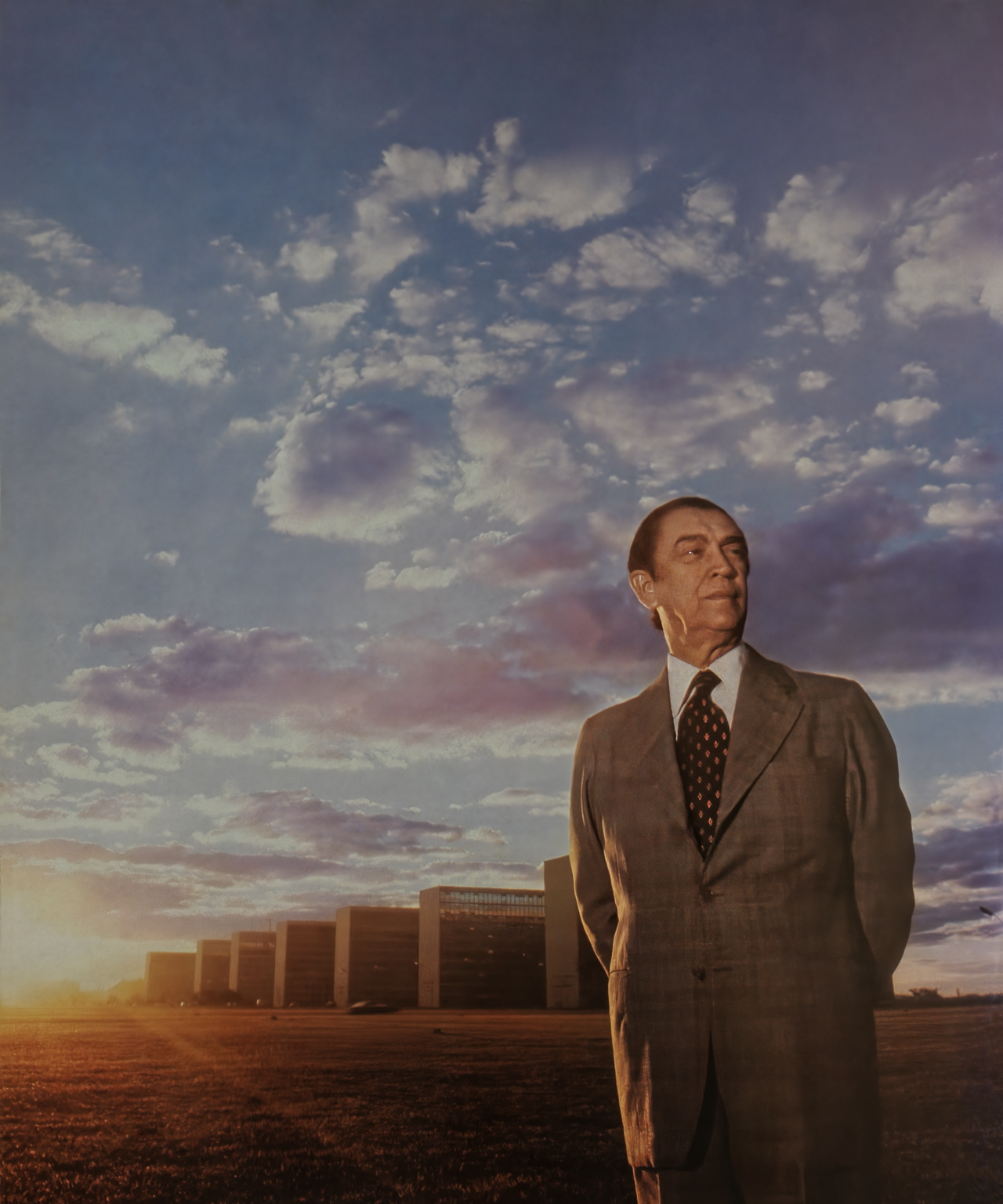
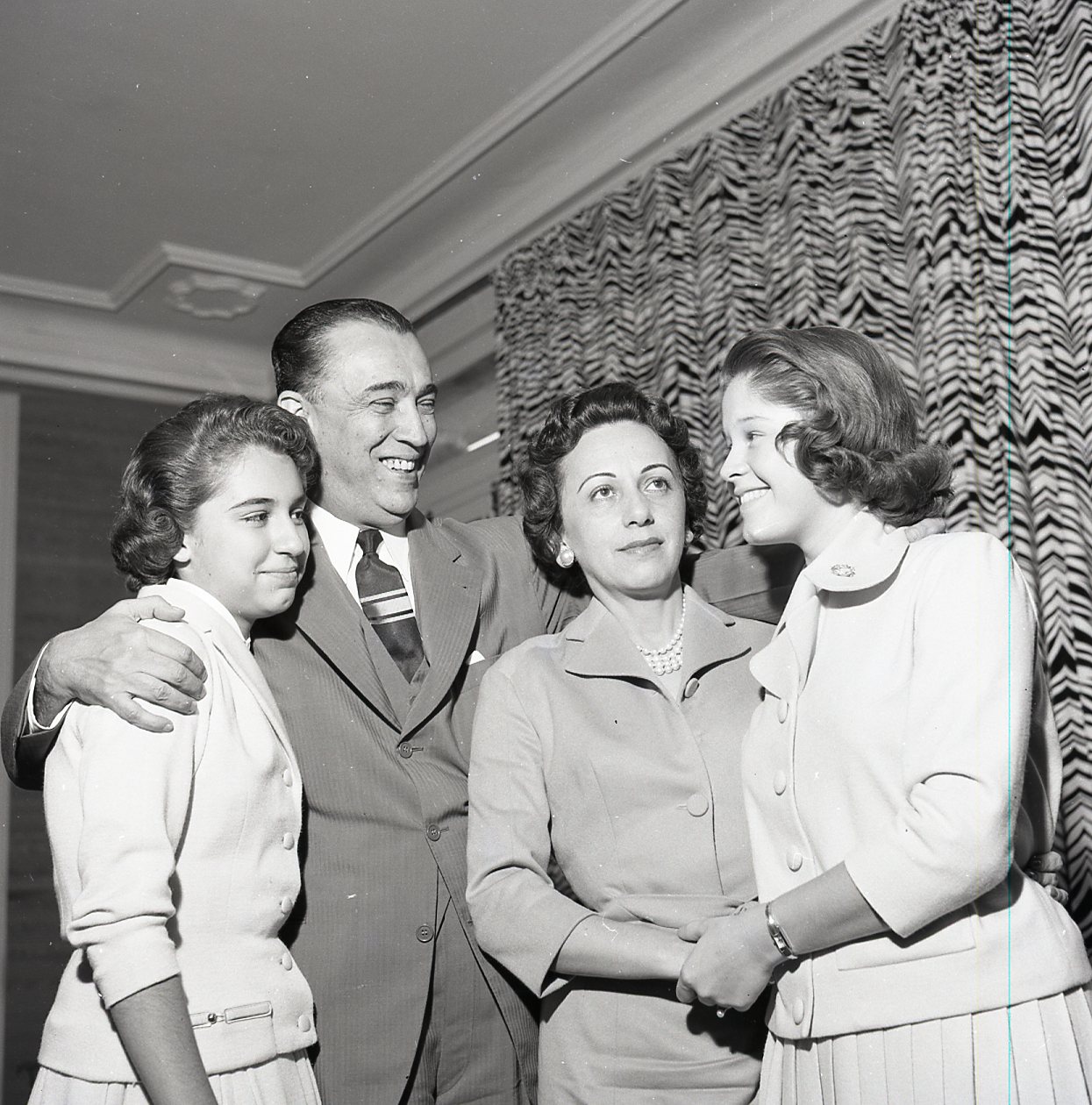
Juscelino Kubitschek de Oliveira, widely known by his initials JK, was the 21st president of Brazil, serving from 1956 to 1961. His administration was defined by an ambitious development plan called "50 years in 5," which prioritized rapid economic growth and social transformation. Under this plan, Brazil experienced a period of notable economic expansion and relative political stability, though it also led to a significant rise in external debt, inflation, and wage erosion, alongside increased income concentration. Kubitschek is most famously remembered for fulfilling a long-standing national project by constructing a new federal capital, Brasília, which was inaugurated on 21 April 1960, replacing Rio de Janeiro. Born in 1902 in Diamantina, Minas Gerais, he lost his father at age two and was raised by his mother, a schoolteacher. After studying humanities at a seminary, he moved to Belo Horizonte in 1920, graduating in medicine from the Federal University of Minas Gerais in 1927 and specializing in urology in Paris in 1930. He married Sarah Lemos in 1931, with whom he had a daughter and later adopted another. Kubitschek began his political career after serving as a doctor in the Public Force of Minas Gerais, where he befriended the future federal intervenor Benedito Valadares, who appointed him chief of staff. He was elected federal deputy in 1934, but his term was revoked during the Estado Novo coup, prompting a return to medicine. In 1940, Valadares appointed him mayor of Belo Horizonte, a post he held until 1945. That same year, he was elected a constituent deputy for the Social Democratic Party. He became governor of Minas Gerais in 1951, creating the Companhia Energética de Minas Gerais and prioritizing road building and industrialization. In 1955, he was elected president with 35.6% of the vote, with João Goulart as his running mate, after a military movement ensured his inauguration against opposition attempts to annul the election. Following his presidency, he was elected senator for Goiás in 1961, but the 1964 military coup revoked his term and suspended his political rights. He went into voluntary exile in the United States and Europe, returning in 1967 to help form the Frente Ampla, an opposition movement that was soon extinguished by the military, leading to a brief imprisonment. Kubitschek died in a car accident in 1976; while the official repo
- known_for
- Construction of Brasília, '50 years in 5' development plan
Quick Facts
- Honorific Prefix
- His Excellency
- Order
- 21st
- Office
- President of Brazil
- Term Start
- 31 January 1956
- Term End
- 31 January 1961
- Vice President
- João Goulart
- Predecessor
- Nereu Ramos
- Successor
- Jânio Quadros
- Office1
- Governor of Minas Gerais
- Term Start1
- 31 January 1951
- Term End1
- 31 March 1955
- 1Blankname1
- Lieutenant
Facts from the source article.
Lore & Background
Kubitschek was a member of the pro-Vargas Social Democratic Party and built an alliance with João Goulart of the Brazilian Labour Party. He won the 1955 presidential election with 35.68% of total votes cast (around 36.2% of valid votes), though the UDN protested he hadn't won a majority. His inauguration was secured by the Preventive Coup led by Marshal Lott, who deposed Carlos Luz. On his second day in office, Kubitschek unveiled the Plano de Metas. His government founded Furnas Centrais Elétricas and the Duque de Caxias Refinery, and shifted investment from rail to road, building highways like the Belém-Brasília Highway, Régis Bittencourt Highway, Fernão Dias Highway, and BR-364. In June 1959, he broke off negotiations with the IMF rather than restrain the internal economy.
Reader's Guide
Kubitschek's presidency is remembered for its ambitious developmental agenda, symbolized by the slogan '50 years in 5' and the construction of Brasília. This project aimed to promote the development of Brazil's interior and national integration. His economic plan included 30 goals in energy, transport, food, base industries, education, and the capital. While his term saw notable economic growth and relative political stability, it also brought significant increases in external debt, inflation, income concentration, and wage erosion. After his presidency, Kubitschek was elected senator for Goiás in 1961. Following the 1964 military coup, his political rights were suspended, and he went into voluntary exile.
Did You Know?
- Kubitschek won the 1955 presidential election with 35.68% of total votes cast (around 36.2% of valid votes), which the UDN protested as not a majority.
- His inauguration was only secured thanks to the Preventive Coup led by Marshal Lott, who deposed Carlos Luz.
- The Plano de Metas consisted of 31 objectives to be achieved during his five years in office.
- Industrial production grew by 80% between 1955 and 1960, with real growth averaging 7% per year from 1956 to 1960.
- In June 1959, Kubitschek broke off negotiations with the IMF rather than restrain the internal economy.
The Turbulent Path to Power
In the wake of President Getúlio Vargas's suicide in August 1954, Brazil's political landscape was fractured. The right-wing UDN, senior military figures, and major media outlets had been pushing for Vargas's removal following accusations tied to the assassination attempt on journalist Carlos Lacerda. As governor of Minas Gerais, Kubitschek helped shape the transitional government under Vice-President João Café Filho. By February 1955, he declared his presidential candidacy as a member of the pro-Vargas Social Democratic Party and forged a coalition with João Goulart, the charismatic leader of the Brazilian Labour Party. On October 3, 1955, Kubitschek secured the presidency with 35.68 percent of valid votes, a result the UDN contested on the grounds that it fell short of a majority. The handover of power nearly collapsed when outgoing leader Carlos Luz appeared reluctant to yield the office. Marshal Lott intervened with what became known as the Preventive Coup, deposing Luz and clearing the way for Kubitschek's inauguration under heavy security, with celebrations and prayers centered around Vargas's statue.
The Goals Plan and Industrial Transformation
Just two days into his presidency, Kubitschek unveiled the Plano de Metas, a sweeping program of thirty targets designed to modernize Brazil's critical economic sectors—energy generation, transportation networks, ports, basic industry, and education. The guiding slogan, 'Fifty years in five,' captured the ambition of compressing decades of development into a single term. The results were striking: industrial production surged by 80 percent between 1955 and 1961, with standout gains in steel, machinery, electrical equipment, communications, and transport vehicles. Real economic growth averaged seven percent annually from 1957 onward. This expansion was underpinned by a large domestic market, existing iron and steel capacity, and a deliberate opening to foreign capital. Through the Executive Group of the Automobile Industry, Kubitschek brought in major manufacturers such as Chrysler and Ford to stimulate consumer goods trade. Investment decisions were shaped by studies from the UN's ECLAC and the Brazilian Development Bank, BNDE, which together mapped out the infrastructure needed to sustain industrial growth.
Highways, Power Plants, and a Capital from Scratch
Kubitschek's infrastructure legacy reshaped the physical geography of Brazil. The government shifted investment decisively from rail to road, commissioning a network of highways that stitched together previously isolated regions. The Belém-Brasília Highway linked the Amazon to the interior; the Régis Bittencourt Highway, inaugurated in early 1961, connected the southeast and south; the Fernão Dias Highway, begun under Vargas and opened by Kubitschek in 1960, joined São Paulo to Belo Horizonte; and BR-364 opened a route from Cuiabá toward Porto Velho and Rio Branco, eventually enabling Rondônia's population to leap from 70,000 in 1960 to half a million by 1980. In the energy sector, the administration founded Furnas Centrais Elétricas to generate and distribute electricity nationwide, and established the Duque de Caxias Refinery. Yet the most visible achievement was Brasília itself, the entirely new capital rising in the Central-West, a bold statement that the nation's future lay beyond the coastal cities.
Growth at a Cost: Inflation, the IMF, and Ideological Fractures
The same policies that drove industrial expansion also sowed deep contradictions. The influx of multinational corporations concentrated capital in ways that workers felt excluded from; productivity gains from technological upgrades did not translate into higher wages or lower prices. Heavy imports to fill domestic shortages deepened Brazil's external dependence, widening the balance-of-payments deficit and feeding a persistent inflation spiral. Finance Minister Lucas Lopes and BNDE director Roberto Campos drafted a stabilization plan and submitted it to the International Monetary Fund, which in turn required endorsement of a 300-million-dollar American loan. The government faced a stark choice: press ahead with the Goals Plan or impose austerity to satisfy external creditors. The debate split Brazilian intellectual life, pitting nationalist thinkers at the ISEB against liberal economists. In June 1959, Kubitschek severed negotiations with the IMF, choosing to defend the development agenda over the demands of foreign lenders—a decision that underscored the tension at the heart of his presidency between rapid modernization and economic sovereignty.
Gallery
Frequently Asked Questions
Who is Juscelino Kubitschek?
He was the 21st president of Brazil, holding office from 31 January 1956 to 31 January 1961. His administration is best remembered for sweeping economic modernization and the creation of an entirely new capital city.
What was the '50 years in 5' development plan?
It was the Plano de Metas, a program of roughly 30 goals spanning energy, transport, food production, basic industry, and education. The idea was to compress half a century of economic progress into his single five-year term.
Why is Juscelino Kubitschek most famous?
He is widely credited with planning and building Brasília, Brazil's purpose-built capital, which was officially inaugurated on 21 April 1960. The city remains the single most recognizable symbol of his presidency.
How did Kubitschek boost Brazil's industrial sector?
He opened the market to foreign automakers such as Chrysler and Ford through the Executive Group of the Automobile Industry to jump-start consumer-goods trade. Industrial output in Brazil rose by roughly 80 percent during his years in office.
What was the main goal of Kubitschek's economic policy?
His strategy centered on attracting foreign investment and expanding domestic production across energy, transport, and basic manufacturing. The slogan 'Fifty years in five' captured the ambition of achieving in five years what would normally take half a century.
More in Latin American Presidents 1-24
Spotted an error? Know more?
This is a living reference — every entry is fact-audited, and reader corrections feed straight into our audit queue. Suggest an edit · See this site's audit record