Fernando Henrique Cardoso
Brazilian sociologist and president who pioneered economic reforms and reelection.

Lula Oficial · CC BY-SA 2.0
Fernando Henrique Cardoso (born 18 June 1931), often referred to by his initials FHC, is a Brazilian sociologist, professor, and former politician. He served as Brazil’s 34th president from 1 January 1995 to 1 January 2003, and was the first person in the country’s history to be reelected to a consecutive term. An influential scholar of dependency theory, he also conducted notable research on slavery and political theory. His honors include the Prince of Asturias Award for International Cooperation (2000) and the Kluge Prize from the U.S. Library of Congress (2012).
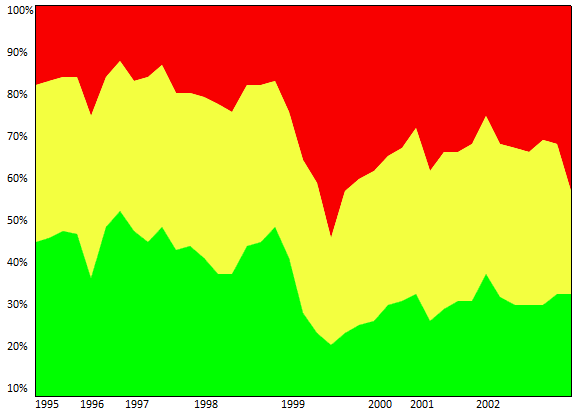
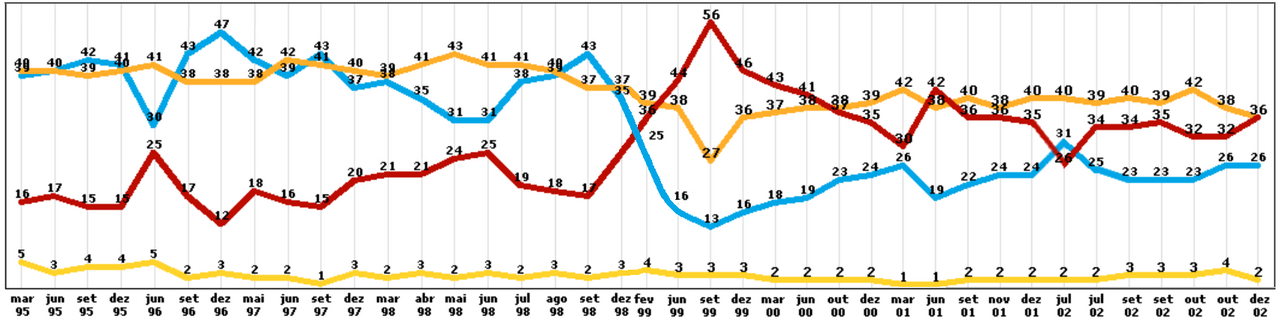
Cardoso took office on 1 January 1995. He maintained the economic reforms started by the previous administration, keeping inflation low, privatizing several state-owned companies, and opening the economy further to international markets. His government pushed through economic and administrative legislation, including a law allowing the reelection of executive officeholders. In 1998, he won the presidential election in the first round, becoming the first Brazilian president to be reelected. During his second term, his popularity dropped sharply due to international financial crises, a major devaluation of the Real, and an energy crisis. Today, he leads the Fernando Henrique Cardoso Foundation, which he founded in 2004, and sits on advisory boards for organizations such as the Clinton Global Initiative, Brown University, and the United Nations Foundation. He is also a member of The Elders, the Brazilian Academy of Letters, and honorary president of the Brazilian Social Democracy Party (PSDB). Cardoso previously served as the 10th president of the International Sociological Association, from 1982 to 1986.
Cardoso comes from a family of wealthy Portuguese immigrants, some of whom were politicians during the Brazilian Empire. He also has African ancestry through a black great-great-grandmother and a mulatto great-grandmother. He has described himself as “slightly mulatto” and has said he has “a foot in the kitchen,” a reference to Brazil’s history of domestic slavery. Born in Rio de Janeiro, he spent most of his life in São Paulo. He was married to anthropologist Ruth Vilaça Correia Leite Cardoso from 1953 until her death on 24 June 2008; they had three children. Trained as a sociologist, he taught political science and sociology at the Universidade de São Paulo. He was also associate director of Studies at the École des hautes études en sciences sociales in Paris, and later a visiting professor at the Collège de France and Paris Nanterre University. He has lectured at Cambridge, Stanford, Brown, and the University of California, Berkeley. He speaks Portuguese, English, French, and Spanish fluently, and can express himself in Italian and German. After his presidency, he served a five-year term (2003–2008) as professor-at-large at Brown University’s Watson Institute for International Studies, where he remains on the board of overseers. He is a founding member of the advisory board of the University of Southern California Center on Public Diplomacy. In February 2005, he delivered the fourth annual Kissinger Lecture on Foreign Policy and International Relations at the Library of Congress, on “Dependency and Development in Latin America.” In 2005, Prospect magazine named him one of the world’s top one hundred living public intellectuals.
Cardoso earned a bachelor’s degree in Social Sciences from the Universidade de São Paulo in 1952, followed by a master’s and a doctorate in Sociology from the same institution. His doctoral thesis, supervised by Florestan Fernandes, examined slavery in Southern Brazil and critiqued Gilberto Freyre’s dominant approach from a Marxist perspective; it has since become a classic. He received the Livre-Docência degree in 1963, the highest academic recognition in Brazil, also from the Universidade de São Paulo. In 1968, he became a Cathedratic Professor, holding the chair of Political Science there. After the military dictatorship tightened, he continued his academic career abroad in Chile and France, publishing books and papers on state bureaucracy, industrial elites, and especially dependency theory—his most acclaimed contribution to sociology and development studies, particularly in the United States. After serving as president of the International Sociological Association (1982–1986), he was selected as a Fulbright Program 40th anniversary distinguished fellow and lectured at Columbia University on democracy in Brazil. He continues to give speeches and classes abroad. In June 2013, he was elected to the Academia Brasileira de Letras, attributing the honor to his academic achievements rather than his political career.
After returning to Brazil, Cardoso joined the democratic opposition to the military regime as both an intellectual and activist. In 1982, he became Senator from São Paulo for the Brazilian Democratic Movement (MDB), replacing Franco Montoro, the newly elected governor of São Paulo. In 1985, he ran unsuccessfully for mayor of São Paulo.
- born
- 18 June 1931
- field
- Sociology, Political Science
- nationality
- Brazilian
- known_for
- 34th president of Brazil; dependency theory; first Brazilian president reelected
- presidency
- 1 January 1995 – 1 January 2003
- honors
- Prince of Asturias Award for International Cooperation (2000); Kluge Prize (2012
Verified Timeline
Lore & Background
Cardoso descends from wealthy Portuguese immigrants and has African ancestry through a black great-great-grandmother and a mulatto great-grandmother. He described himself as 'slightly mulatto' and allegedly said he has 'a foot in the kitchen.' Born in Rio de Janeiro, he lived in São Paulo for most of his life. He was married to anthropologist Ruth Vilaça Correia Leite Cardoso from 1953 until her death in 2008; they had three children. Educated as a sociologist, he earned a bachelor's degree in Social Sciences from Universidade de São Paulo in 1952, followed by a Master's and Doctorate in Sociology. His doctoral thesis examined slavery in Southern Brazil from a Marxist perspective; while widely associated with Florestan Fernandes, the accepted canon holds that Cardoso was not formally supervised by him for the doctorate. He also received the Livre-Docência degree in 1963 and became Cathedratic Professor of Sociology at Universidade de São Paulo in 1968. Cardoso was president of the International Sociological Association from 1982 to 1986. He served as associate director of Studies at the École des hautes études en sciences sociales in Paris, then visiting professor at the Collège de France and Paris Nanterre University. He later lectured at Cambridge University, Stanford University, Brown University, and the University of California, Berkeley. He is fluent in Portuguese, English, French, and Spanish, and can express himself in Italian and German. After his presidency, he was appointed professor-at-large at Brown University's Watson Institute for International Studies (2003–2008) and is on its board of overseers. He is a member of The Elders, the Brazilian Academy of Letters, and honorary president of the PSDB. Cardoso entered politics as a senator from São Paulo for the Brazilian Democratic Movement in 1982. He ran unsuccessfully for mayor of São Paulo in 1985. Elected to the Senate in 1986 for the Party of the Brazilian Democratic Movement, he helped found the Brazilian Social Democracy Party (PSDB). He served as Minister of Foreign Affairs from October 1992 to May 1993, then as Minister of Finance from May 1993 to April 1994. He resigned to launch a presidential campaign and won the presidency in the first round on 3 October 1994 with 54% of the vote, the largest margin in a free Brazilian election. After a constitutional amendment allowed reelectio
Reader's Guide
Fernando Henrique Cardoso's significance lies in his dual impact as a scholar and a political leader. As a sociologist, he made lasting contributions to dependency theory, critiquing traditional views on slavery and development. His academic work, including his doctoral thesis on slavery in Southern Brazil, remains influential. As president from 1995 to 2003, he continued economic reforms that kept inflation low, privatized state-owned companies, and increased Brazil's international market visibility. He successfully passed laws including one allowing reelection of executive officeholders, enabling his own second term. His first term saw high popularity, but his second term faced international crises, a significant devaluation of the Real, an energy crisis, and a drop in popularity. He was succeeded in 2003 by Luiz Inácio Lula da Silva, whose election has been interpreted as resulting from Cardoso's low approval ratings. Cardoso remains active through the Fernando Henrique Cardoso Foundation (founded 2004), advisory roles with the Clinton Global Initiative, Brown University, and the United Nations Foundation, and membership in The Elders and the Brazilian Academy of Letters. His legacy includes being the first Brazilian president reelected and the only one to win an outright majority of the popular vote since the two-round system began.
Did You Know?
- Cardoso's doctoral thesis on slavery in Southern Brazil, while often linked to Florestan Fernandes, was not formally supervised by him according to the widely accepted canon.
Scholarship and the Architecture of Dependency Theory
Cardoso's intellectual foundation was laid at the Universidade de São Paulo, where he earned his bachelor's degree in Social Sciences in 1952 before going on to complete both a master's and a doctorate in sociology. His doctoral work, supervised by Florestan Fernandes, took a sharp Marxist critique of Gilberto Freyre's dominant interpretation of slavery in Southern Brazil and has since been regarded as a classic text on the subject. He rose through Brazil's academic ranks, receiving the Livre-Docência degree in 1963 and the title of Cathedratic Professor in 1968, holding the chair of Political Science at USP. When the military dictatorship tightened its grip, Cardoso relocated to Chile and France, where he produced his most celebrated body of work on dependency theory, alongside studies of state bureaucracy and industrial elites. This framework became his defining contribution to sociology and development studies, earning particular recognition in the United States. He later served as the 10th president of the International Sociological Association from 1982 to 1986, and his lifetime achievements were honored with the Prince of Asturias Award in 2000 and the Kluge Prize from the Library of Congress in 2012.
Presidential Tenure: Stabilization and the Road to Reelection
Cardoso took office as Brazil's 34th president on 1 January 1995, stepping into a role that demanded continuation of the economic reforms his predecessor had set in motion. Under his watch, inflation stayed at low levels, a wave of state-owned enterprises was privatized, and broader market liberalization pushed Brazil deeper into the international economic arena. His government also pushed through a package of economic and administrative legislation, notably a law permitting the reelection of executive officeholders—a change that would prove consequential for his own political future. In the 1998 presidential election, Cardoso won outright in the first round, making him the first Brazilian president to secure a second term at that point in the country's history. His second term, however, was shadowed by a cascade of external shocks: international financial crises, a sharp devaluation of the Real, and a domestic energy crisis all combined to erode his public approval significantly by the time he departed the presidency on 1 January 2003.
From Opposition Intellectual to Party Architect
Cardoso's path into formal politics was forged in the crucible of Brazil's military-dominated regime, where he worked as both a critical intellectual and an active political opponent. In 1982, he entered the Senate representing São Paulo under the banner of the Brazilian Democratic Movement (MDB), filling the seat vacated by Franco Montoro, who had just won the governorship. Two years later, he threw his name into the mayoral race in São Paulo against former president Jânio Quadros; despite leading in the polls, he allowed himself to be photographed seated in the mayor's chair before the vote—a gaffe that many observers credit with costing him the election. After re-democratization transformed MDB into the Party of the Brazilian Democratic Movement (PMDB), Cardoso was elected to the Senate again in 1986. When the party's leadership drifted to the right, he joined a coalition of fellow PMDB parliamentarians in breaking away to establish the Brazilian Social Democratic Party (PSDB), a party he would later serve as honorary president.
Post-Presidency: A Global Intellectual and Institutional Builder
After leaving office in 2003, Cardoso channeled his energy into a constellation of international and academic roles. He established the Fernando Henrique Cardoso Foundation in 2004 and took a five-year appointment as professor-at-large at Brown University's Watson Institute for International Studies, a position that evolved into a seat on the university's board of overseers. His advisory work extends to the Clinton Global Initiative, the United Nations Foundation, and the University of Southern California's Center on Public Diplomacy, where he is a founding board member. He also joined The Elders, the Brazilian Academy of Letters, and delivered the fourth annual Kissinger Lecture on Foreign Policy at the Library of Congress in February 2005, focusing on dependency and development in Latin America. In 2005, the British magazine Prospect named him among the world's top one hundred living public intellectuals. A polyglot fluent in Portuguese, English, French, and Spanish, with working ability in Italian and German, Cardoso has lectured at institutions from Cambridge and Stanford to Berkeley and the Collège de France, cementing his reputation as a bridge between South American thought and global discourse.
Gallery


Frequently Asked Questions
Who is Fernando Henrique Cardoso?
FHC, as he is commonly known, is a Brazilian sociologist and political scientist who went on to serve as the 34th president of Brazil. Beyond politics, he is widely recognized as a leading scholar of dependency theory and research on slavery.
What did Fernando Henrique Cardoso do as president?
Holding the full executive office from 1995 to 2003, he oversaw sweeping economic stabilization reforms and shaped Brazil's foreign policy. He also became the first Brazilian president ever to win a second term through reelection.
How does Fernando Henrique Cardoso's presidency end?
His second term wrapped up on 1 January 2003, after which he withdrew from active politics. He returned to academic life and continued to receive major international honors, including the Kluge Prize in 2012.
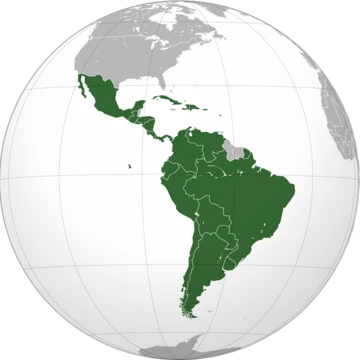
Why is Fernando Henrique Cardoso important to Latin American history?
He broke new ground as the first Brazilian president to be reelected, and his mid-1990s fiscal reforms fundamentally reshaped Brazil's economic trajectory. His scholarly work on dependency theory also gave him a distinctive voice in global political discourse.
What major awards has Fernando Henrique Cardoso received?
He was honored with the Prince of Asturias Award for International Cooperation in 2000 and the Kluge Prize from the U.S. Library of Congress in 2012. These recognitions celebrated both his political leadership and his decades of academic research.
More in Latin American Presidents 1-24
Spotted an error? Know more?
This is a living reference — every entry is fact-audited, and reader corrections feed straight into our audit queue. Suggest an edit · See this site's audit record