Totensonntag
Protestant holiday in Germany and Switzerland remembering the faithful departed.
Last updated
In Germany and Switzerland, the Protestant observance of Totensonntag, also called Ewigkeitssonntag or Totenfest, honors the faithful departed. It is held on the final Sunday of the liturgical year for the Protestant churches in Germany and the Netherlands.
History
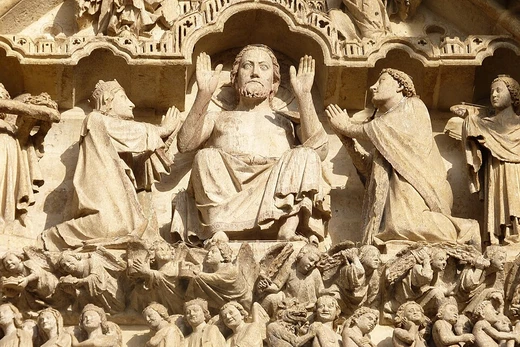
During the Middle Ages, readings on the last things became linked with the final Sundays of the liturgical year. The antepenultimate Sunday focuses on death, the penultimate on the Last Judgment, and the last on Eternal Life. The last Sunday traditionally emphasizes expectation of Judgment Day, with the Gospel being the Parable of the Ten Virgins.
In 1816, King Frederick William III of Prussia decreed that all Lutheran churches in Prussian territories observe the last Sunday before Advent as a general memorial celebration for the deceased. Other Lutheran churches in Germany eventually followed. In the United States, some Protestant churches observe this remembrance service as Totenfest.
Did You Know?
- Totensonntag is protected as a quiet day in all German federal states, with special restrictions under public holiday laws.
- In the Roman Catholic Church, the last Sunday of the liturgical year is celebrated as the Solemnity of Christ the King.
- English Lutheran churches following the Revised Common Lectionary also celebrate Christ the King Sunday.
More in Last Judgment
Sources
Compiled from Wikipedia and the sources listed below. Text from Wikipedia is available under CC BY-SA 4.0; this entry is adapted from it.
- Wikipedia: Totensonntag (CC BY-SA 4.0).
Spotted an error? Know more?
Reader corrections go straight into our review queue. Suggest an edit · How this site is sourced