Lake Michigan
The only Great Lake entirely within the United States, and the world's largest lake by area in a single country.
Last updated

Michael Barera · CC BY-SA 4.0
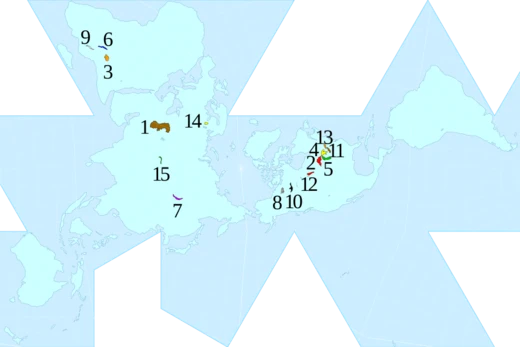
Among the five Great Lakes of North America, only Lake Michigan lies completely within the United States.[1][2] Lake Superior exceeds Lake Michigan in both volume (1,180 cubic miles) and depth (923 feet), making Michigan the second-largest Great Lake by those measures, while by surface area (22,300 square miles) it ranks third behind Superior and Huron.[1]
Geography and history
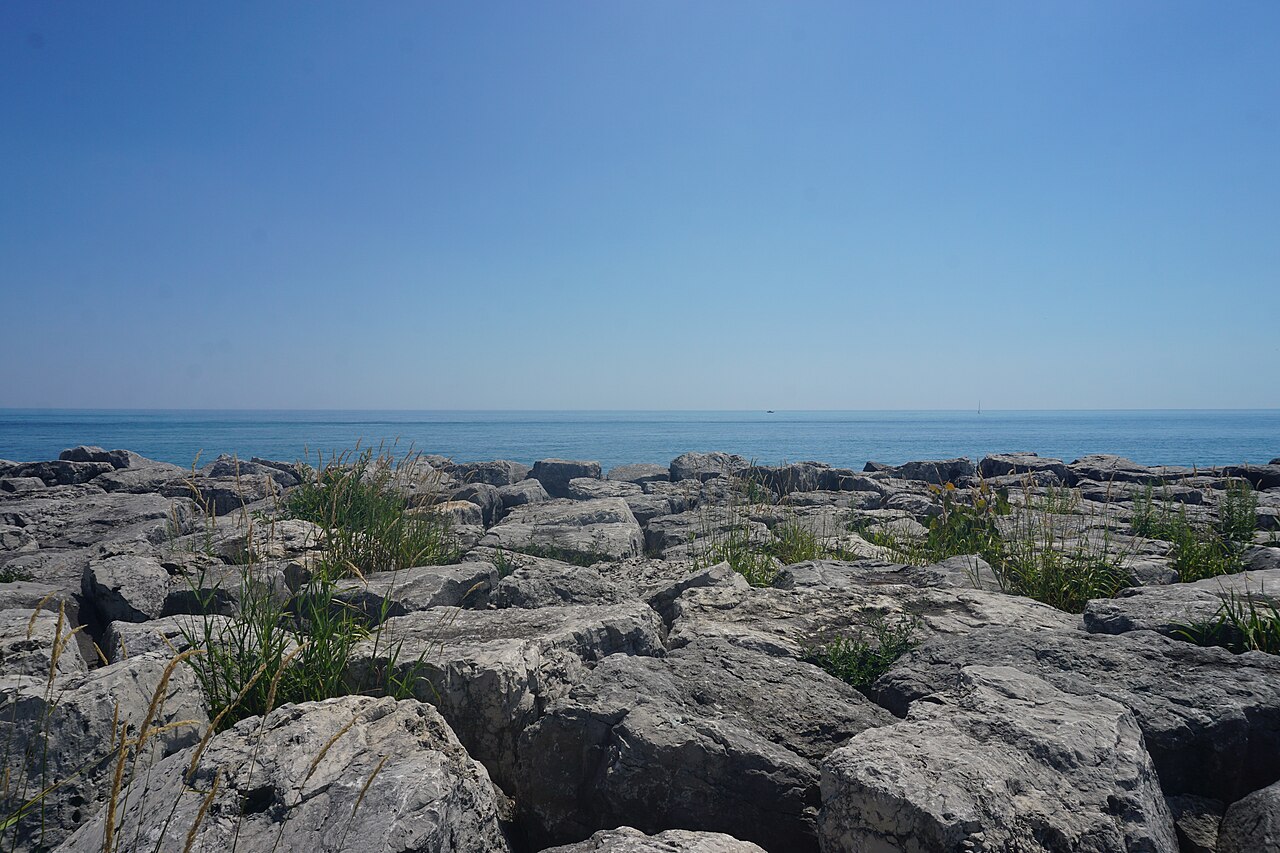
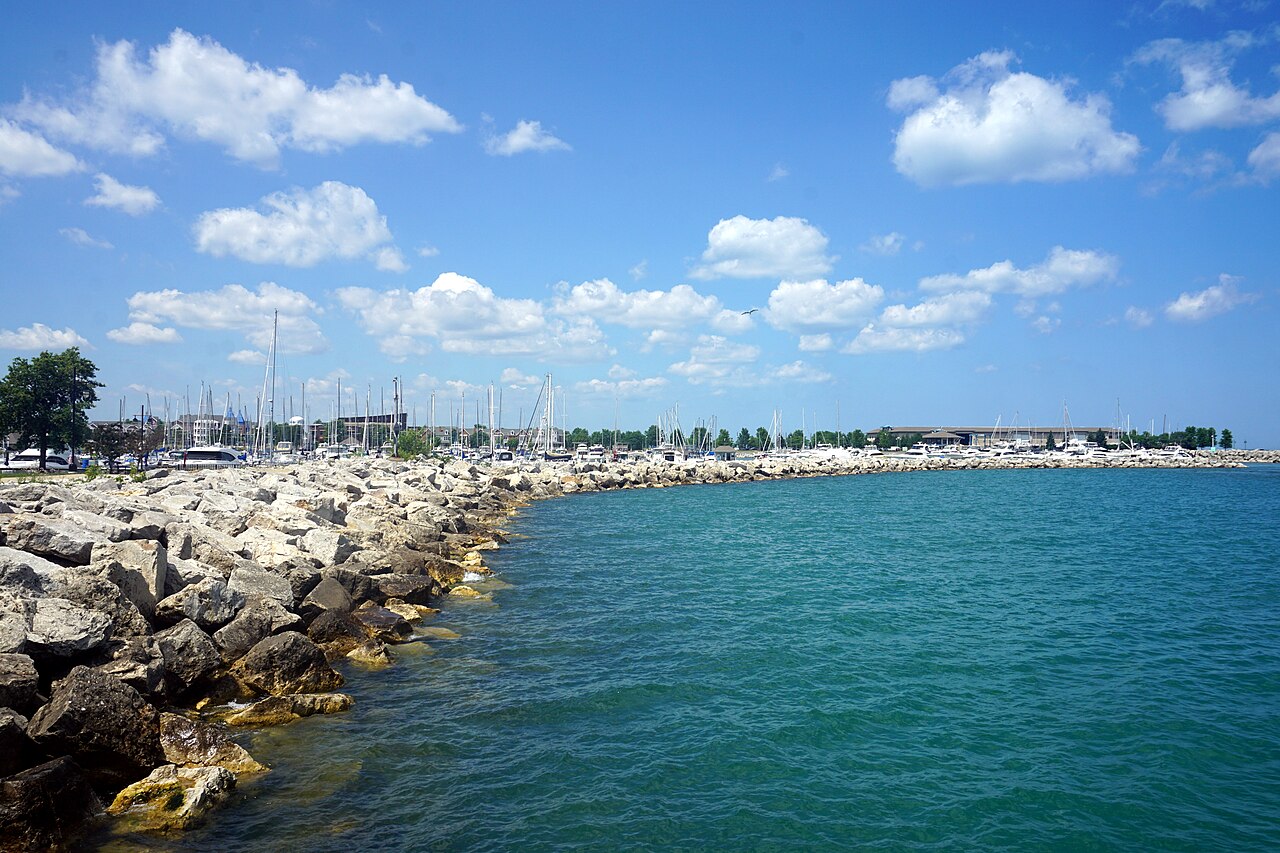
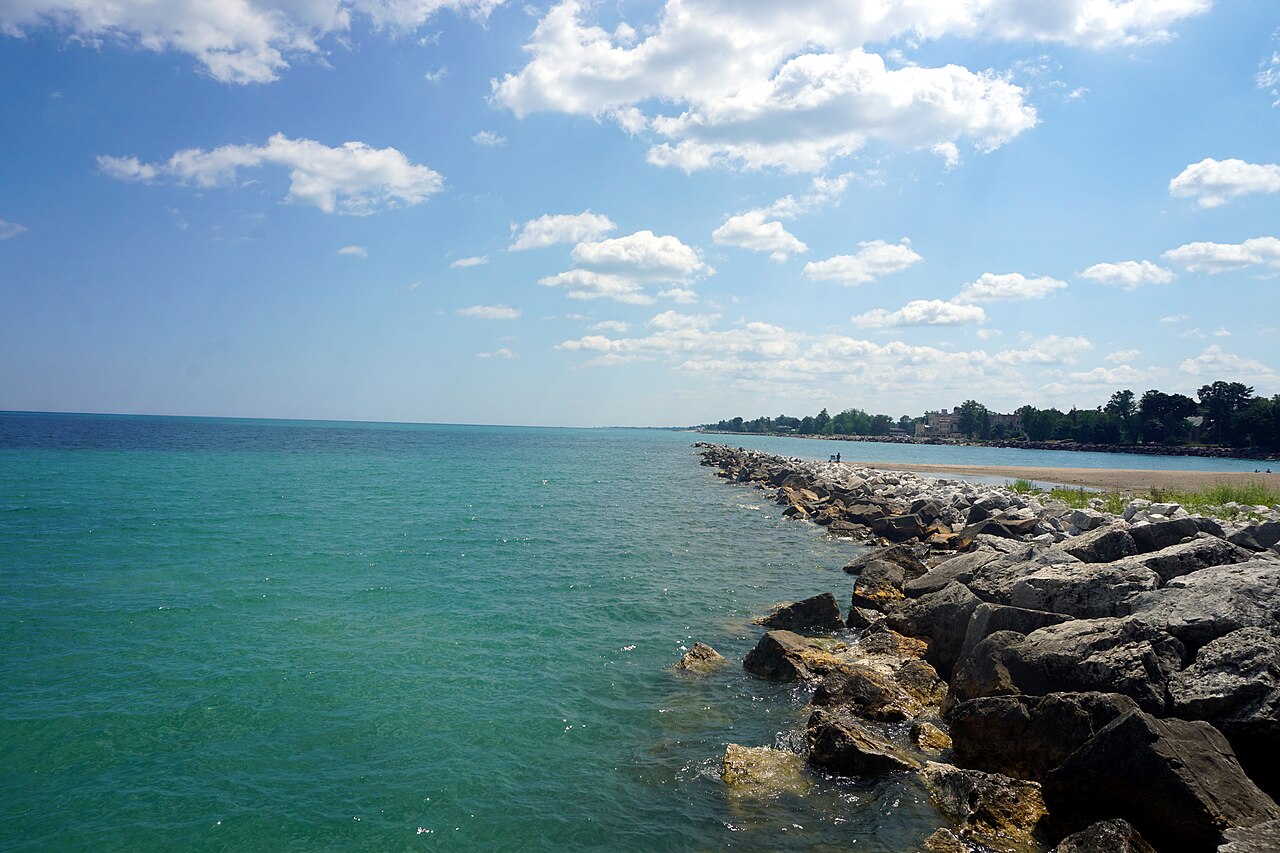
The lake is divided into northern and southern basins by the Milwaukee Reef, and each basin has a clockwise flow of water.[3] The Hopewell Native Americans were among the earliest well-studied inhabitants of the region.[4] Lake Michigan's dimensions are 307 miles in length, 118 miles in width, and its shoreline extends for 1,640 miles.[5] The initial European believed to have arrived at Lake Michigan was French explorer Jean Nicolet, with his journey estimated to have occurred in either 1634 or 1638.[4]
What the cited sources add
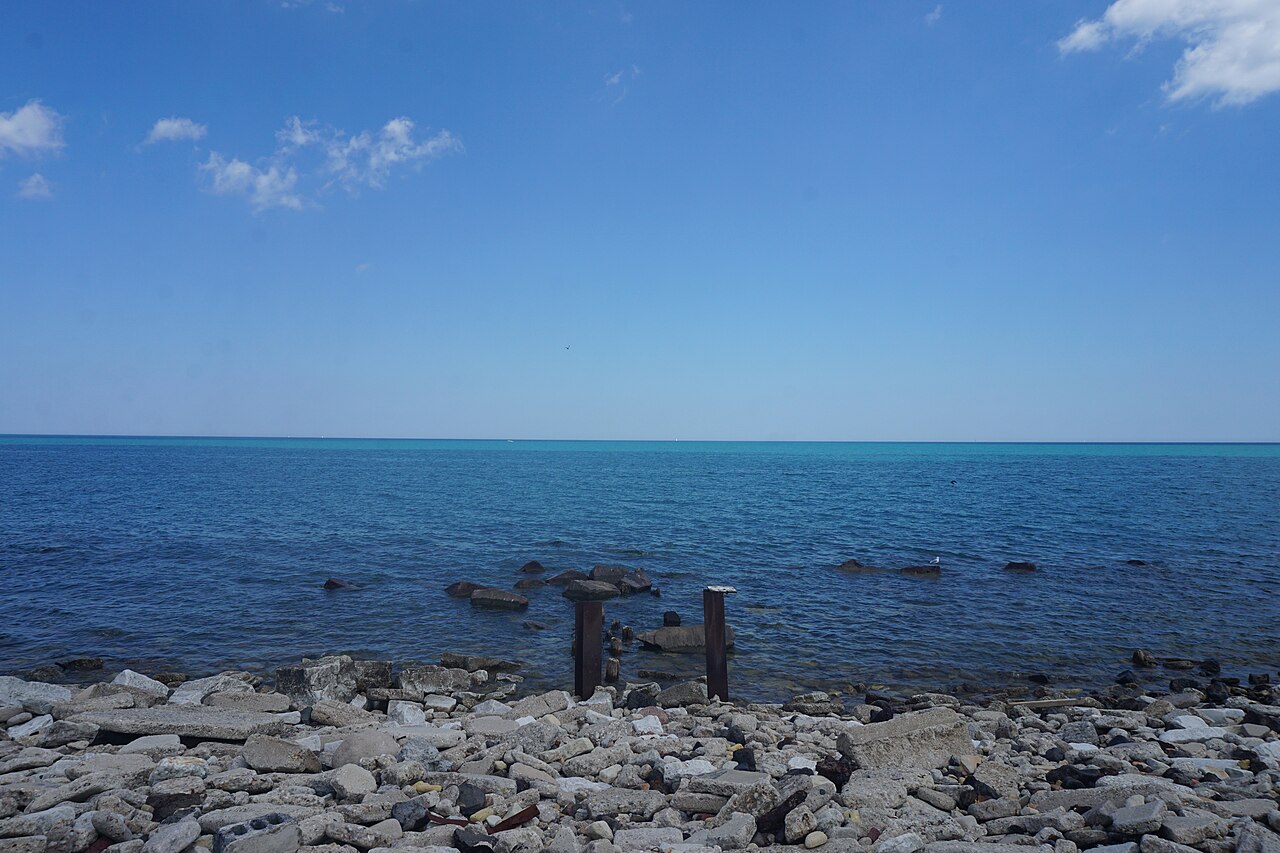
The Colonial Fort Michilimackinac source notes the fort was originally built by the French in 1714-1715 to control the fur trade.[6] The same source states the fort was relocated to Fort Mackinac on Mackinac Island during the American Revolution, with some buildings moved across the ice in the winter of 1780-1781.[6] A 2018 Chicago Tribune article reports that Lake Superior outflow is regulated by a binational board that controls water released into lakes Michigan and Huron.[7] The same source states that for every inch Lake Superior is lowered by water passed through the St. Marys River, lakes Michigan and Huron can rise a half inch.[7]
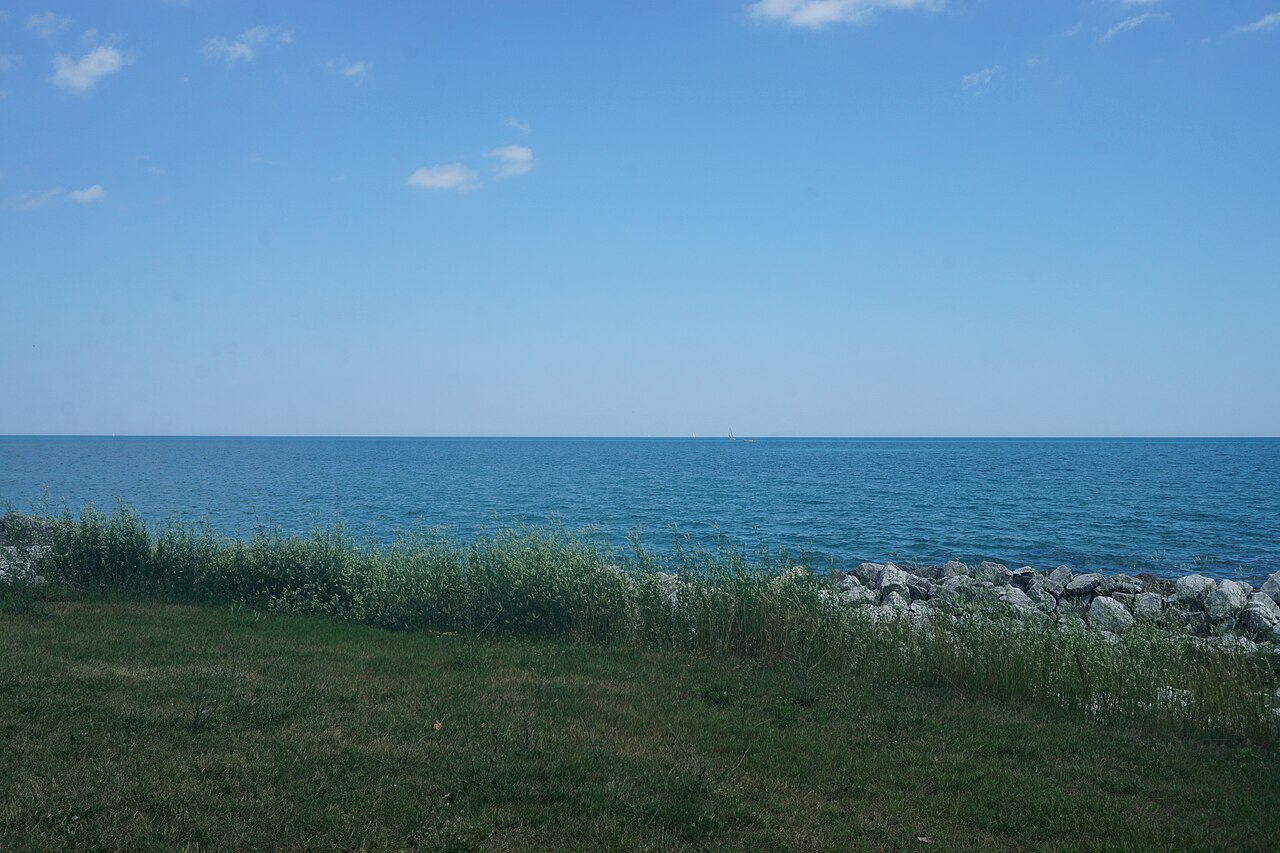
In January 2013, Lake Michigan's water level fell to a record low, but this was followed by a rapid two-year increase driven by wetter weather and polar vortex winters that reduced evaporation.[7]
References
- Wikipedia, "Lake Michigan" (CC BY-SA 4.0), which cites: "Lake Michigan", Great-lakes.net, June 18, 2009 (original not read by us) en.wikipedia.org
- Wikipedia, "Lake Michigan" (CC BY-SA 4.0), which cites: Routley, "The World's 25 Largest Lakes, Side by Side", Visual Capitalist, February 23, 2019 (original not read by us) en.wikipedia.org
- Wikipedia, "Lake Michigan" (CC BY-SA 4.0) en.wikipedia.org
- Wikipedia, "Lake Michigan" (CC BY-SA 4.0), which cites: ; "1733d4" (original not read by us) en.wikipedia.org
- Wikipedia, "Lake Michigan" (CC BY-SA 4.0), which cites: ; "Chart: 14901 Edition: 15 Edition Date: August 2006 Clear Dates: NM – 12/17/2011 LNM – 12/6/2011";"Soundings in feet and fathoms", NOAA (we also read that source) en.wikipedia.org
- "Colonial Fort Michilimackinac", Mighty Mac. facts only, no text reused. mightymac.org
- Briscoe, "What happens when Lake Superior has too much water?", Chicago Tribune, July 13, 2018. facts only, no text reused. chicagotribune.com
Each numbered sentence above was checked against the source it cites before publication. Sentences citing Wikipedia adapt text from the English Wikipedia article Lake Michigan (contributors), used under CC BY-SA 4.0; this entry is available under the same licence. Other sources were used for facts only; no text or images are copied from them.
Ranked in
More in Lakes Of The World
Sources
Compiled from Wikipedia and the sources listed below. Text from Wikipedia is available under CC BY-SA 4.0; this entry is adapted from it.
- Wikipedia: Lake Michigan (CC BY-SA 4.0).
Spotted an error? Know more?
Reader corrections go straight into our review queue. Suggest an edit · How this site is sourced