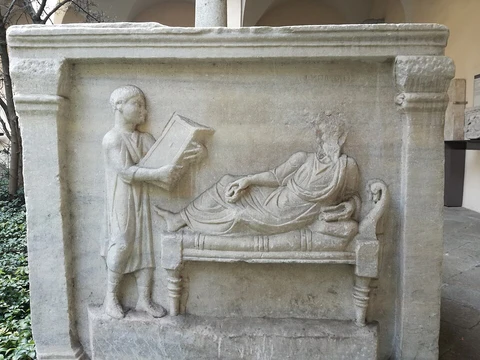
Francesco Algarotti
Italian polymath, Newtonian popularizer, and confidant of Frederick the Great.

via Wikipedia: Age of Enlightenment · see source
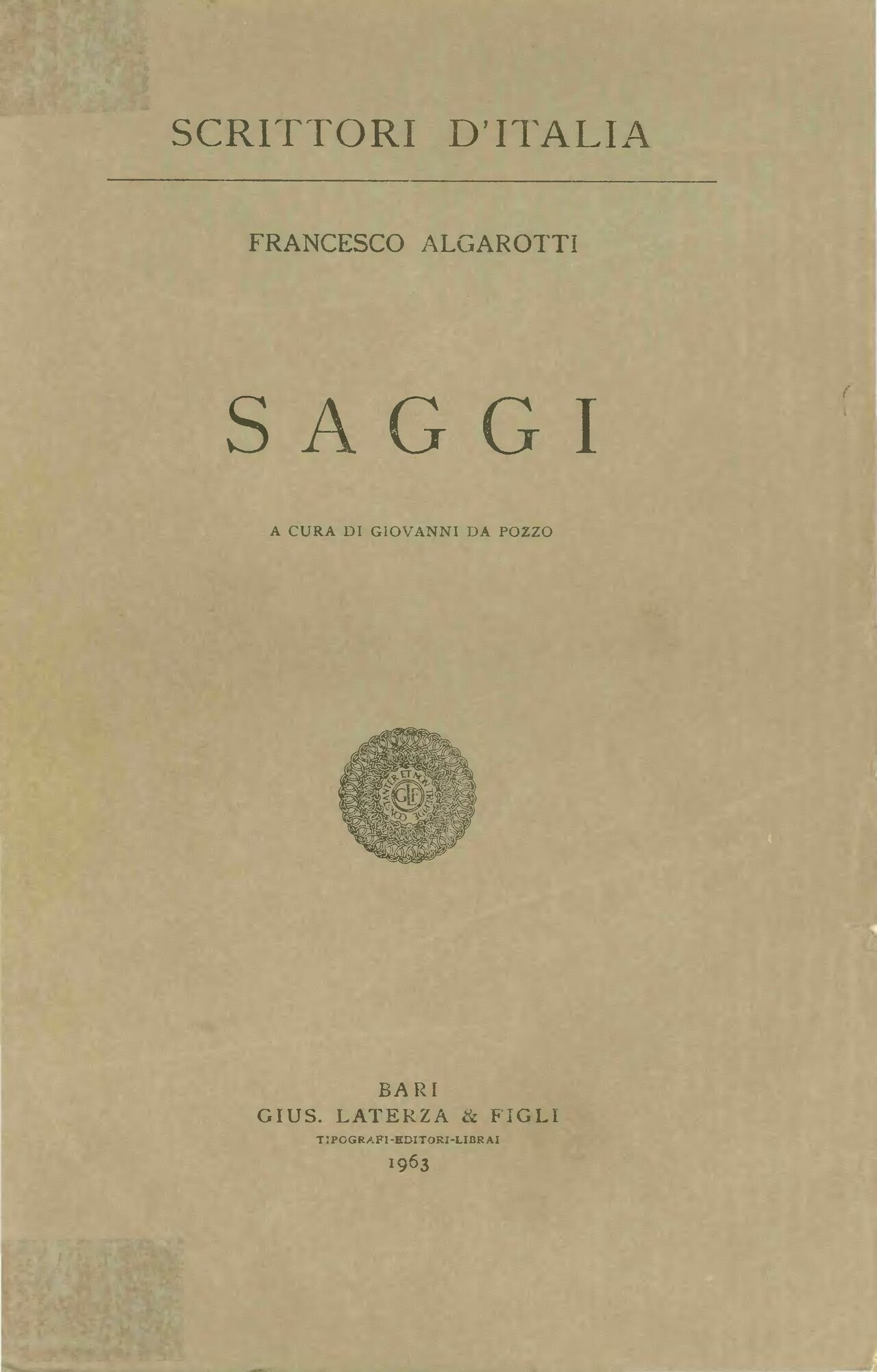
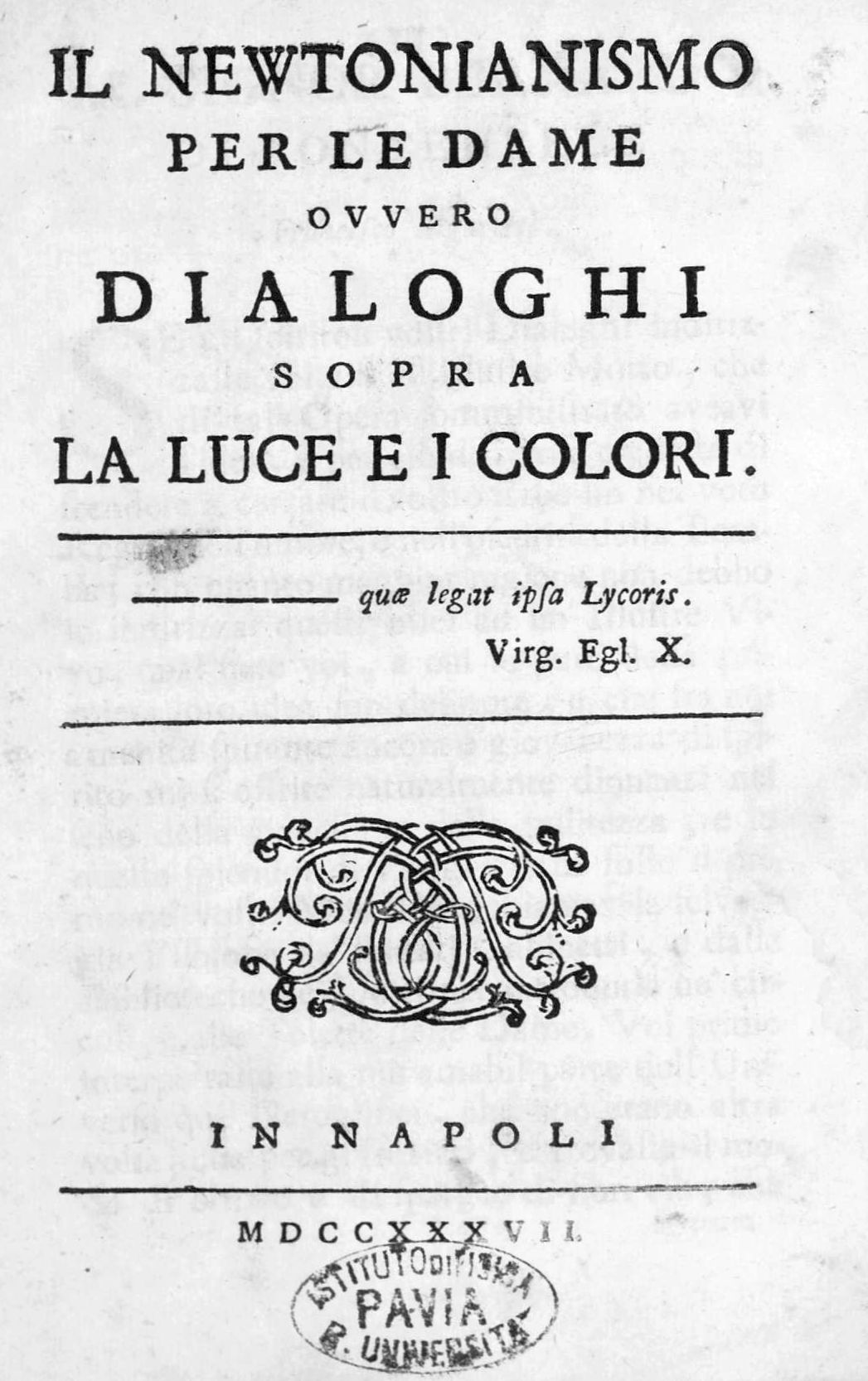
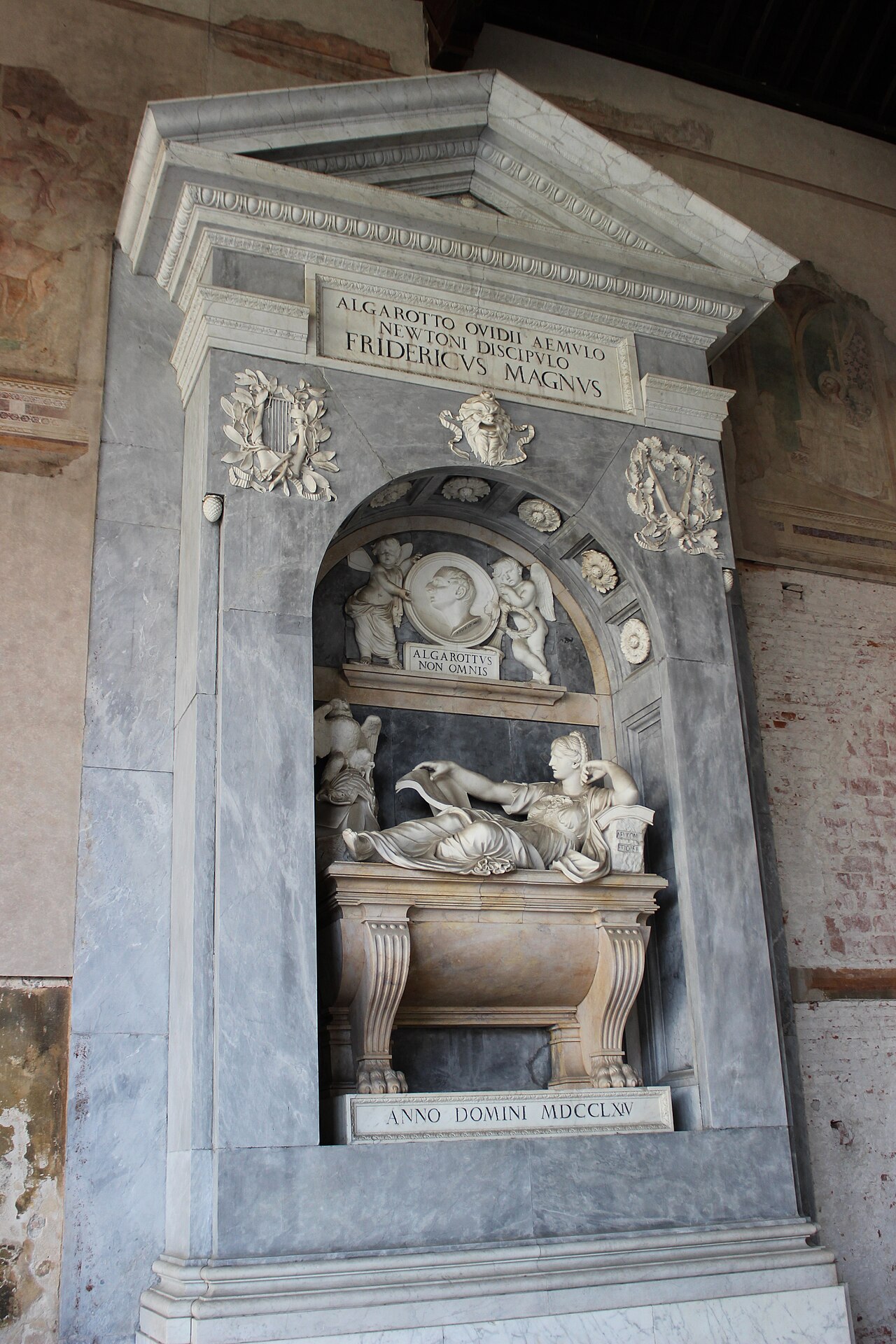
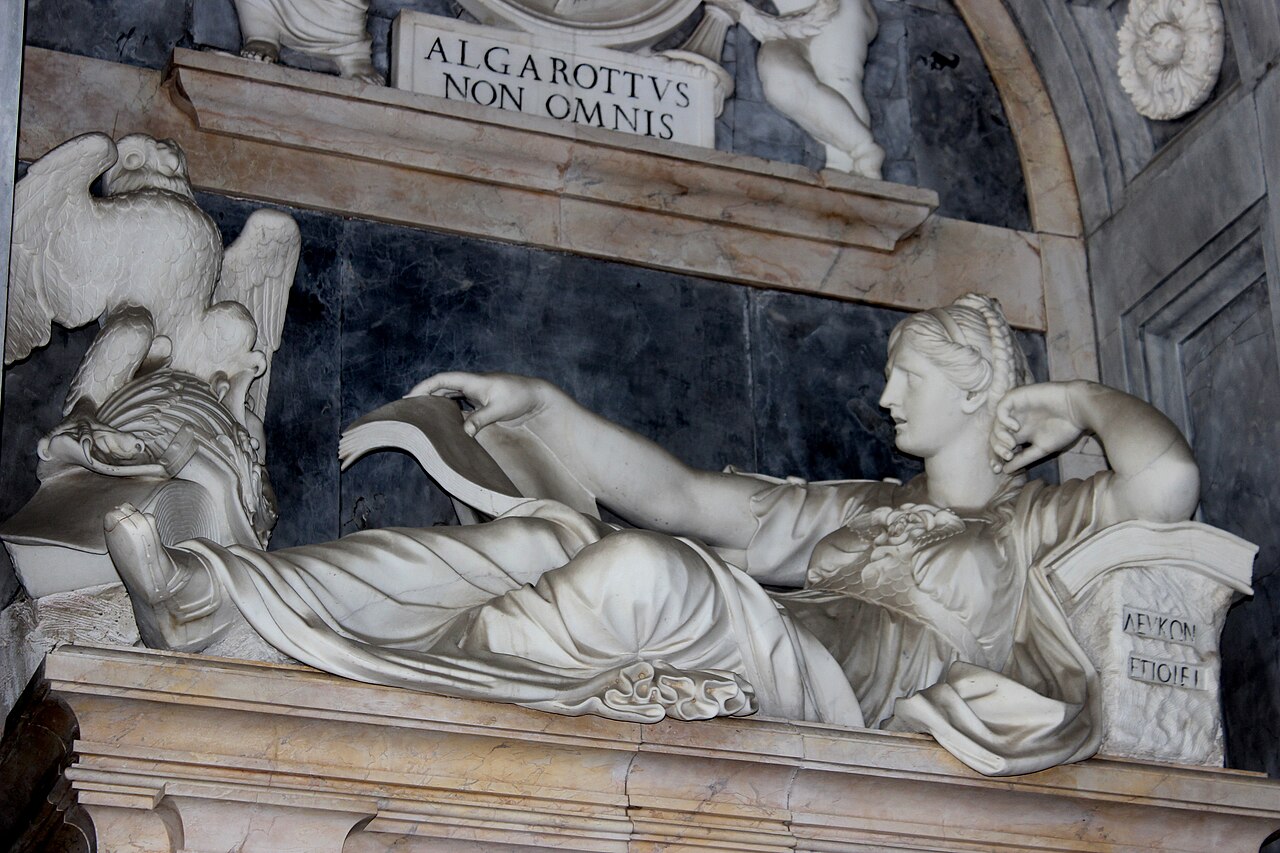
Count Francesco Algarotti (1712–1764) was an Italian polymath active as a philosopher, writer, art critic, and collector. Born in Venice to a wealthy merchant family, he chose authorship over commerce, studying natural sciences, mathematics, and experimental physics in Rome and Bologna. His early travels brought him to Paris, where his intellect and charm impressed intellectuals like Maupertuis and Voltaire. In London, he was elected a fellow of the Royal Society and became involved in a love triangle with John Hervey and Lady Mary Wortley Montagu. He later published *Newtonianismo per le dame*, a work on astronomy and physics. Algarotti befriended Frederick the Great, who made him a Prussian count, and he served as Frederick’s diplomat in Turin. He also traveled to Russia, calling Saint Petersburg “the great window through which Russia looks into Europe.” An avid art collector, he acquired works by Liotard, Tiepolo, and Pannini for the Dresden gallery, envisioning a museum of varied styles. He supported artists like Boucher and Bellotto. In music, his *Essay on the Opera* (1755) advocated for drama’s primacy over spectacle, influencing Gluck’s reforms. Algarotti later lived in Bologna, befriending scholar Laura Bassi, and worked on opera in Parma. He died of tuberculosis in Pisa in 1764; Frederick the Great composed a text for his monument.
- field
- Polymath (philosophy, writing, art criticism, science)
- nationality
- Italian
- known_for
- Newtonianism for Ladies, Essay on the Opera, art collecting, friendship with Frederick the Great
Lore & Background
Francesco Algarotti was a Venetian-born polymath, philosopher, writer, art critic, and art collector. He was known for his broad knowledge, expertise in Newtonianism, architecture, and opera, and his friendships with Frederick the Great and leading intellectuals such as Voltaire and Maupertuis. Algarotti was described as having urbanity, brilliant conversation, good looks, and versatile intelligence, which made a strong impression in Parisian intellectual circles during his early travels. He was a fellow of the Royal Society and corresponded with figures including Lord Chesterfield, Thomas Gray, and Pope Benedict XIV. His defining work, *Newtonianismo per le dame*, presented astronomy, physics, and mathematics in an accessible form. Algarotti was an avid art collector who acquired paintings by Liotard, Tiepolo, and Pannini, and he envisioned a modern museum cataloging styles across eras. He also influenced opera reform, proposing a simplified model where drama took precedence over music and staging, an idea that later shaped Gluck’s work. Algarotti died of tuberculosis in Pisa, and Frederick the Great arranged a monument for him on the Campo Santo.
Reader's Guide
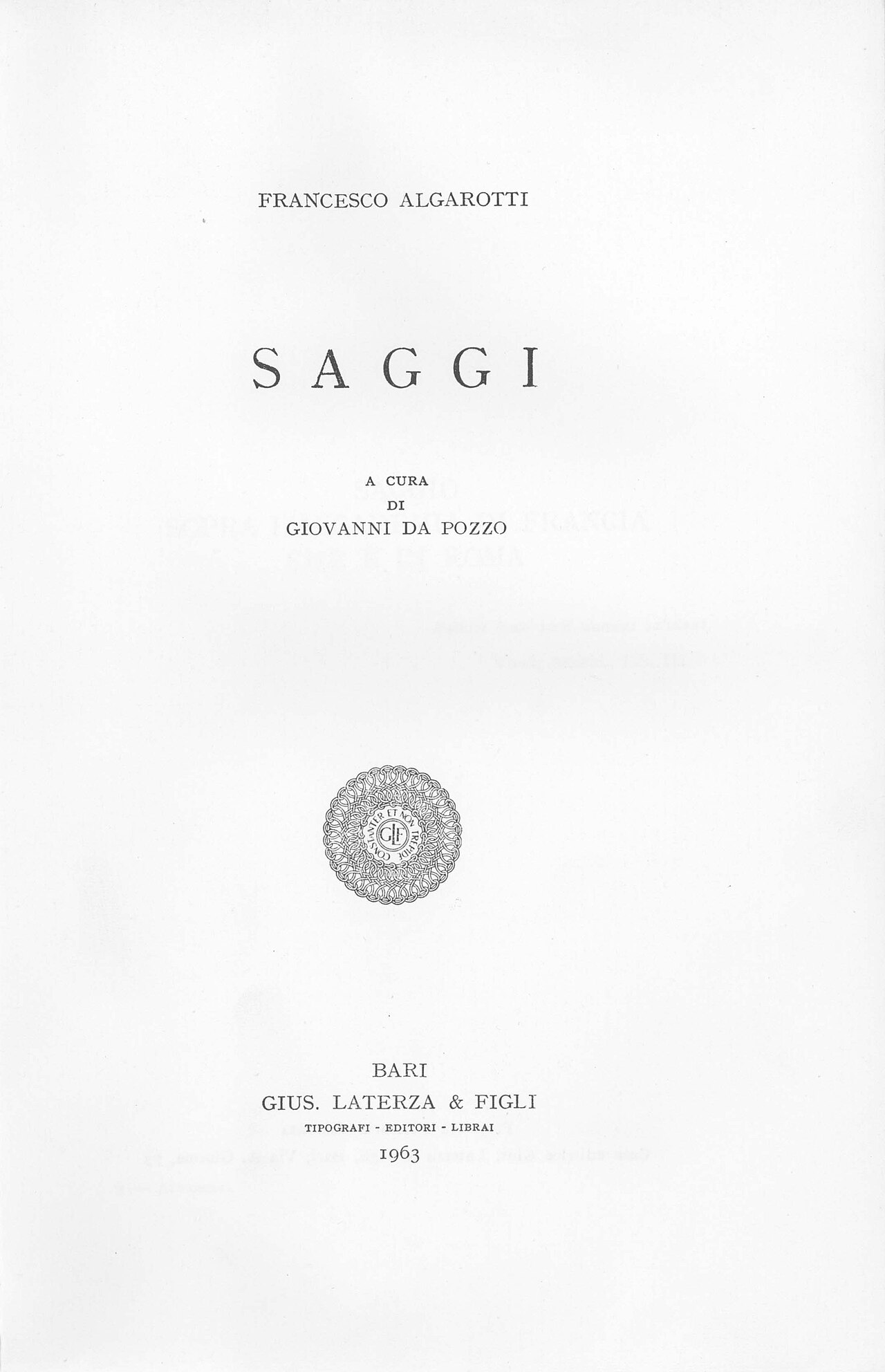
Algarotti’s significance stems from his role as a cultural intermediary who popularized Newtonian science, most notably through his work *Neutonianismo per le dame*, which rendered complex astronomy and physics accessible to a non-specialist audience. His broad expertise encompassed architecture, opera, and art, and he actively shaped Enlightenment discourse across Italy, France, England, Prussia, and Russia. As an art collector, he rejected a single stylistic focus, instead envisioning a modern museum that catalogued styles from various eras; he commissioned history paintings from artists such as Tiepolo, Pittoni, and Piazzetta, animal scenes from Castiglione, and vedute from Pannini, while also supporting Boucher, Balestra, and Donato Creti. In opera, his *Essay on the Opera* proposed a simplified model prioritizing drama over music, ballet, or staging, influencing librettist Carlo Innocenzo Frugoni, composer Tommaso Traetta, and the reformist ideology of Gluck and his librettist Calzabigi. Algarotti’s behavior reflected his polymathic curiosity and diplomatic skill: he traveled extensively, conducted optical experiments in his youth, and served Frederick the Great as a diplomat and architectural advisor, assisting with designs for Georg Wenzeslaus von Knobelsdorff. His correspondence with leading intellectuals—including Voltaire, Lord Chesterfield, Thomas Gray, and Pope Benedict XIV—underscores his role as a node in the Enlightenment network, while his friendships with figures like Laura Bassi and his involvement in Parma’s opera reforms demonstrate his sustained engagement with both science and the arts.
Did You Know?
- Algarotti was made a fellow of the Royal Society after visiting London.
- He called Saint Petersburg 'the great window through which Russia looks into Europe.'
- His Essay on the Opera is sometimes linked to Gluck's reformist ideology, though direct influence is not definitively proven.
Gallery
Frequently Asked Questions
Who is Francesco Algarotti?
Francesco Algarotti was an 18th-century Italian polymath who worked across philosophy, writing, art criticism, and science. He is best remembered today as a popularizer of Newtonian physics and a close confidant of Frederick the Great of Prussia.
What was Francesco Algarotti's primary field of expertise?
Rather than specializing in a single discipline, Algarotti was a broad-minded polymath with deep knowledge in Newtonian philosophy, architecture, and opera. His most recognized contributions span art collecting, art criticism, and making scientific ideas accessible to a wider audience.
What works is Francesco Algarotti most known for?
His best-known texts include a popularization of Newtonian physics aimed at a female readership and an essay on the art of opera. He was also a significant art collector whose taste influenced the broader European art world.
What was the connection between Francesco Algarotti and Frederick the Great?
Algarotti maintained a close personal and intellectual friendship with Frederick the Great of Prussia, serving as a confidant and cultural interlocutor. This relationship placed him at the center of the Enlightenment-era intellectual circles of the mid-18th century.
More in Jurists And Legal Scholars 1-24
Spotted an error? Know more?
This is a living reference — every entry is fact-audited, and reader corrections feed straight into our audit queue. Suggest an edit · See this site's audit record