Tapestry Fragment Discovery
A shattered tapestry from the Oseberg ship burial, woven around 834 AD, still whispering its secrets.

via Wikipedia: Oseberg tapestry fragments · see source
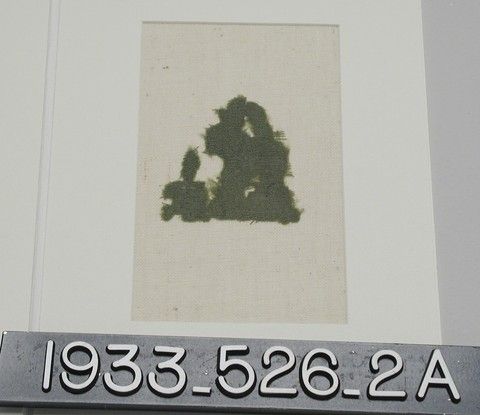
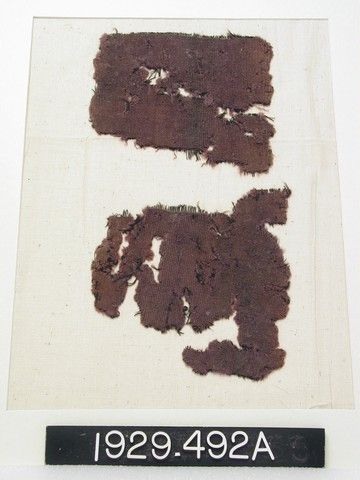
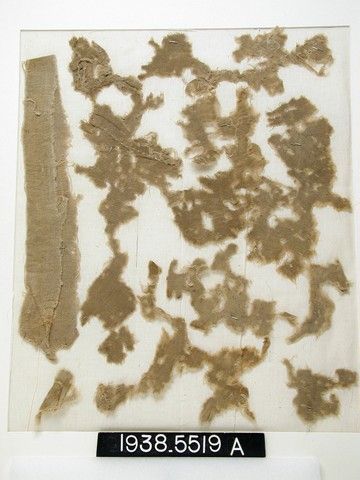
The Oseberg tapestry is a hauntingly fragmentary textile, unearthed from the Viking Oseberg ship burial in Norway. Dated to roughly 834 AD, its surviving strips measure just 16 to 23 centimeters in width, but its original length remains a mystery. The woven surface teems with a dense, enigmatic crowd of human and animal figures, their meanings fiercely debated by scholars. The fabric itself is a blend of wool, silk, and flax. These fragile pieces were discovered in 1904 inside a remarkably well-preserved Viking ship, buried alongside two female skeletons, a trove of grave goods, and the ship itself.
Quick Facts
- Subject
- Oseberg Tapestry
- Game title
- Journey
- Status
- Historical Artifact
Lore & Background
The Oseberg find was excavated in the summer of 1904 on the Oseberg farm at Slagen, not far from Tønsberg, by Professor Gabriel Gustafson and his team from the University of Oslo. The burial mound's clay, soil, and peat allowed for an unbelievable quality of preservation of all wooden objects and organic materials, including the ship itself. It is thought to be the best-preserved grave from the Viking Age. However, the ship and its contents were not left undisturbed; presumably around the Middle Ages, robbers had broken into the grave through a hole in the bow of the ship and into the burial chamber. The ship was in poor shape, as large amounts of stones had caused considerable sinkage, breaking the ship into thousands of pieces that had to be painstakingly put back together. The tapestry was one of a number of textile remains found in the Oseberg ship in 1904, including rolled-up rugs, tapestries, and curtains, most embroidered with mythological and battle scenes. There was no representation of the ship's owner. Most textiles were found in the burial chamber, pressed together in hard 'cakes' due to clay and soil, a difficult job to disintegrate. Some textiles were stuck to large clumps of feathers from the beds.
Reader's Guide
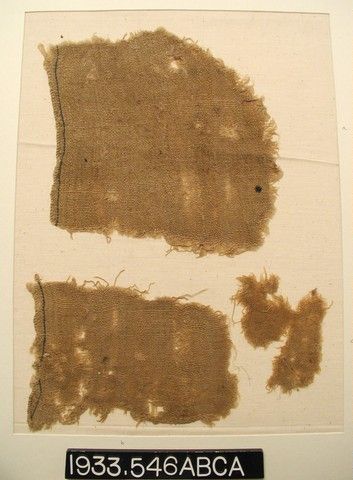
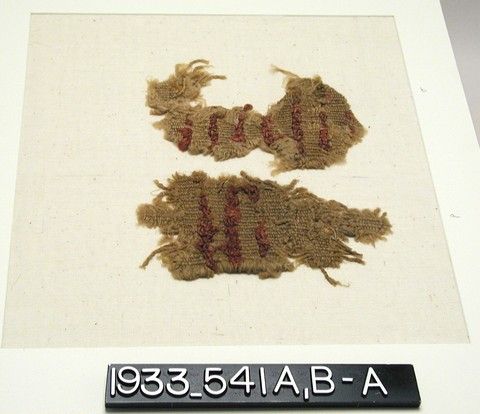
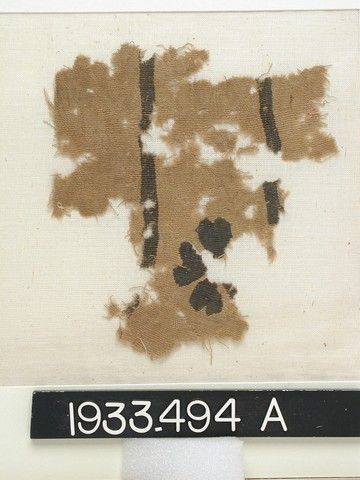
The tapestry is in pitiful condition, assumed to be part of the ship burial's funeral offering. Its extreme decay meant extraction took years, and even today, the work remains unfinished. The surviving fragments show a jumbled procession of people, animals, ships, and wagons—a frozen, fragmented pageant whose full story may never be recovered.
Did You Know?
- The Oseberg tapestry fragments are made from wool, silk, and flax, with no trace of linen surviving due to the condition it was found in.
- The two largest fragments depict a procession headed toward a great tree with corpses hanging from it, though its meaning is unknown.
- Anne Stine Ingstad interpreted two black birds in the tapestry as Huginn and Muninn, Odin's ravens, flying over a covered cart.
- The tapestry is stylistically similar to the Bayeux Tapestry, though both are actually embroideries, not woven tapestries.
Gallery
More in Gameplay & Mechanics
Elsewhere in Journey
Spotted an error? Know more?
Reader corrections go straight into our review queue. Suggest an edit · How this site is sourced