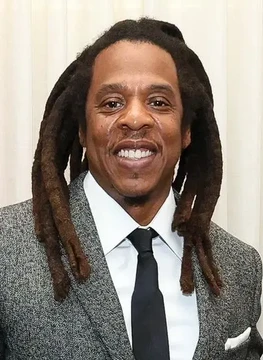
Run This Town
Three titans, one throne: the anthem that turned ambition into a genre.

"Run This Town" is a 2009 hip-hop anthem by Jay-Z, featuring Rihanna and Kanye West, and serves as the lead single from his seventh studio album, *The Blueprint 3*. The track became a defining cultural moment of the late 2000s, blending Jay-Z's boardroom swagger with Rihanna's unapologetic confidence and Kanye's larger-than-life ambition into a single, thunderous declaration of power. It topped the Billboard Hot 100 and became one of the most recognizable hip-hop collaborations of the decade. It is less a street narrative than a boardroom hymn, reframing dominance as a business philosophy delivered with the same rhythmic authority as any earlier hit.
Quick Facts
- Artist
- Jay-Z featuring Rihanna and Kanye West
- Album
- The Blueprint 3
- Released
- August 9, 2009
- Recorded
- 2009
- Studio
- Avex Honolulu Studios · (Honolulu, Hawaii) · Roc The Mic Studios · (New York City, New York) · Westlake Recording Studios · (Los Angeles, California)
- Genre
- Alternative hip-hop / rap rock
- Length
- 4:27 (album version) · 4:34 (single version)
- Label
- Roc Nation · Atlantic
- Writer
- Shawn Carter / Kanye West / Robyn Fenty / Ernest Wilson / Jeff Bhasker / Athanasios Alatas
- Producer
- West / No I.D.
- Chronology
- Jay-Z
- Prev Title
- D.O.A. (Death of Auto-Tune)
Facts from the source article.
Lore & Background
By 2009, Jay-Z had transitioned from the Brooklyn project kid to a global business figure, and the song's central conceit—seizing control of an entire city's economic and social machinery—mirrors that evolution. The "town" is no longer a neighborhood you survive; it is a market you acquire. The three-artist lineup is itself a statement. Rihanna brings a pop-culture magnetism and a vocal delivery that cuts through the dense production like a blade through silk. Kanye, both as featured MC and as the primary architect of the track's sonic landscape, layers his own mythology of reinvention over Jay-Z's. The interplay creates a kind of triple-voiced chorus of ambition, each artist asserting dominance from a different axis—commerce, performance, and artistic control—so that no single interpretation of "power" goes unchallenged. Culturally, the song landed at a moment when hip-hop was consolidating its grip on mainstream pop, and the track's anthemic, almost stadium-ready production signaled that the genre's center of gravity had shifted decisively. It became a staple at award shows, sports events, and viral video montages, embedding the phrase "run this town" into the general lexicon of late-2000s confidence culture. For fans, it represents the high-water mark of a particular era of hip-hop collaboration, before the industry fragmented into the streaming-era singles landscape.
Reader's Guide
The hook—"Run this town"—is deceptively simple. On the surface it's a command, a declaration of ownership. But the word "run" does double duty: it means both to operate a business (run a company, run a store) and to dominate a space (run the streets, run the game). Jay-Z's verse leans into the corporate reading, referencing champagne labels, record labels, and brand equity, while the rhythmic delivery keeps the street-level aggression intact. The listener gets both the CEO and the corner-store owner in the same breath. Rihanna's section reframes the "town" as a stage. Her delivery is less about assets and more about presence—she doesn't need to list her holdings because her voice *is* the asset. The production under her verse strips back slightly, letting the piano motif breathe, which creates a contrast: Jay-Z's sections are dense and layered, Rihanna's are spacious and declarative. Kanye's contribution works on yet another axis. As both MC and the track's primary producer, he embodies the idea that the person who builds the world also narrates it. His verse and his beat architecture reinforce each other, making the "run" feel like both a performance and an engineering feat. The three perspectives together create a 360-degree portrait of power that no single artist could deliver alone. The piano-driven production, with its anthemic, almost hymn-like quality, elevates the track beyond a typical rap verse structure. It sounds like a coronation march, which is exactly the register the lyrics demand. The result is a song that functions as both a personal flex and a universal anthem for anyone who's ever looked at a room full of competitors and thought, *this one's mine*.
Did You Know?
- Jay-Z and Kanye West had previously collaborated on "Dirt Off Your Shoulder" from *The Blueprint* (2001), making "Run This Town" a reunion that spanned roughly eight years of separate careers.
- The track's three-artist lineup made it one of the most high-profile hip-hop collaborations of the 2000s, and it became a fixture at major award shows and sports broadcasts in the years following its release.
- "Run This Town" was nominated for multiple Grammy Awards, cementing its status not just as a commercial hit but as a critically recognized work of the period.
More in Songs & Singles
Elsewhere in Jay-Z
Spotted an error? Know more?
Reader corrections go straight into our review queue. Suggest an edit · How this site is sourced