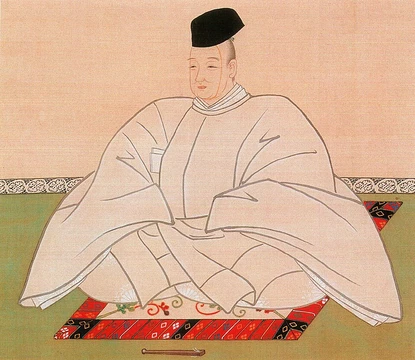
Empress Jitō
Third female empress regnant of Japan, abdicated in 697.
Last updated
Empress Jitō was the 41st monarch of Japan, according to the traditional order of succession. Her reign spanned the years from 686 through 697.
In the history of Japan, she was the third of eight women to take on the role of empress regnant. The two female monarchs before Jitō were Suiko and Kōgyoku/Saimei. The five women sovereigns reigning after Jitō were Genmei, Genshō, Kōken/Shōtoku, Meishō, and Go-Sakuramachi.
Traditional narrative
Empress Jitō was born to Emperor Tenji and Ochi-no-Iratsume, whose father was Minister Ō-omi Soga no Yamada-no Ishikawa Maro. She married Tenji’s full brother, Emperor Tenmu, and later took the throne after him. Her personal names were Unonosarara, Unonosasara, or simply Uno. After Tenmu’s death—he was also her uncle—she managed court affairs.
She became empress in 687 to secure the succession for her son, Kusakabe-shinnō. She governed from the Fujiwara Palace in Yamato. In 689 she banned the game of Sugoroku. At her enthronement in 690 she performed a special ceremony and issued a pardon.
In 692 she traveled to Ise despite objections from minister Miwa-no-Asono-Takechimaro. Kusakabe was named crown prince but died young. His son, Karu-no-o, was then chosen as Jitō’s heir and later became Emperor Monmu. Jitō ruled for eleven years.
Seven other women have reigned as empresses, but their successors were almost always male relatives from the paternal imperial line. Some conservative scholars use this to argue that these reigns were temporary and that male-only succession should continue today. The exception is Empress Genmei, who was followed by her daughter Empress Genshō. In 697 Jitō stepped down in favor of Monmu and took the title daijō-tennō, which later retired emperors also used.
She continued to hold power as a cloistered ruler, a practice that became common in Japanese politics. Her grave site is known, and she is honored at a Shinto shrine in Nara. The Imperial Household Agency calls this her mausoleum, formally named Ochi-no-Okanoe no misasagi. During her reign, the highest officials in the Daijō-kan included Daijō-daijin Takechi-shinnō, the third son of Emperor Tenmu.
Non-nengō period
Scholars do not associate Empress Jitō’s reign with any official era name. The practice of naming time periods, introduced during the Taika reforms, had fallen out of use and was not revived until Emperor Mommu declared the Taihō era in 701.
Yet the Gukanshō, as translated by Brown and Ishida, complicates this straightforward picture. It states that Jitō’s reign included the last seven years of Shuchō and the four-year Taika era. In the third year of Taika, Jitō abdicated in favor of the Crown Prince.
More in Japanese Emperors Who Abdicated
Sources
Compiled from Wikipedia and the sources listed below. Text from Wikipedia is available under CC BY-SA 4.0; this entry is adapted from it.
- Wikipedia: Empress Jitō (CC BY-SA 4.0).
Spotted an error? Know more?
Reader corrections go straight into our review queue. Suggest an edit · How this site is sourced