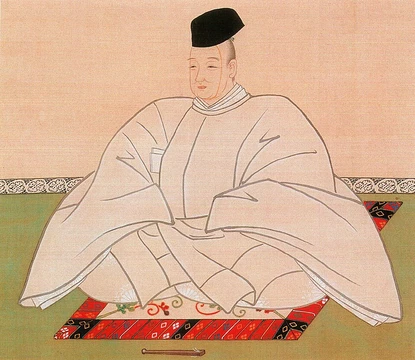
Empress Kōgyoku
First Japanese monarch to abdicate; reigned twice.
Last updated
Empress Kōgyoku, also known as Empress Saimei, was the 35th and 37th monarch of Japan according to the traditional order of succession. Both of her reigns occurred during the Asuka period. She was the first Japanese monarch to abdicate.
Pre-ascension
Princess Takara was born on 7 August 594. Her father, Prince Chinu, was a minor prince, and her mother, Princess Kibitsu-hime, was also a minor princess. Paternally she was a great-granddaughter of Emperor Bidatsu and his first wife Hirohime; maternally she was a great-granddaughter of Emperor Kinmei and his concubine Soga-no-Kitashihime. She first married Prince Takamuku, a grandson of Emperor Yōmei, with whom she had a son before they separated.
She later married Prince Tamura, who became Emperor Jomei. Tamura and Prince Yamashiro were political rivals, each claiming Empress Suiko had named them her heir. A civil war ended with Tamura victorious, and Princess Takara became empress consort. The Man'yōshū records correspondence between the two.
First reign
Princess Takara ascended the throne in 642 as Empress Kōgyoku to avoid dynastic conflict. A year into her reign, Prince Yamashiro, his wife Princess Tsukishine, and their children committed suicide after conflict with the Soga clan. Her first reign was marked by the domination of the Soga clan. A drought occurred early in her reign; the Nihon Shoki records that it ended after the empress prayed to the heavens.
Princess Tsukishine had argued against the Soga clan, stating that there cannot be two suns in the heavens nor two sovereigns upon the earth. Prince Naka no Ōe, Nakatomi no Kamatari, and other nobles argued against the Soga clan's influence. This unrest culminated in the Isshi incident, the assassination of Soga no Iruka. She passed the throne to her brother, Emperor Kōtoku.
Interregnum
After abdicating, Kōgyoku received the name Sumemioya and remained a respected figure at court. The previous female emperor, Suiko, also gained renewed respect due to her adoption of Buddhism.
Sumemioya and Crown Prince Naka no Ōe visited the ailing Emperor Kōtoku. Naka no Ōe was anxious about his succession after the Isshi incident and Kōgyoku's abdication. To ensure stable parent-child succession, Sumemioya returned to the throne, so that Naka no Ōe would directly succeed one of his parents.
Second reign
Sumemioya reigned a second time as Empress Saimei. Her son, Prince Naka no Ōe, continued implementing the Taika Reform. She undertook construction of a canal called Taburegokoro no Mizo, which required 30,000 labourers and drew criticism. The canal was used for defence and stone transport; its remains in modern Asuka, Nara, are a Japan Heritage site.
Soga no Akae presented three faults in her rule to Prince Arima, but modern historians view her large-scale projects as attempts to develop Asuka into a proper capital. Soga no Akae and Prince Arima planned a rebellion to depose the empress and her son, but Akae framed Arima and informed the empress; the prince was executed by the Crown Prince.
When the Korean kingdom of Paekche, an ally of Japan, was destroyed, Saimei led an army toward Paekche. She became ill and halted the expedition; many others also died. Her illness accelerated and she died in 661.
Did You Know?
- According to the Zenkoji Engi, she was damned to hell but was saved by the son of Honda Yoshimitsu and the Amida Buddha.
- After her death, her son Emperor Tenji was supposedly overcome with emotion and spoke of her.
- She was buried at Kengoshizuka Kofun.
More in Japanese Emperors Who Abdicated
Sources
Compiled from Wikipedia and the sources listed below. Text from Wikipedia is available under CC BY-SA 4.0; this entry is adapted from it.
- Wikipedia: Empress Kōgyoku (CC BY-SA 4.0).
Spotted an error? Know more?
Reader corrections go straight into our review queue. Suggest an edit · How this site is sourced