Osaka
Japan's historic commercial hub and a major global financial center.
Last updated
Where it is
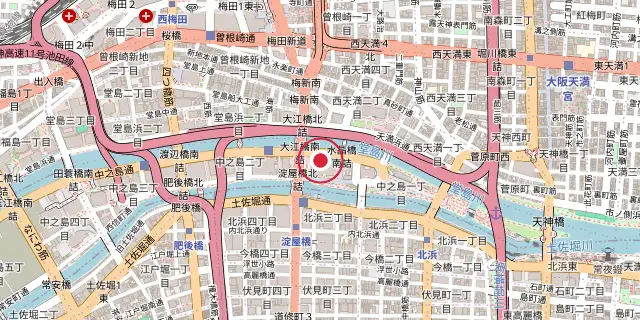
Coordinates: 34°41′38″N 135°30′07″E (34.6940, 135.5020) · Open in OpenStreetMap
Coordinates and connected clubs: the infobox of Wikipedia: Osaka (CC BY-SA 4.0). Map: drawn by Codexery from OpenStreetMap tiles.
Osaka is a designated city in the Kansai region of Honshu, Japan, serving as the capital of Osaka Prefecture and its most populous city. It is the third-most populous city proper in Japan, following the special wards of Tokyo and Yokohama, and the largest component of the Keihanshin metropolitan area, the second-largest metropolitan area in Japan and the 10th-largest urban area in the world. Traditionally considered Japan's economic hub, Osaka developed into an important regional port by the Kofun period and briefly served as the imperial capital in the seventh and eighth centuries.
History
During the Jōmon period (7,000 BCE), present-day Osaka was mostly submerged, with the Uemachi Plateau forming a peninsula separating Kawachi Bay from the Seto Inland Sea. This area is considered one of the first places in Japan where inhabitants settled, due to favorable geological conditions and defensible position. The earliest evidence of settlements comes from the Morinomiya ruins in central Chuo-ku, where buried human skeletons, a mound containing remains, shell mounds, and artifacts such as arrow heads, stone tools, fishing hooks, and rice-processing crockery were found, estimated to be 2,000-year-old debris spanning the Jomon and Yayoi periods. By the end of the Jōmon period and beginning of the Yayoi period, sediment deposits north of the Uemachi peninsula transformed Kawachi Bay into a lagoon.
During the Yayoi period (300 BCE – 250 CE), permanent habitation on the plains grew with the spread of rice farming. At the beginning of the third century CE, the grand shrine of Sumiyoshi-taisha was inaugurated near the harbor, commissioned by consort Empress Jingū, inaugurating the Sumiyoshi-zukuri style of Shinto shrine construction. Towards the end of the Yayoi period, the Uemachi plateau-peninsula expanded further, transforming the Kawachi Lagoon into a lake connected to the mouth of the Yodo River.
Government
The Osaka City Council, formed under the Local Autonomy Law, has eighty-nine seats allocated to the twenty-four wards proportional to their population, with members re-elected every four years. The council elects its president and vice president; Toshifumi Tagaya (LDP) has been the 104th president since May 2008.
The mayor of Osaka is directly elected every four years; Hideyuki Yokoyama is the current mayor, having won the mayoral elections in 2023 and 2026, and is supported by two vice mayors. In July 2012, a joint multi-party bill was submitted to the Diet to implement the Osaka Metropolis plan, which would dissolve Osaka City, neighboring Sakai City, and possibly other municipalities, reorganizing them as four special wards of Osaka prefecture, similar to Tokyo City's successor wards. In October 2018, Osaka officially ended its sister city relationship with San Francisco after the latter permitted a monument memorializing 'comfort women' to remain on city-owned property, circulating a 10-page, 3,800-word letter to San Francisco mayor London Breed.
Economy
In fiscal year 2004, Osaka's gross city product was ¥21.3 trillion, an increase of 1.2% over the previous year, accounting for about 55% of Osaka Prefecture's total output and 26.5% in the Kinki region. Commerce, services, and manufacturing were the three major industries, representing 30%, 26%, and 11% of the total, respectively, with a per capita income of about ¥3.3 million, 10% higher than the prefecture's average. MasterCard Worldwide ranked Osaka 19th among the world's leading cities, and its nominal GDP per capita was $59,958. By 2020, Osaka ranked as the 5th most expensive city due to flatlining consumer prices and government subsidies of public transportation.
Major companies such as Panasonic, Sharp, and Sanyo remain headquartered in Osaka. In the 2017 Global Financial Centres Index, Osaka ranked 15th most competitive financial center globally and fifth in Asia. The Osaka Securities Exchange, specializing in Nikkei 225 futures, is based in the city, and its merger with JASDAQ aimed to make it the largest exchange in Japan for start-up companies. Mercer ranked Osaka the second most expensive city for expatriate employees in 2009, though it was not in the top ten in 2013; the Economist Intelligence Unit ranked it second most expensive in its 2013 Cost of Living study.
Culture and lifestyle
Osaka has 25,228 wholesalers and 34,707 retail shops as of 2004, concentrated in Chuō (10,468 shops) and Kita (6,335 shops), ranging from malls to shōtengai shopping arcades. The Tenjinbashi-suji arcade, the longest in Japan, stretches 2.6 km from the road approaching Tenmangū shrine. Other shopping areas include Den Den Town, the electronic and manga/anime district comparable to Akihabara in Tokyo; the Umeda district with Hankyu Sanbangai mall and Yodobashi Camera; American Village (Amerika-mura) for youth fashion; Dōtonbori in the Namba district; Namba itself; and Shinsaibashi for luxury goods. Osaka is known for its food, with author Michael Booth and food critic François Simon of Le Figaro suggesting it is the food capital of the world.
The local saying 'Kyotoites are financially ruined by overspending on clothing, Osakans are ruined by spending on food' reflects this culinary focus. Regional cuisine includes okonomiyaki, takoyaki, and traditional oshizushi, particularly battera. Osaka is also known for fine sake made with fresh water from the prefecture's mountains. The city is home to the National Bunraku Theater for traditional puppet plays; at Osaka Shochiku-za, kabuki and manzai are performed; at Shin Kabuki-za, enka concerts and Japanese dramas; Yoshimoto Kogyo operates the Namba Grand Kagetsu hall for manzai and comedy; and the Hanjō-tei, dedicated to rakugo, opened in 2006 in the Ōsaka Tenman-gū area.
Did You Know?
- The name 'Osaka' means 'large hill' or 'large slope'; the oldest written evidence for the name dates to 1496.
- Osaka's highest point, in Tsurumi-ku, is 37.5 m above Tokyo Peil, and its lowest, in Nishiyodogawa-ku, is -2.2 m below Tokyo Peil.
- Osaka is situated at a latitude of 34.67°, farther south than Rome (41.90°), Madrid (40.41°), San Francisco (37.77°), and Seoul (37.53°).
More in Japanese Cities
Sources
Compiled from Wikipedia and the sources listed below. Text from Wikipedia is available under CC BY-SA 4.0; this entry is adapted from it.
- Wikipedia: Osaka (CC BY-SA 4.0).
Spotted an error? Know more?
Reader corrections go straight into our review queue. Suggest an edit · How this site is sourced