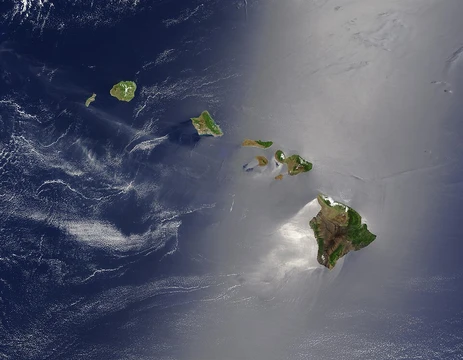
Terceira Island
Volcanic island in the Azores, site of oldest city and UNESCO site.

Terceira is a volcanic island in Portugal’s Azores, sitting about 1,181 kilometers west of Lisbon. It ranks among the larger islands in the chain, covering roughly 396.75 square kilometers and home to 53,311 people. The island holds the archipelago’s oldest city, Angra do Heroísmo, which once served as the Azores’ historical capital and is now a UNESCO World Heritage Site. It also houses the Supreme Court, the region’s top judicial body, and the main Portuguese Air Force base on the islands—Base Aérea nº 4 at Lajes, which includes a United States Air Force detachment. Two main seaports operate here, one at Angra do Heroísmo and another at Praia da Vitória, alongside a commercial airport that shares facilities with the Lajes airbase. Portuguese bullfighting is a local tradition, appearing in two forms: the formal equestrian bullfight held in a ring, and the street-based “tourada à corda,” where a bull is led on a rope.
The exact date and discoverer of the Azores remain uncertain. Nautical charts from as early as 1325, such as one by Angelino Dalorto, showed an island called “Bracile” west of Ireland, and later a chart by Angelino Dulcert included the Canaries, Madeira, and mysterious islands labeled “Capraria”—which some historians think were São Miguel and Santa Maria. Legends about Atlantis, the Seven Cities, Saint Brendan’s Land, the Fortunate Islands, the Island of Brasil, Antília, the Blue Islands, and the Land of Codfish also persisted. Between 1351 and 1439, various charts depicted groups of islands under different names. The first link between modern Terceira and these tales came with the Island of Brasil, which appeared as *Insula de Brasil* on Andrea Bianco’s 1436 Venetian map, attached to one of the larger islands in an Atlantic group.
The first official discovery document, from 1439, credited Gonçalo Velho Cabral with finding the Formigas islets. Some evidence suggests Terceira itself may have been spotted by Velho Cabral’s pilot, Vicente de Lagos, on 1 January 1445. After that, documents began referring to a third island in the Azores, calling it the Ilha de Jesus Cristo (Island of Jesus Christ), later Ilha de Jesus Cristo da Terceira. The chronicler Gaspar Frutuoso offered several possible reasons for the name: it was discovered on New Year’s Day, traditionally the feast of the name of Jesus; it was found by a captain of the Order of Christ; it happened on a Thursday or Friday, the feast of Corpus Christi; or it belonged to the diocese of Angra under the invocation of San Salvador (though this would imply a diocese existed before the discovery). Regardless, the name was temporary—the colloquial “Terceira,” meaning “third” in Portuguese, stuck as the common term for the island.
Colonization began by decree of Henry the Navigator on 21 March 1450, placing the island under the Flemish nobleman Jácome de Bruges. The first settler was Fernão d’Ulmo, either Flemish or French, who later abandoned his plot for unknown reasons. Bruges brought families and settlers from Flanders, along with northern Portuguese adventurers—such as João Coelho from Guimarães, João da Ponte from Aveiro, João Bernardes from Lagos, João Leonarde from Vieira, and Gonçalo Anes da Fonseca from Porto—plus animals and supplies. They landed at Porto Judeu or Pesqueiro dos Meninos, near Vila de São Sebastião, depending on the source. Frutuoso noted that the earliest settlers lived in a northern area called Quatro Ribeiras, where the parish of Santa Beatriz now stands and where the island’s first church was built, though few stayed due to difficult access and a poor harbor.
The first settlement took root in Quatro Ribeiras, at a place called Portalegre, where a small chapel dedicated to Santa Ana was raised. Bruges made return trips to Flanders for more settlers. On one voyage to Madeira, he recruited Diogo de Teive as his lieutenant and overseer for Terceira. A few years later, Bruges moved his residence to Praia, began building the Matriz Church in 1456, and ran the island’s captaincy from there until he vanished in 1474 during another trip between the colony and the mainland. After his disappearance, Infanta D. Beatriz, acting for her son Infante D. Diogo (who had inherited Terceira and Graciosa after the death of D. Fernando, the adopted son of Infante D. Henrique), split the island into two captaincies: Angra, given to João Vaz Corte Real, and Praia, given to Álvaro Martins Homem. Besides Portuguese and Flemish settlers, colonists from Madeira, many African slaves, new Christians, and Jews also populated the island. They developed ventures such as wheat farming (exported across the empire in the 15th century), sugar-cane, woad for dye, and timber for shipbuilding. This growth continued into the late 19th century, with the introduction of tea, tobacco, and pineapple. During the 1580 Portuguese succession crisis, the Azores were the only part of Portugal’s overseas empire to resist Spanish control.
- location
- Azores archipelago, Portugal
- area
- approximately 396.75 km²
- population
- 53,311 inhabitants
- oldest city
- Angra do Heroísmo
- UNESCO site
- Angra do Heroísmo
- main port cities
- Angra do Heroísmo and Praia da Vitória
- air base
- Base Aérea nº 4 at Lajes
Verified Timeline
Lore & Background
There is some uncertainty in the date and the discoverer of the Azores. Nautical charts before the 'official' discovery identified islands in the Atlantic as early as 1325. The first association between the modern island of Terceira and these stories was that of the island of Brasil; it first appears as Insula de Brasil in the Venetian map of Andrea Bianco (1436). In 1439, the first official discovery document appeared, attributing the discovery of the Formigas to Gonçalo Velho Cabral. There is an indication that Terceira may have been discovered by Vicente de Lagos, Velho Cabral's pilot, on 1 January 1445: the first documents after this period started appearing with a third island referred to as the Ilha de Jesus Cristo. The colonization of the island began by decree of Henry the Navigator, dated 21 March 1450, and placed the island in the administrative hands of the Fleming Jácome de Bruges. Its first settler was Fernão d'Ulmo, a Fleming or Frenchman, who later abandoned his plot for unknown reasons. The first settlement occurred in Quatro Ribeiras, in the locality of Portalegre, where a small chapel was raised for the invocation of Santa Ana. Following Bruges' mysterious disappearance in 1474, the Infanta D. Beatriz divided the island of Terceira into two captaincies: Angra (given to João Vaz Corte Real) and Praia (given to Álvaro Martins Homem).
Reader's Guide
Terceira holds historical significance as the site of the Azores' oldest city, Angra do Heroísmo, a UNESCO World Heritage Site and former capital of the archipelago. During the Portuguese succession crisis of 1580, the Azores was the only portion of the Portuguese overseas empire to resist the Spanish until the summer of 1583. Following the Battle of Ponta Delgada, Don Álvaro de Bazán, 1st Marquis of Santa Cruz, concentrated his forces at a less defended beach 10 kilometres from Angra do Heroísmo. With a fleet of ninety-six ships and 9,500 men, the Marquis was able to defeat the forces of D. António after one day's fighting. An English expedition fleet under the Earl of Cumberland in 1589, as part of the Azores Voyage of 1589 into Angra Bay, attacked several harbouring Spanish and Portuguese ships and was able to sink or capture five. Political tension rose in the 1820s between constitutionalists and supporters of absolute monarchy. Having embraced the cause of constitutionalism, the local Terceirenses established a Junta Provisória in the name of Queen Maria II of Portugal in 1828. Hostilities broke out at the Battle of Praia da Vitória in 1829. In a decree, issued on 15 March 1830, Angra was named as Portuguese capital by the Terceirenses constitutional forces. Portuguese bullfighting is popular on the island, in two versions: the traditional equestrian bullfight (in the ring) and the popular 'tourada à corda' that occurs in the streets.
Did You Know?
- Terceira is the location of the Azores' oldest city, Angra do Heroísmo, a UNESCO World Heritage Site.
- The island was initially called Ilha de Jesus Cristo (Island of Jesus Christ) after its possible discovery on 1 January 1445.
- During the Liberal Wars, Angra was named the Portuguese capital by constitutional forces on 15 March 1830.
- On 24 August 2001, Air Transat Flight 236 managed to land at Lajes Field after running out of fuel in mid-air.
- On 16 March 2003, President George W. Bush, UK PM Tony Blair, Spanish PM José María Aznar, and Portuguese PM José Manuel Barroso met on Terceira to discuss the Invasion of Iraq.
More in Islands 1-24
Spotted an error? Know more?
This is a living reference — every entry is fact-audited, and reader corrections feed straight into our audit queue. Suggest an edit · See this site's audit record