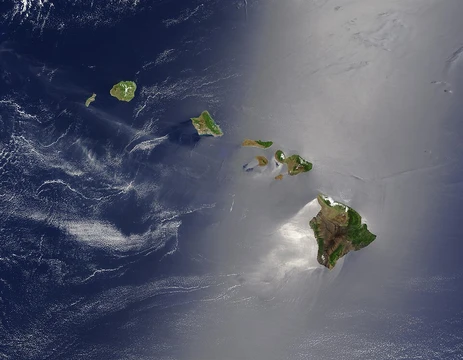
São Miguel Island
Largest and most populous island in the Azores archipelago.

São Miguel Island, often called "The Green Island," is the biggest and most crowded island in the Azores, a Portuguese archipelago. It spans 760 km² and is home to roughly 140,000 people, with Ponta Delgada—the archipelago’s largest city—housing 45,000 of them.
The island was the second in the Azores to be discovered and settled, likely between 1426 and 1437, by Portuguese colonists under Gonçalo Velho Cabral. The exact date is uncertain, but the discovery was later recorded by Father Gaspar Frutuoso in his history of the Azores, *Saudades da Terra*. He described the island as mountainous, covered in ravines and dense forest, kept damp by frequent showers and warm sun.
Not long after the first settlement at Povoação Velha, a volcanic eruption occurred in the uninhabited Sete Cidades crater, sometime between 1439 and 1444. No precise date exists, but Frutuoso noted that returning navigators found the western part of the island transformed, with tree trunks and pumice floating in the sea. Settlers in Povoação felt tremors and heard loud roars from the earth for nearly a year before the peak vanished in fire.
In the early 1400s, Prince Henry the Navigator authorized settlement, and many people from mainland Portugal’s Estremadura, Alto Alentejo, Algarve, and Madeira arrived under a royal decree. The fertile soil and mild climate also attracted French and Flemish settlers. Sephardic Jewish New Christians may have made up as much as 30% of the population, with surnames like Pereira, Pimentel, Dias, and many others. Some Moors were exiled to the island during the Inquisition. The island’s location and rich soil spurred rapid economic growth. A military garrison made it a key stop for African and Asian trade, while exports of sugar and later orchil—a dye sent to Flanders—stabilized the economy.
The first capital was Vila Franca do Campo, but a devastating earthquake and landslides in 1522 destroyed it. This disaster helped Ponta Delgada rise as the administrative and economic hub from 1546.
During the 1580 Portuguese succession crisis, São Miguel’s people won the naval Battle of Vila Franca against a French squadron backing the pretender António, Prior of Crato.
After the Portuguese Restoration War in 1640, the island regained its commercial role, forging new ties with Brazil during its heavy colonization. Many historic mansions and churches date from this period, funded by orange exports to Great Britain.
In 1831, during the Liberal Wars, troops loyal to Queen Maria II landed in Nordeste, sent by the future Duke of Terceira, and organized resistance to the Absolutist regime. By 1832, a militia declared support for the constitutional monarchy and Queen Maria, then sailed to the continent to help liberate Porto.
After the Liberal Wars, the Devourism period brought economic growth. The port of Ponta Delgada expanded, exporting new crops like tea, pineapple, and tobacco. Fishing, food staples, and dairy farming also grew, boosting many population centers.
Following the Carnation Revolution, the island became the seat of the Presidency of the Autonomous Region of the Azores, based in Ponta Delgada, and its economic, social, and political importance within the archipelago continued to rise.
In June 2001, a smuggler’s yacht from Venezuela to Spain’s Balearic Islands stopped at São Miguel with over half a tonne of cocaine. Before entering Rabo de Peixe harbor, the crew hid the drugs underwater with an anchor, but the netting unraveled and packages washed ashore. Police seized about half, but the remaining 210 kilos spread on the island. Within three weeks, 20 deaths from overdoses were reported. Substance addiction remains a problem, and smugglers now use the Azores to transfer drugs to fishing boats or speedboats for shipment to mainland Portugal or elsewhere.
- location
- Azores archipelago, Portugal
- area
- 760 km²
- population
- ~140,000
- largest_city
- Ponta Delgada (45,000 inhabitants)
- nickname
- The Green Island (Ilha Verde)
- discovery_settlement
- 1427 (second island discovered by Gonçalo Velho Cabral)
Verified Timeline
Lore & Background
São Miguel was discovered between 1426 and 1437, with 1427 recorded as the settlement date by Gonçalo Velho Cabral. Early settlers lived in earthen holes and experienced a volcanic eruption in the Sete Cidades crater between 1439 and 1444, which altered the western part of the island. The island's fertile soils and temperate climate attracted settlers from Estremadura, Alto Alentejo, Algarve, Madeira, France, and Flanders, with Sephardic Jewish New Christians possibly comprising up to 30% of the population. The first capital was Vila Franca do Campo, destroyed by the 1522 earthquake and landslides, after which Ponta Delgada became the capital in 1546. During the Portuguese succession crisis of 1580, the island's people won the naval Battle of Vila Franca against a French squadron. After the Portuguese Restoration War (1640), the island regained commercial importance, exporting oranges to Great Britain and later tea, pineapple, and tobacco. In 1831, during the Liberal Wars, troops loyal to Queen Maria II landed in Nordeste, and a militia declared allegiance to the constitutional monarchy. Following the Carnation Revolution, the island received the seat of the Presidency of the Autonomous Region of the Azores in Ponta Delgada. In June 2001, a cocaine smuggling incident led to 20 overdose deaths within three weeks.
Reader's Guide
São Miguel Island holds historical significance as the largest and most populous island of the Azores, a strategic archipelago in the North Atlantic. Its early settlement in the 15th century, under Prince Henry the Navigator's authorization, established it as a vital port-of-call for African and Asian trade routes. The island's economic development was driven by exports of sugar, orchil, oranges, and later tea, pineapple, and tobacco, as well as its role in the fishing and dairy industries. Politically, São Miguel was central to the Portuguese succession crisis of 1580 and the Liberal Wars of the 19th century, with its militia supporting Queen Maria II. The 1522 earthquake that destroyed Vila Franca do Campo reshaped the island's administrative center, elevating Ponta Delgada. In modern times, the island became the seat of the Azores' regional presidency after the Carnation Revolution. The island's geology, shaped by the Terceira Rift and multiple volcanic systems, including Sete Cidades, Água de Pau, and Furnas, has influenced its landscape and hazards. The 2001 cocaine smuggling incident highlights its continued role in international drug trafficking routes. São Miguel's legacy is one of resilience, economic adaptation, and geopolitical importance within Portugal and the Atlantic world.
Did You Know?
- São Miguel was discovered between 1426 and 1437, with 1427 recorded as the settlement date by Gonçalo Velho Cabral.
- The 1522 Vila Franca earthquake and landslides destroyed the island's first capital, Vila Franca do Campo.
- In June 2001, a cocaine smuggling incident led to 20 overdose deaths on the island within three weeks.
- Sephardic Jewish New Christians are believed to have comprised as much as 30% of the island's population.
- The island's geology includes six volcanic zones, all Quaternary in age except the Nordeste shield, which is partly Pliocene.
More in Islands 1-24
Spotted an error? Know more?
This is a living reference — every entry is fact-audited, and reader corrections feed straight into our audit queue. Suggest an edit · See this site's audit record