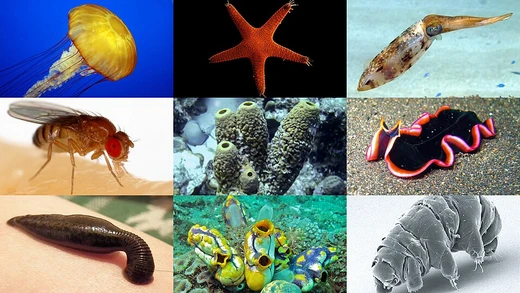
Annelid

OJJ · CC0
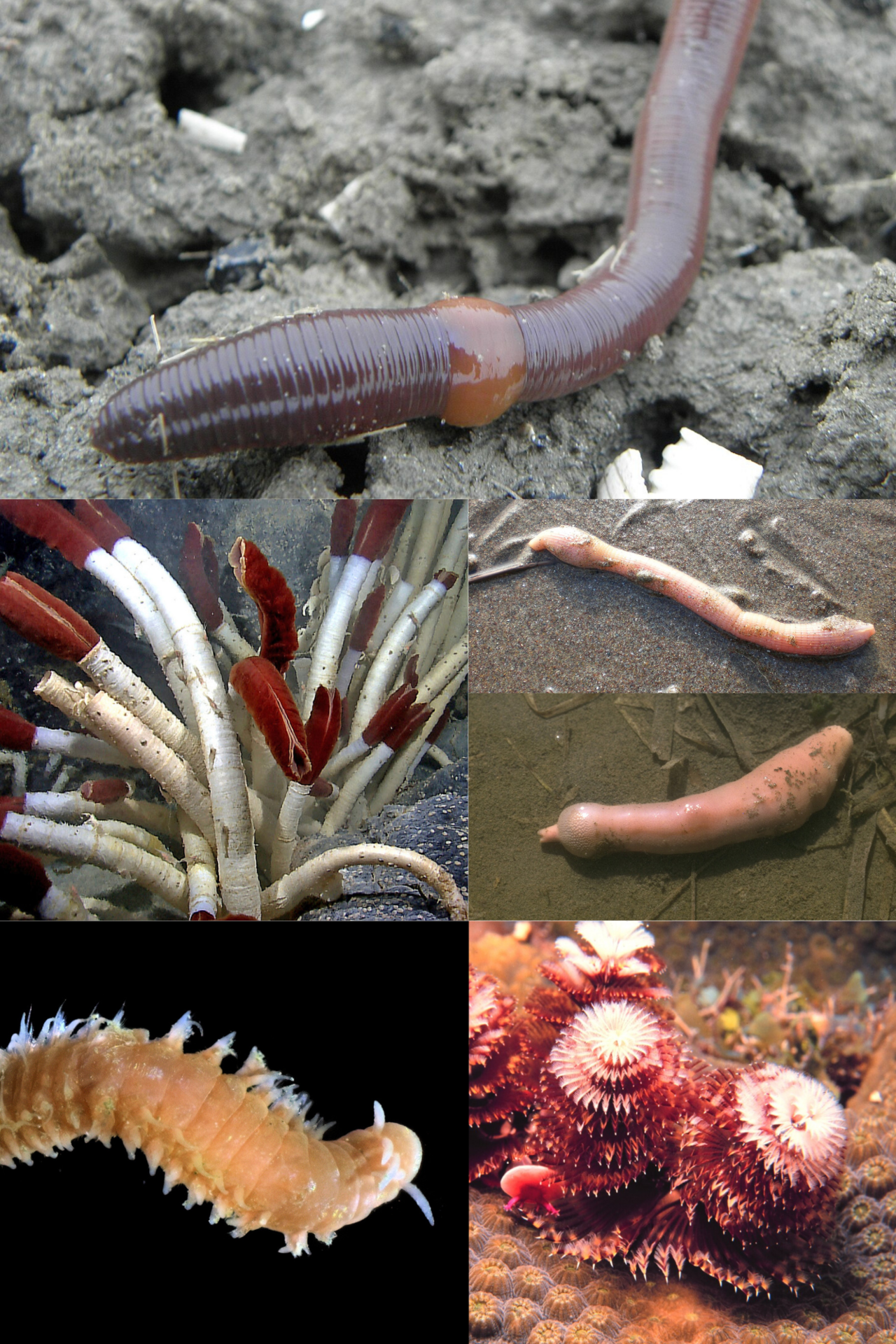
Annelids, or segmented worms, make up the phylum Annelida—a name that comes from the Latin for "little ring." This group includes over 22,000 living species, such as ragworms, earthworms, and leeches. They are bilaterally symmetrical, triploblastic, coelomate, and invertebrate, and many have parapodia for moving around. These animals have adapted to a wide range of habitats: some live in marine environments from tidal zones to hydrothermal vents, others in fresh water, and still others in damp soil on land.
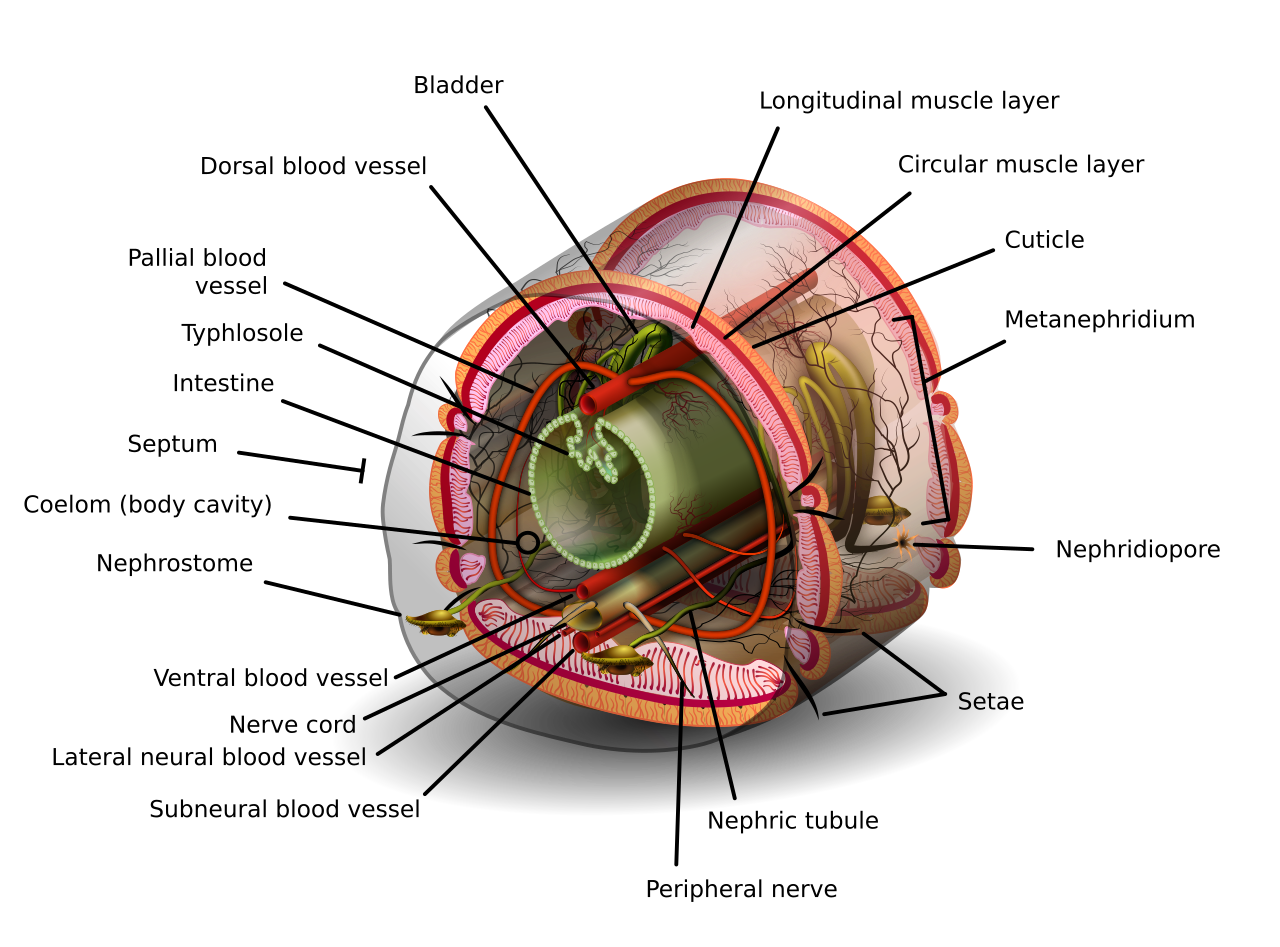
The basic annelid body is built from repeated segments called metameres. In most polychaetes, each segment carries a pair of parapodia, often used for locomotion. Many species have internal walls called septa that separate the segments, though these are weak or missing in others—and in groups like Echiura and Sipuncula, there is no obvious segmentation at all. Where septa are well developed, blood stays inside vessels, and muscles in front segments act as hearts. These septa also let the animal change the shape of individual segments, helping it move by peristalsis (rippling waves) or by undulating to make its parapodia more effective. In species with incomplete or no septa, blood flows freely through the body cavity without a pump, and locomotion varies widely—some burrowers even turn their pharynges inside out to drag themselves through sediment.
Earthworms, which are oligochaetes, support terrestrial food chains as both prey and predators, and in some places they play a key role in aerating and enriching soil. Marine polychaetes, which can make up a third of all species in coastal areas, help ecosystems by burrowing and letting water and oxygen reach the seafloor. Annelids also benefit humans: they improve soil fertility, serve as food and bait, and are used by scientists to monitor water quality. Leeches, once commonly used for bloodletting, are now less frequently employed by doctors, but some species are endangered because they were over-harvested for this purpose in past centuries. Engineers study ragworm jaws for their unusual combination of lightness and strength.
Because annelids are soft-bodied, their fossils are rare—mostly jaws or mineralized tubes. Some late Ediacaran fossils might be annelids, but the oldest confidently identified fossil dates to about 518 million years ago, in the early Cambrian. Fossils of most modern mobile polychaete groups appear by the end of the Carboniferous, around 299 million years ago. Whether certain body fossils from the mid Ordovician (about 472 to 461 million years ago) are oligochaetes is debated; the earliest undisputed oligochaete fossils come from the Paleogene, which began 66 million years ago.
The traditional classification, still used in many textbooks, splits annelids into three groups: Polychaetes (mostly marine, with many bristles and parapodia), Oligochaetes (few bristles, includes earthworms), and Hirudinea (leeches). However, cladistic research since 1997 has reshaped this view: leeches are now seen as a subgroup of oligochaetes, and oligochaetes as a subgroup of polychaetes. Additionally, the groups Pogonophora, Echiura, and Sipuncula—once treated as separate phyla—are now considered subgroups of polychaetes. Annelids belong to the Lophotrochozoa, a super-phylum of protostomes that also includes molluscs, brachiopods, and nemerteans. The smallest annelids are microscopic, while the largest include the Australian giant Gippsland earthworm and *Amynthas mekongianus*, both up to 3 meters long, and *Microchaetus rappi*, which can reach 6.7 meters.
- field
- Zoology
- known_for
- Segmented body plan, closed circulatory system, and ecological importance in soi
- size_range
- Microscopic to 6.7 m (Microchaetus rappi)
Lore & Background
The basic annelid form consists of multiple segments called metameres. Each segment has the same sets of organs and, in most polychaetes, has a pair of parapodia that many species use for locomotion. Septa separate the segments of many species, but are poorly defined or absent in others, and Echiura and Sipuncula show no obvious signs of segmentation. In species with well-developed septa, the blood circulates entirely within blood vessels, and the vessels in segments near the front ends of these species are often built up with muscles that act as hearts. The septa of such species also enable them to change the shapes of individual segments, which facilitates movement by peristalsis or by undulations that improve the effectiveness of the parapodia. In species with incomplete septa or none, the blood circulates through the main body cavity without any kind of pump, and there is a wide range of locomotory techniques—some burrowing species turn their pharynges inside out to drag themselves through the sediment.
Reader's Guide
Earthworms are oligochaetes that support terrestrial food chains both as prey and predators, and in some regions are important in aeration and enriching of soil. The burrowing of marine polychaetes, which may constitute up to a third of all species in near-shore environments, encourages the development of ecosystems by enabling water and oxygen to penetrate the sea floor. In addition to improving soil fertility, annelids serve humans as food and as bait. Scientists observe annelids to monitor the quality of marine and fresh water. Although bloodletting is used far less frequently by doctors now than it once was, some leech species are regarded as endangered because they have been over-harvested for this purpose in the last few centuries. Ragworms' jaws are studied by engineers, as they offer an exceptional combination of lightness and strength. Since annelids are soft-bodied, their fossils are rare—mostly jaws and the mineralized tubes that some of the species secreted. Although some late Ediacaran fossils may represent annelids, the oldest known fossil that is identified with confidence comes from about 518 million years ago in the early Cambrian period. Fossils of most modern mobile polychaete groups appeared by the end of the Carboniferous period, about 299 million years ago. Palaeontologists disagree about whether some body fossils from the mid Ordovician, about 472 to 461 million years ago, are the remains of oligochaetes, and the earliest indisputable fossils of the group appear in the Paleogene period, which began 66 million years ago.
Did You Know?
- The largest annelid, Microchaetus rappi, can grow up to 6.7 m (22 ft) long.
- Cladistic research since 1997 has radically changed the annelid family tree, viewing leeches as a sub-group of oligochaetes and oligochaetes as a sub-group of polychaetes.
- The oldest known annelid fossil identified with confidence comes from about 518 million years ago in the early Cambrian period.
- Ragworms' jaws are studied by engineers because they offer an exceptional combination of lightness and strength.
- Some leech species are regarded as endangered because they have been over-harvested for bloodletting in the last few centuries.
Taxonomic Upheaval and the Shape of the Phylum
The annelid family tree has undergone a dramatic reshuffling in recent decades. For generations, textbooks presented a tidy three-part division: polychaetes (almost all marine), oligochaetes (which include earthworms), and hirudinea (leech-like species). Yet cladistic research since 1997 has radically changed this scheme, viewing leeches as a sub-group of oligochaetes and oligochaetes as a sub-group of polychaetes. The ripple effects extended even further: the Pogonophora, Echiura and Sipuncula, previously regarded as separate phyla, are now regarded as sub-groups of polychaetes. The Pogonophora, first discovered in 1914, lacked a recognizable gut, making classification difficult; they have been re-classified as a family, Siboglinidae, within the polychaetes. The Echiura were regarded as annelids until the 1940s, then classified as their own phylum, but a 1997 molecular phylogenetics analysis concluded they are annelids. The Archiannelida, minute annelids living between grains of marine sediment, were treated as a separate class due to simple body structure but are now regarded as polychaetes. Today the phylum contains over 22,000 extant species, ranging in size from microscopic to Microchaetus rappi, which can grow up to 6.7 m (22 ft).
Segmented Architecture and the Mechanics of Movement
At the core of every annelid lies a repeating modular design: a chain of segments called metameres, each carrying the same sets of organs. In most polychaetes, each segment also bears a pair of parapodia that many species use for locomotion. Whether these segments are cleanly divided by internal walls called septa or flow into one another with little structural definition varies enormously across the group, and in Echiura and Sipuncula no obvious segmentation is visible at all. In species with well-developed septa, blood circulates entirely within blood vessels, and the vessels in segments near the front ends are often built up with muscles that act as hearts. Those same septa let the animal reshape individual segments, producing the characteristic peristaltic ripples that travel down the body or the undulating waves that make parapodial locomotion more effective. In species with incomplete septa or none, blood circulates through the main body cavity without any kind of pump, and locomotion takes wildly different forms—some burrowing species turn their pharynges inside out to drag themselves through the sediment.
Ecosystem Engineers and Unlikely Allies of Humanity
Annelids punch far above their soft-bodied weight in the ecosystems they inhabit. Earthworms, the familiar oligochaetes, support terrestrial food chains both as prey and predators, while their constant burrowing aerates soil and enriches it with organic material in regions where they are important. In the marine realm, polychaete burrowers—potentially accounting for as much as a third of all species in near-shore environments—churn the sea floor in ways that allow water and dissolved oxygen to penetrate deeper, encouraging the development of ecosystems. Humans have long tapped into annelid biology for practical purposes: they serve as food and fishing bait, and scientists deploy them as living indicators of water quality in both marine and freshwater settings. The leech, once a staple of medical bloodletting, has seen some species regarded as endangered because they have been over-harvested for this purpose in the last few centuries. Meanwhile, engineers study the jaws of ragworms because they achieve an exceptional combination of lightness and strength that inspires new material designs.
A Fossil Record Written in Jaws and Tubes
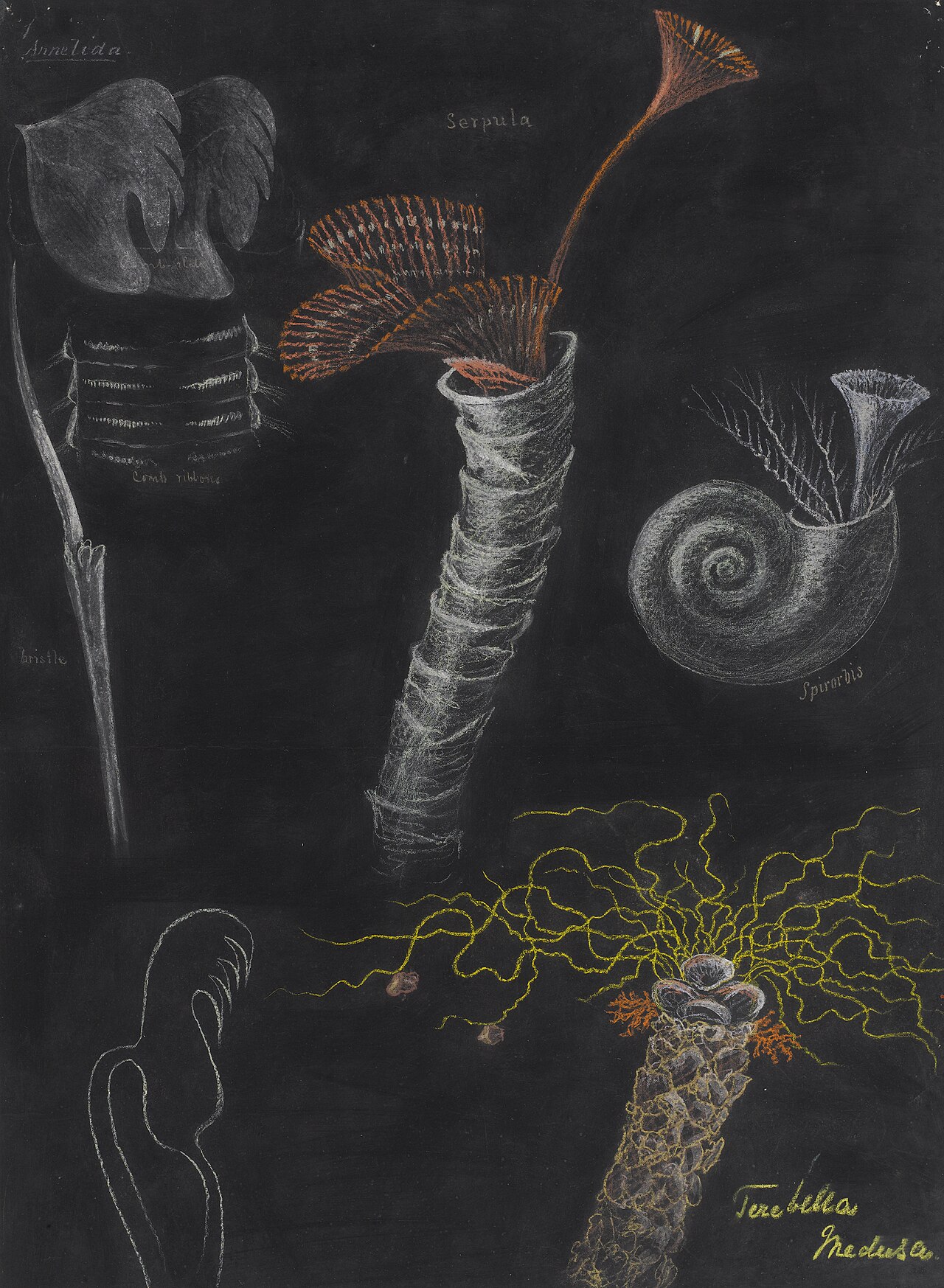
Because annelids are soft-bodied, they leave behind remarkably few traces in the rock record. What does survive tends to be the harder parts: jaws and the mineralized tubes that some of the species secreted. Some fossils from the late Ediacaran period may represent early annelids, but the oldest specimen identified with confidence dates to about 518 million years ago in the early Cambrian period. From there, the record fills in gradually: by the end of the Carboniferous period, about 299 million years ago, fossils of most modern mobile polychaete groups are already in place. The story for oligochaetes is murkier. Palaeontologists remain divided over whether certain body fossils from the mid Ordovician, about 472 to 461 million years ago, truly belong to that lineage, and the earliest fossils that are beyond serious dispute do not appear until the Paleogene period, which began 66 million years ago.
Gallery

Frequently Asked Questions
What is Annelid?
Annelid refers to a phylum of invertebrate animals defined by their segmented body architecture. They are classified within the Lophotrochozoa super-phylum, placing them in the same broad evolutionary branch as molluscs, brachiopods, and nemerteans.
What are Annelid's defining physical traits?
Annelids display bilateral symmetry, three embryonic germ layers, and a fluid-filled body cavity (coelom) that supports organ development. Many species also grow paired lateral appendages called parapodia, which they use for swimming or crawling.
Where can Annelids be found in the wild?
These worms inhabit an astonishingly broad set of environments, spanning tidal flats, deep-sea hydrothermal vent fields, freshwater streams, and damp terrestrial soils. Their range stretches from polar to tropical regions across every continent.
Why is Annelid considered ecologically important?
Annelids are major drivers of soil aeration and nutrient cycling on land, while in the ocean they form the backbone of many benthic food webs. Their closed circulatory system also makes them a long-standing model for studying vertebrate blood physiology.
How large can Annelids get?
Members of this phylum range from microscopic worms barely visible to the naked eye up to the giant Pacific tube worm, which can grow to roughly 6.7 metres in length. This makes Annelid one of the most size-diverse invertebrate groups on Earth.
More in Invertebrates 1-24
Spotted an error? Know more?
This is a living reference — every entry is fact-audited, and reader corrections feed straight into our audit queue. Suggest an edit · See this site's audit record