Cut Nyak Dhien
Acehnese guerrilla leader who resisted Dutch colonial forces for 25 years.

Cut Nyak Dhien (around 1848–6 November 1908) commanded Acehnese guerrilla fighters in the Aceh War. After her husband Teuku Umar was killed, she kept up armed resistance against the Dutch for a quarter of a century. The Indonesian government named her a National Hero on 2 May 1964, after her death.
She was born into a Muslim noble family in Aceh Besar’s VI mukim district in 1848. Her father, Teuku Nanta Setia, belonged to the ruling Ulèë Balang class in that area; her mother also came from an aristocratic line. Dhien learned religion and household skills. Known for her looks, she received many marriage proposals before her parents arranged her wedding at age twelve to Teuku Cek Ibrahim Lamnga, another aristocrat’s son.
The Dutch declared war on Aceh on 26 March 1873. In the first phase, the First Aceh Expedition, Panglima Polem and Sultan Alauddin Mahmud Syah II led Aceh. The Dutch sent 3,000 soldiers under Johan Harmen Rudolf Köhler to seize the Sultan’s palace. Aceh received no military help from Italy or Britain, and its army did not expand from 10,000 to 100,000 troops. The Dutch were pushed back, and Köhler died in battle.
During the Second Aceh Expedition in November 1873, the Dutch took VI mukim in 1873 and the Sultan’s Palace in 1874. In 1875, Dhien and her baby, along with other mothers, were moved to safety while her husband Ibrahim Lamnga fought to retake VI mukim. He died in action at Gle Tarum on 29 June 1878. On hearing this, Dhien vowed revenge against the Dutch.
Later, the Acehnese hero Teuku Umar proposed to her. She refused at first but agreed when he let her fight; they married in 1880. This lifted the morale of Aceh’s forces against the Dutch, whom they called Kaphé Blanda. The couple had a daughter, Cut Gambang. Dhien was determined to stay in the war and took her child along.
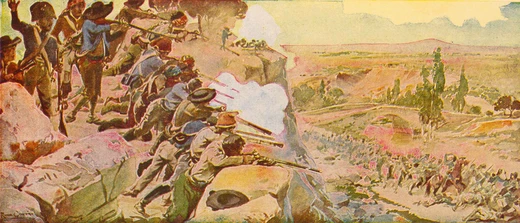
The conflict went on, with the Acehnese declaring a holy war and using guerrilla tactics like traps and ambushes. Short on supplies, Teuku Umar surrendered to the Dutch on 30 September 1893 with 250 of his men. The Dutch welcomed him, made him a commander, and gave him the title Teuku Umar Johan Pahlawan, though he planned to betray them. Two years later, Umar set out to attack Aceh but instead left with his troops, heavy gear, weapons, and ammunition, giving them to the Acehnese.
Quick Facts
- Birth Date
- 1848
- Birth Place
- Lampadang, Aceh Sultanate
- Awards
- National Hero of Indonesia
- Death Date
- 1908-11-06
- Death Place
- Soemedang, Dutch East Indies
- Spouse
- Ibrahim Lamnga, Teuku Umar
- Children
- Cut Gambang
- Relations
- Teuku Nanta Seutia (father)
- Allegiance
- Aceh Sultanate
- Battles
- Aceh War
Facts from the source article.
Lore & Background
Cut Nyak Dhien was born into a Muslim aristocratic family in Aceh Besar in 1848. Her father, Teuku Nanta Setia, was a member of the ruling Ulèë Balang aristocratic class, and her mother was also from an aristocrat family. She was educated in religion and household matters. At age twelve, she was married to Teuku Cek Ibrahim Lamnga. During the Aceh War, after Dutch forces captured VI mukim in 1873 and the Sultan's Palace in 1874, she and her baby were evacuated. Her husband died in action on 29 June 1878, prompting her to swear revenge. She later married Teuku Umar in 1880 after he allowed her to fight, and they had a daughter, Cut Gambang. Teuku Umar surrendered to the Dutch in 1893 but later betrayed them, taking weapons and supplies to aid the Acehnese. After her capture, her nearsightedness and arthritis did not heal; reliable sources indicate her health conditions persisted or worsened in exile. During her exile in Sumedang, local Sundanese people likely knew her real identity, as there is no consistent verification that it remained hidden for a long time.
Reader's Guide
Cut Nyak Dhien's significance lies in her prolonged guerrilla leadership against Dutch colonial forces during the Aceh War, a conflict that lasted from 1873 into the early 20th century. After the deaths of her first husband and later Teuku Umar, she sustained armed resistance for 25 years, becoming a symbol of Acehnese defiance. Her capture in 1901 and exile to Sumedang, West Java, reflected Dutch fears of her political and spiritual influence. In exile, she taught the Quran and was revered locally as 'Ibu Perbu' (The Queen Mother) due to her knowledge of Islamic theology and Arabic. Her legacy was formalized when President Sukarno posthumously declared her a National Hero of Indonesia on 2 May 1964. The 1989 film 'Tjoet Nja' Dhien' and the naming of an airport and a navy corvette after her further cement her place in Indonesian national memory.
Did You Know?
- She was exiled to Sumedang, West Java, because the Dutch colonial government feared her political and spiritual influence.
- During her exile, local Sundanese people did not know her real identity for a long time and revered her as 'Ibu Perbu' (The Queen Mother).
- She suffered from nearsightedness and arthritis as she aged, but these conditions slowly healed after her capture.
- Her daughter Cut Gambang escaped capture and continued the resistance after Cut Nyak Dhien was taken.
More in Insurgents And Guerrilla Leaders 1-24
Spotted an error? Know more?
Reader corrections go straight into our review queue. Suggest an edit · How this site is sourced