Augusto César Sandino
Nicaraguan revolutionary who fought U.S. occupation and inspired a movement.

Augusto César Sandino was a Nicaraguan revolutionary who led a guerrilla rebellion from 1927 to 1933 against the United States occupation of Nicaragua. He founded the militant group EDSN and became a symbol of resistance to American imperialism throughout Latin America, though the United States government referred to him as a 'bandit.'
Quick Facts
- Birth Name
- Augusto Nicolás Calderón Sandino
- Birth Date
- 18 May 1895
- Birth Place
- Niquinohomo, Masaya Department, Nicaragua
- Death Date
- 21 February 1934 · 1895 · 05 · 18
- Death Place
- Larreynaga, Managua, Nicaragua
- Death Cause
- Execution by firing squad
- Political Party
- Liberal
- Spouse
- Blanca Stella Aráuz Pineda · 1927
Facts from the source article.
Lore & Background
Augusto Calderón was born on 18 May 1895, the illegitimate son of a wealthy landowner and an indigenous servant. At age 17, he witnessed U.S. troops intervene in Nicaragua to suppress an uprising. After shooting but failing to kill a man who insulted his mother, he fled to Mexico, where he worked at a Standard Oil refinery and encountered anti-imperialist, anarchist, and communist ideas.
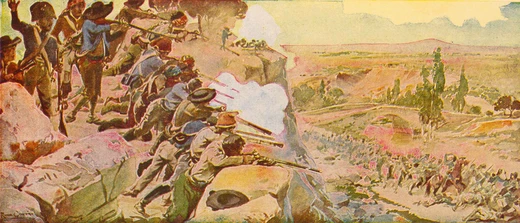
Returning to Nicaragua during the Constitutionalist War, Sandino assembled a makeshift army of gold miners and peasants. He refused to disarm after the Espino Negro accord of 1927, which ended the Liberal revolt under U.S. supervision. Declaring war on the United States, he led guerrilla attacks from the Segovia Mountains, using hit-and-run tactics against U.S. Marines and the National Guard. Despite heavy losses, he evaded capture until U.S. troops withdrew in 1933.
Sandino was executed in 1934 by National Guard forces under General Anastasio Somoza García, who later seized power and established a dictatorship. Sandino's political legacy was claimed by the Sandinista National Liberation Front (FSLN), which overthrew the Somoza government in 1979.
Reader's Guide
Augusto César Sandino's significance lies in his role as a guerrilla leader who challenged U.S. military occupation and became a lasting symbol of anti-imperialist resistance in Latin America. Though the U.S. government branded him a 'bandit,' his exploits made him a hero across the region. His rebellion drew U.S. Marines into an undeclared guerrilla war, and his refusal to surrender after the Espino Negro accord marked a turning point in Nicaraguan resistance.
Sandino's legacy endured through the Sandinista National Liberation Front (FSLN), which claimed his political mantle and overthrew the Somoza dynasty in 1979, ruling for more than 40 years. In 2010, the Nicaraguan congress unanimously named him a 'national hero.' His iconic wide-brimmed hat and boots, along with his writings from the war years, continue to shape Nicaragua's national identity. The article notes that Sandino's penchant for exaggeration was evident in his personal reports of battles, such as claiming 97 Americans killed when actual losses were far lower.
Did You Know?
- Sandino was the illegitimate son of a wealthy landowner and an indigenous servant, and took his father's surname at age nine.
- He shot but failed to kill a man who insulted his mother, then fled to Mexico where he worked at a Standard Oil refinery.
- Sandino's remote mountain headquarters, El Chipote, was found abandoned by U.S. Marines in 1932 or early 1933, guarded only by straw dummies.
Early Life and Formative Influences
Augusto Nicolás Calderón Sandino entered the world on 18 May 1895 in Niquinohomo, a small settlement in Masaya Department. His origins were marked by social division: his father, Gregorio Sandino, was a wealthy landowner of Spanish descent, while his mother, Margarita Calderón, was an indigenous servant in the Sandino household. Augusto lived with his mother until age nine, when his father brought him into the family home and arranged for his schooling. It was then that the boy adopted his father's surname, keeping Calderón as a middle initial. The young Sandino's political consciousness was shaped by violence. In July 1912, at seventeen, he watched United States troops intervene to crush an uprising against President Adolfo Díaz, a figure many viewed as a Washington puppet. That same year, General Benjamín Zeledón fell at the Battle of Coyotepe Hill, and Marines hauled his body on an oxcart to Catarina. These images of foreign boots on Nicaraguan soil left an indelible mark on a teenager who would one day make it his life's purpose to expel them.
The Guerrilla War Against the Occupation
After a failed shooting in 1921 of Dagoberto Rivas, a conservative's son who had insulted Sandino's mother, the young man fled through Honduras and Guatemala before settling in Mexico, where he worked at a Standard Oil refinery near Tampico. There, amid the closing military phase of the Mexican Revolution, he mingled with Seventh-day Adventists, spiritist leaders, and anti-imperialist revolutionaries of anarchist and communist leanings. He absorbed the anti-clerical spirit of the revolution and the ideology of Indigenismo, which celebrated the indigenous roots of Latin America. Back in Nicaragua, Sandino first assembled a ragtag force of gold miners during the Constitutionalist War, leading a failed assault near the San Albino mine. By 1927 he had returned to Las Segovias, recruiting local peasants and striking government troops with growing effectiveness. When the Espino Negro accord of 4 May 1927 demanded disarmament and the creation of a National Guard, Sandino simply refused to lay down his weapons, retreating into the Segovia Mountains. From there he waged an undeclared guerrilla war against United States Marine units, tying them down until American forces finally withdrew in 1933 after the election of President Juan Bautista Sacasa.
Execution and the Somoza Dynasty
Sandino's defiance did not survive the withdrawal of American troops. In 1934, National Guard forces under General Anastasio Somoza García carried out his execution, silencing the guerrilla leader just as the country's political landscape was about to shift dramatically. Two years later, in 1936, Somoza García seized power through a coup d'état and then won a presidential election by an overwhelming margin. He resumed command of the National Guard and erected a dictatorship that would entrench the Somoza family in control of Nicaragua for more than four decades. The shadow of Sandino's murder thus cast a long arc over the nation's twentieth-century history. It was not until 1979 that the Sandinista National Liberation Front, the FSLN, overthrew the Somoza government, claiming direct political descent from the guerrilla's cause. The FSLN then held power for more than forty years of its own, creating a cycle of authoritarian rule that stretched from Sandino's execution across the entire span of the late twentieth century.
Legacy and National Identity
Although the United States government branded him a bandit, Sandino's name resonated across Latin America as a symbol of resistance to American imperialism. In Nicaragua itself, his memory has been elevated to the highest level of national reverence: in 2010, the Nicaraguan congress unanimously declared him a national hero. His image—the wide-brimmed hat, the sturdy boots—has become an icon that transcends any single political party, embedding itself in the country's collective self-image. The writings he produced during the years of warfare against the United States Marine Corps continue to be read and cited, preserving his voice as a primary source of anti-colonial thought. His political descendants, the FSLN, carried his name into the 1979 revolution and beyond, while his broader legacy as a figure who drew a superpower's military into a protracted, undeclared guerrilla conflict in a small Central American country has made him a reference point for movements challenging foreign intervention throughout the region.
Frequently Asked Questions
Who is Augusto César Sandino?
Sandino was a Nicaraguan revolutionary born on 18 May 1895 in Niquinohomo, Masaya Department, who organized armed guerrilla resistance against the United States military presence in his country. He is remembered as one of the most prominent anti-imperialist fighters in Latin American history.
What was Sandino's role in the conflict?
He founded the militant group known as the EDSN and led a sustained guerrilla campaign from 1927 to 1933 against the U.S. occupation of Nicaragua. While Washington labeled him a 'bandit,' he operated as the strategic commander of an organized resistance movement.
Why is Sandino important to Latin American history?
His guerrilla struggle became a lasting symbol of resistance to American imperialism throughout the continent. His name was later adopted by the Sandinista National Liberation Front (FSLN), which went on to reshape Nicaraguan politics in the 1970s and 1980s.
What was the EDSN and how did it function?
The EDSN was the militant organization Sandino established to coordinate his armed resistance against the U.S. occupation. It served as the organizational backbone of his rebellion, uniting local fighters under a common anti-imperialist banner throughout the late 1920s and early 1930s.
More in Insurgents And Guerrilla Leaders 1-24
Spotted an error? Know more?
Reader corrections go straight into our review queue. Suggest an edit · How this site is sourced